
Chesapeake Bay Retriever: character, care & history
- 11 min read

The Chesapeake Bay Retriever is a sturdy, loyal dog with a fascinating history. Discover everything about temperament, care, and health.
Some dogs win your heart with their energy, and some leave an indelible impression with their loyalty. The Chesapeake Bay Retriever belongs to that rare category that combines both qualities. This sturdy, intelligent dog from the American Chesapeake Bay region has a rich past as a working dog and a temperament as versatile as the tides of the bay that gave it its name. For owners seeking a loyal companion with a strong working instinct, this dog offers a unique mix of strength, perseverance, and a loving nature.
The history of America's water dog
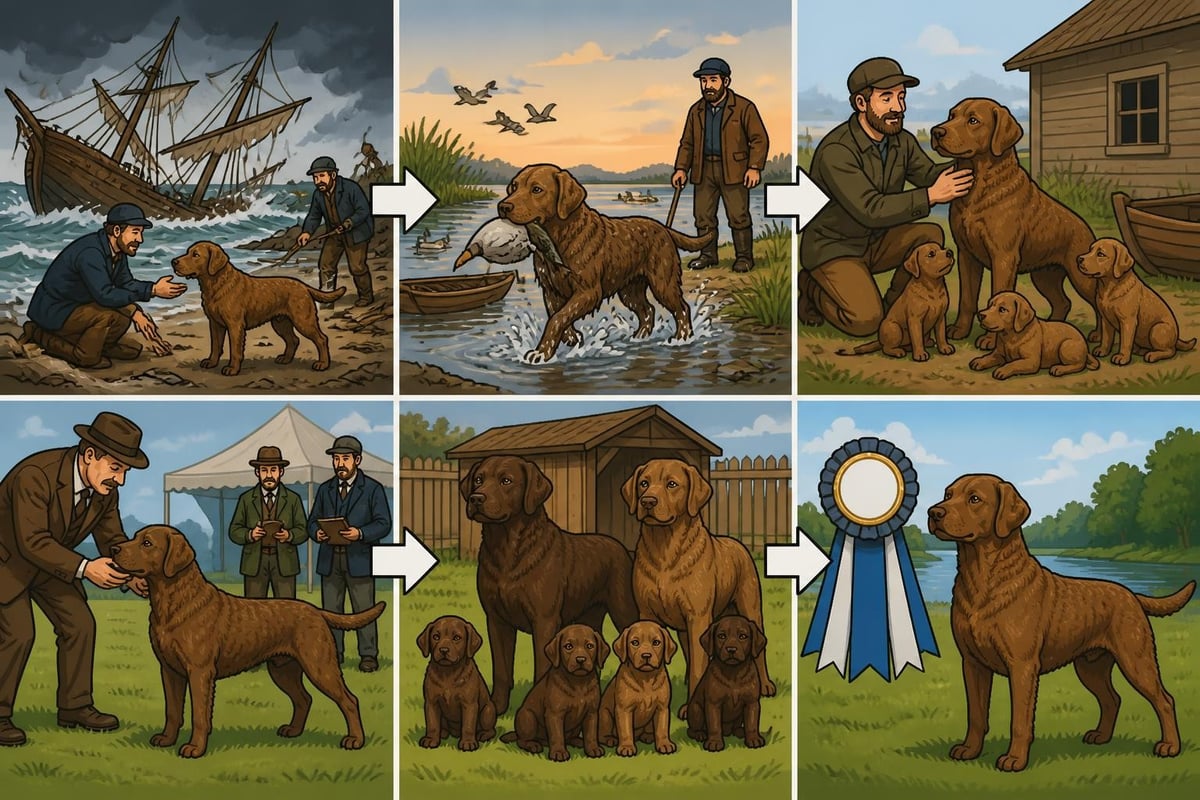
The story of the Chesapeake Bay Retriever begins with a shipwreck and chance. In 1807 an English ship sank off the coast of Maryland, and aboard were two Newfoundland puppies. These dogs were rescued and proved to be exceptional waterfowl hunters. Local hunters decided to cross these dogs with regional retriever types, possibly with Curly-Coated Retrievers and setters.
What followed were generations of selective breeding with one goal: to create the ultimate water dog for the rough conditions of the Chesapeake Bay.
From working dog to registered breed
The Chesapeake Bay region experiences harsh winters and icy water. Hunters needed a dog that could not only swim but sustain it for hours in extreme conditions. The Chesapeake Bay Retriever developed into exactly that dog.
- Water-repellent coat: A unique oil-rich double coat
- Physical strength: Built to carry heavy game
- Endurance: Known for retrieving more than 100 ducks a day
- Weather resistance: Performs best in cold, wet weather
The American Kennel Club officially recognized the breed in 1878, making the Chesapeake Bay Retriever one of the older registered American dog breeds.
Character and temperament: a loyal workhorse
The Chesapeake Bay Retriever is not simply a cuddle dog. This is a breed with a distinct personality, shaped by generations of selection for working ability.
Independent but devoted
Unlike some retrievers that treat everyone as their best friend, the Chesapeake Bay Retriever shows a more reserved attitude toward strangers. These dogs choose their people carefully and then build an unbreakable bond.
Their loyalty manifests in various ways. They follow their owner around the house, take their protective role seriously, and show an almost intuitive understanding of their family members' emotions.
| Characteristic | Description | Suitability for families |
|---|---|---|
| Loyalty | Very high, chooses one family | Excellent for stable households |
| Energy | High, needs daily challenge | Ideal for active families |
| Trainability | Good, but stubborn | Experienced owners recommended |
| Protective instinct | Moderate to high | Good with early socialization |
Intelligence with a stubborn streak
A Chesapeake Bay Retriever thinks for itself. This intelligence makes them excellent problem-solvers, but also dogs that question commands that seem illogical. For owners this means consistent, positive training is essential.
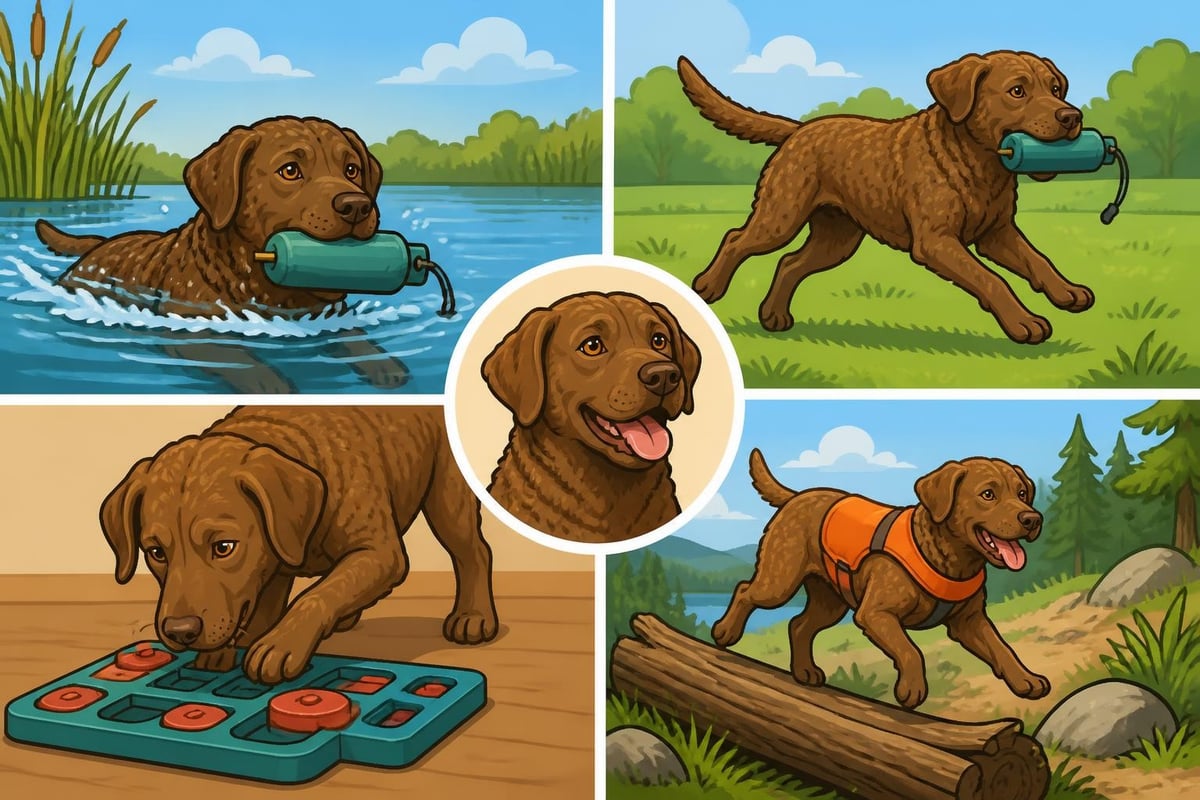
They excel in activities that tap into their natural instincts:
- Water retrieving and swimming
- Tracking and nosework
- Obedience training (with patience)
- Field trials and hunting tests
The American Chesapeake Club provides detailed guidelines on developing the working skills of these dogs, combining traditional training methods with modern insights.
Physical characteristics and care
The Chesapeake Bay Retriever is built like an athlete. Weighing between 25 and 36 kilograms and standing 53 to 66 centimeters at the withers, this breed combines strength with agility.
The unique coat
What really sets the Chesapeake Bay Retriever apart is the coat. This double layer has an oily character that repels water like duck feathers. After a dive into icy water a Chessie can shake itself and be relatively dry within minutes.
Colors range from:
- Dead grass (yellow-brown)
- Reed (reddish brown)
- Sedge (light brown)
Grooming this coat is surprisingly simple. Weekly brushing prevents matting and removes loose hair. Twice a year, during shedding, more intensive grooming is needed. Excessive bathing is discouraged because it removes the natural oils that make the coat water-repellent.
Exercise and mental stimulation
A Chesapeake Bay Retriever needs more than a walk around the block. This is a working breed that thrived retrieving hundreds of ducks a day. Modern pets need adapted challenges:
- Daily physical activity: At least 60-90 minutes of active exercise
- Swimming ability: Water is their natural element
- Mental challenge: Puzzle toys, training sessions, variety in routes
- Social interaction: Structured meetups with other dogs
If you want to keep a birthday calendar to record important moments with your Chessie, Kalenderwinkel.nl offers a wide selection of practical solutions, such as a specific birthday calendar for dog lovers where all the milestones of your faithful four-legged friend can be noted.
Health and genetic considerations
As with many purebred dogs, the Chesapeake Bay Retriever has specific health issues that breeders and owners should be aware of. Responsible breeding and health screening are crucial.
Hip dysplasia and joint problems
Hip dysplasia (HD) occurs in many medium to large breeds, and the Chesapeake Bay Retriever is no exception. Research on genetic selection has shown that consistent screening of breeding dogs can significantly reduce prevalence.
Recommended health tests for breeding dogs:
| Test | Purpose | Frequency |
|---|---|---|
| HD X-ray | Detecting hip dysplasia | For breeding approval |
| ED screening | Detecting elbow dysplasia | For breeding approval |
| Eye examination | Inherited eye disorders | Annually |
| DNA tests | PRA and other genetic conditions | One-time |
Progressive retinal atrophy and eye problems
Progressive retinal atrophy (PRA) is an inherited eye disease that causes gradual blindness. The AKC Canine Health Foundation supports research into this and other inherited conditions in the Chesapeake Bay Retriever.
Modern DNA tests can identify carriers before they are used for breeding. Responsible breeders test all potential breeding dogs and make informed mating decisions to protect the breed's health.
Hypothyroidism
Thyroid disorders are relatively common in the Chesapeake Bay Retriever. Symptoms include:
- Unexplained weight gain
- Loss of energy and lethargy
- Coat problems
- Behavioral changes
Fortunately, hypothyroidism is well managed with daily medication. Regular veterinary check-ups help detect this condition early.
Nutrition for optimal performance
The Chesapeake Bay Retriever needs nutrition that supports its active lifestyle. Cornell University's veterinary guidelines emphasize the importance of tailored nutrition for working and active dogs.
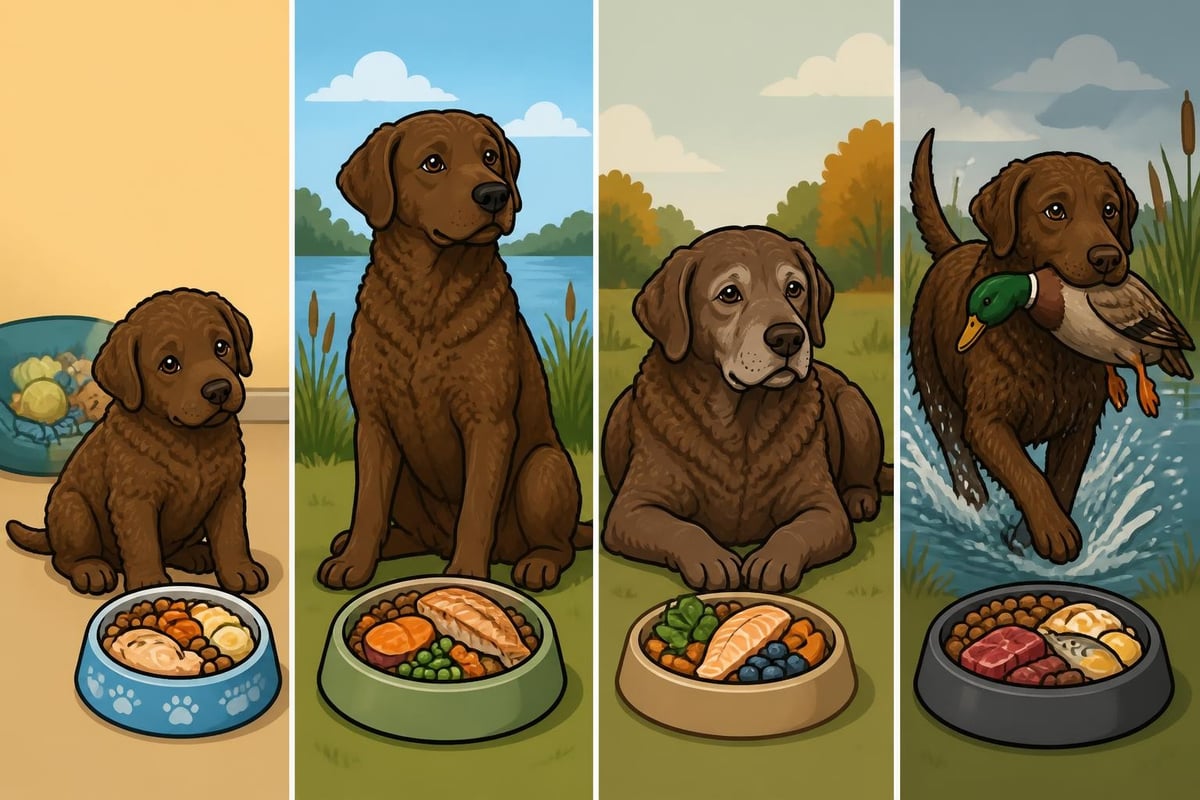
Nutritional needs by life stage
Puppies have different nutritional needs than adult or senior dogs. For the Chesapeake Bay Retriever it is important to avoid overfeeding puppies, as too rapid growth can exacerbate joint problems.
General guidelines:
- Puppies (up to 12 months): High-quality large-breed puppy food, 3-4 meals per day
- Adult dogs (1-7 years): Quality food matched to activity level, 2 meals per day
- Seniors (7+ years): Specialized food with joint support, 2 meals per day
For actively working Chessies that hunt or train intensively, supplementation with extra calories and protein may be necessary.
Training and socialization: the key to success
A well-trained Chesapeake Bay Retriever is a joy to live with. An untrained one can be a challenge. The difference is early, consistent training and socialization.
Start socialization early
Chesapeake Bay Retriever puppies should have positive experiences from a young age with different people, animals, sounds, and environments. This early socialization prevents their natural reserve from turning into fear or aggression.
Effective socialization strategies include:
- Puppy classes using positive reinforcement methods
- Controlled meetings with other dogs
- Exposure to different environments (city, woods, water)
- Positive interactions with a variety of people
- Gradual introduction to household sounds and situations
Training methods that work
The Chesapeake Bay Retriever responds best to positive reinforcement training. Harsh corrections can backfire and damage trust. Instead:
- Use rewards and praise for desired behavior
- Keep training sessions short and varied
- Make use of their retrieving instinct
- Be consistent but fair
- Be patient during their stubborn moments
The AKC Canine College offers specialized education specifically for the Chesapeake Bay Retriever breed, which can be valuable for both new and experienced owners.
The Chesapeake Bay Retriever as a family dog
Although originally bred as a working dog, the Chesapeake Bay Retriever fits very well into the right family. "The right family" is the key phrase here.
Ideal family situation
These dogs thrive in active families that can provide enough exercise and mental stimulation. They are often patient with children in their own family, although their size means supervision around young children is important.
Key considerations:
- Sufficient time for daily exercise
- Access to water for swimming
- Willingness to provide consistent training
- Experience with dogs or willingness to learn
- Secure, fenced outdoor space
Living with other pets
With early socialization, Chesapeake Bay Retrievers can live well with other pets. However, their hunting instinct means smaller animals like cats or rabbits should be introduced cautiously. Some Chessies live harmoniously with cats; others will always be inclined to chase.
Breed standards and show lines
For enthusiasts interested in showing or registered breeding, various organizations provide detailed breed standards. The United Kennel Club breed standard describes the ideal type, movement and structure, while The Kennel Club in the United Kingdom publishes additional health and breeding guidelines.
Important structural features
The breed standard describes a powerfully built dog with specific proportional ratios. The body should be slightly longer than tall, providing the power needed for swimming and retrieving.
Structural highlights:
- Broad, rounded skull
- Yellow or amber-colored eyes
- Small ears set high
- Deep chest for lung capacity
- Powerful hindquarters for swimming ability
- Moderately long, powerful tail
Organizing the year with your Chessie
Owners of a Chesapeake Bay Retriever know that structure and planning are essential. From veterinary appointments to training sessions and seasonal activities, there's a lot to coordinate.
A thoughtful calendar helps you forget nothing. For dog lovers planning their year, Kalenderwinkel.nl offers practical solutions. In addition to specific dog calendars you can also find beautiful art calendars, such as card folders with botanical illustrations that perfectly match the nature-loving spirit of many Chessie owners.
Seasonal points of attention
| Season | Point of attention | Action |
|---|---|---|
| Spring | Shedding begins | Schedule extra brushing sessions |
| Summer | Swimming water available | Organize regular swimming opportunities |
| Autumn | Hunting season (for working dogs) | Intensify training |
| Winter | Coat protection | Oils in the coat preserved, limited bathing |
Selecting a puppy or adult dog
Choosing a Chesapeake Bay Retriever is a commitment of ten to thirteen years. Careful selection of a responsible breeder or rescue organization is crucial.
Recognizing responsible breeders
Serious breeders of Chesapeake Bay Retrievers focus on health, temperament, and breed type. They thoroughly test their breeding stock, thoroughly socialize puppies, and remain available for advice throughout the dogs' lives.
Red flags with breeders:
- Unable to show health test results
- Multiple litters available at the same time
- Selling puppies at a young age (before 8 weeks)
- Not asking questions about your lifestyle
- Not willing to show their facilities
Adopting adult Chessies
Adult Chesapeake Bay Retrievers sometimes find their way to rescue organizations. These dogs can become wonderful family members, especially for people who want to skip the puppy phase. Adoption does require patience and understanding of possible adjustment challenges.
The future of the breed
The Chesapeake Bay Retriever remains a relatively rare breed, especially outside North America. This rarity has pros and cons. On one hand, genetic diversity remains limited; on the other, the breed avoids the health crises that affect some more popular breeds.
Modern breeders balance preserving working ability with producing stable family dogs. Thanks to dedicated breed clubs and health programs, the Chesapeake Bay Retriever remains a robust, versatile breed with a promising future.
The focus on health testing, as described in reports from the Orthopedic Foundation for Animals, helps breeders minimize genetic disorders and maximize life expectancy and quality of life.
The Chesapeake Bay Retriever is a unique breed that combines loyalty, strength, and intelligence with a rich working history. For the right owner, this dog offers an unparalleled bond and years of enjoyment. Whether you are an active family looking for an adventurous companion or a hunter seeking a reliable working partner, the Chessie deserves serious consideration. To organize your year with your faithful four-legged friend— from veterinary appointments to training milestones— Kalenderwinkel.nl offers a wide range of practical calendars and planners for 2027, with convenient payment options and reliable shipping via PostNL, DHL, or UPS.
Related categories
Blog posts
-

, by Kalenderwinkel.nl Red robin: the nature calendar for bird lovers 2027
-

, by Kalenderwinkel.nl Chesapeake Bay Retriever: character, care & history
-

, by Kalenderwinkel.nl Bloodhound: the fascinating scent hound breed for enthusiasts
-

, by Kalenderwinkel.nl Patterdale terrier: character, history and care


