Discover everything about the Bull Terrier: temperament, grooming, training, and health. Includes handy tips for organizing your dog life.
De bull terrier is een hond die zelden onopgemerkt blijft. Met zijn karakteristieke eivormige kop en gespierde lichaam trekt dit ras direct de aandacht. Maar achter dat stoere uiterlijk schuilt een speelse, loyale en soms komische persoonlijkheid die veel hondenliefhebbers verrast. Voor wie overweegt een bull terrier in huis te nemen of al het genoegen heeft met zo'n bijzondere viervoeter, is het essentieel om te begrijpen wat deze honden uniek maakt. Van hun geschiedenis als gevechts- en rattenvangershond tot hun moderne rol als geliefde gezinshond, het verhaal van de bull terrier is er één van transformatie en aanpassingsvermogen.
De geschiedenis van een veelzijdig ras
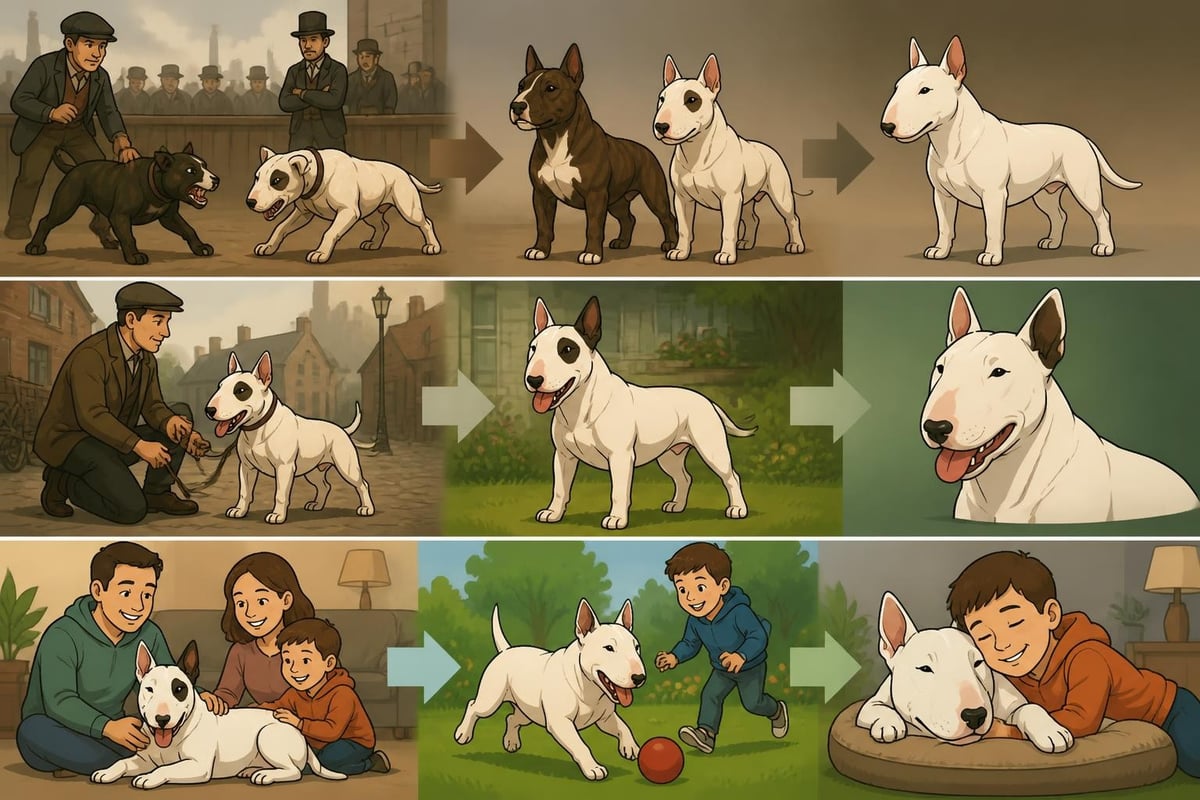
Het verhaal van de bull terrier begint in het negentiende-eeuwse Engeland, waar fokkers experimenteerden met kruisingen tussen bulldogs en verschillende terriersoorten. Het doel was simpel maar specifiek: een hond creëren die de kracht en vastberadenheid van de bulldog combineerde met de wendbaarheid en jagersinstinct van de terrier. De resulterende honden werden ingezet voor hondengevechten en rattenvangen, twee populaire maar gruwelijke 'sporten' van die tijd.
Van vechthond tot showhond
James Hinks wordt algemeen erkend als de man die de moderne bull terrier ontwikkelde in de jaren 1860. Hij verfijnde het ras door onder andere de Engelse witte terrier en de Dalmatier in de foklijnen te introduceren. Het resultaat was een elegantere, meer gestroomlijnde hond met de kenmerkende eivormige kop die we vandaag herkennen. Deze nieuwe versie won snel aan populariteit in hogere sociale kringen.
Belangrijke mijlpalen in de bull terrier geschiedenis:
1850-1860: Vroege kruisingen tussen bulldogs en terriers
1862: James Hinks presenteert zijn verfijnde bull terrier
1887: Oprichting van de Bull Terrier Club in Engeland
1897: Erkenning door de American Kennel Club
1930-1940: Ontwikkeling van de gekleurde variëteit
1950: Wereldwijde populariteit als gezelschapshond
De transformatie van vechthond naar gezelschapsdier was niet alleen een kwestie van fokkerij, maar ook van veranderende maatschappelijke normen. Toen dierenvechten in 1835 verboden werd in Groot-Brittannië, moest het ras een nieuwe rol vinden. Gelukkig bleken bull terriers uitstekende gezinshonden te zijn wanneer ze goed gesocialiseerd werden.
Karakter en temperament: Een persoonlijkheid vol verrassingen
Describing a bull terrier often means putting apparent contradictions into words. They are at once powerful and playful, determined and sensitive, independent and affectionate. According to the American Kennel Club's official breed description, bull terriers are characterized by their lively spirit and cheerful temperament.
Family bonds and loyalty
Bull terriers are known for their intense attachment to their family members. They are not dogs content with a sideline role in the household. Instead, they want to be fully part of family life, preferably as close as possible to their favorite people. This attachment makes them excellent companion dogs, but also means they do poorly when left alone for long periods regularly.
Their attitude toward children is often surprisingly patient and playful. Historically they were sometimes called "the children’s nanny" because of their protective yet gentle behavior around kids. Of course, every interaction between dogs and young children requires supervision, but a well-socialized bull terrier can be a great playmate.
The stubborn side
Let’s be honest: bull terriers have a stubborn streak that can challenge even the most experienced dog owner. These dogs like to think for themselves and have selective hearing when something more interesting grabs their attention. That doesn’t mean they’re untrainable, but it does mean they need consistent, positive, and creative instruction.
Personality trait
Description
Impact on daily life
Playfulness
Retains puppy-like behavior into older age
Requires daily playtime and mental stimulation
Stubbornness
Independent thinking and selective obedience
Training requires patience and consistency
Loyalty
Intense bonding with family members
Can develop separation anxiety if handled incorrectly
Energy
High activity level
Needs at least 1-2 hours of exercise per day
Vigilance
Alert to unfamiliar situations
Good watchdog but not aggressive
Training and socialization: The key to success
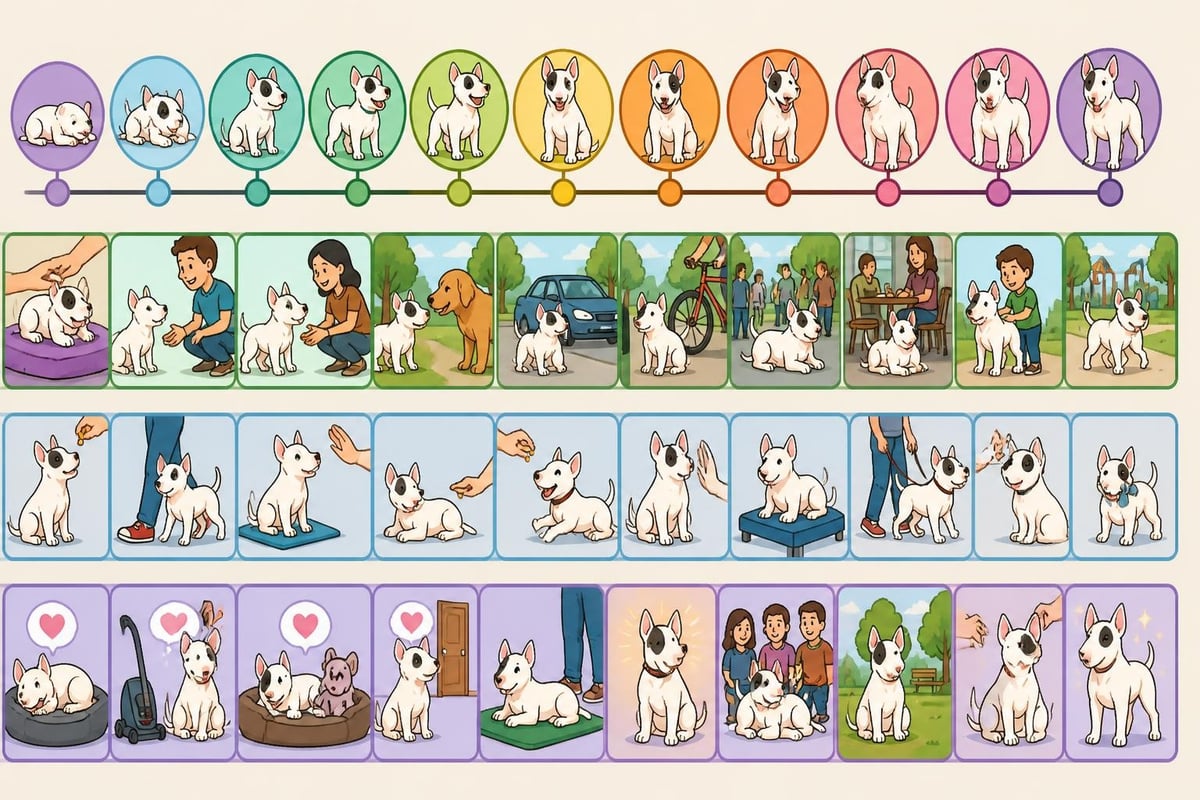
A bull terrier without adequate training and socialization can become a challenge. These dogs have natural energy and determination that need to be channeled positively. Fortunately, they are also intelligent and eager to learn, provided training stays interesting and rewarding.
Positive reinforcement methods
Modern dog training has definitively moved away from dominance-based methods, and that’s good news for bull terriers. According to the American Veterinary Society of Animal Behavior, reward-based methods are not only more humane but also more effective for long-term learning. For a breed that is so sensitive to its owner’s mood, harsh corrections are counterproductive and can damage trust.
Effective training approach for bull terriers:
Start socialization early (from 8 weeks)
Use high-quality rewards (favorite treats, toys)
Keep training sessions short and varied (5-10 minutes)
Vary locations to promote generalization
Remain consistent in rules and expectations
Celebrate four small successes enthusiastically
A planning calendar can be incredibly helpful for structuring your training goals and tracking progress. By noting weekly training milestones, you stay motivated and can see where improvement is needed.
Socialization as a lifelong project
Early socialization is crucial, but it doesn't end after the puppy period. Bull terriers need continuous exposure to different people, animals, and situations to maintain their social skills. Plan regular outings to dog parks, busy shopping streets, or quiet natural areas. Variety is key.
Be cautious during interactions with other dogs. Some bull terriers can display territorial or dominant behavior, especially toward dogs of the same sex. Early and ongoing positive experiences with conspecifics help minimize this.
Health and medical considerations
Like any purebred dog, the bull terrier has certain health issues owners should be aware of. Responsible breeders screen their breeding dogs for hereditary conditions, and prospective owners should always ask for health guarantees.
Hereditary kidney diseases
One of the most serious health problems in bull terriers is hereditary nephritis, a progressive kidney disease that can begin at a young age. Scientific research has extensively documented this condition and shown that it has a hereditary component. Symptoms can include increased thirst, weight loss, and decreased appetite.
Thanks to modern DNA tests, breeders can identify carriers of these genes. The Orthopedic Foundation for Animals offers extensive screening programs that responsible breeders use to guide their breeding programs. When choosing a puppy, it is essential to ask about these health tests.
Skin problems and allergies
Bull terriers, especially the white variety, are prone to skin issues. Allergies to food, flea bites, or environmental factors are relatively common. Symptoms range from mild itching to severe skin infections. Regular check-ups and prompt action at the first signs of skin irritation are important.
Common health problems in bull terriers:
Hereditary nephritis (kidney disease)
Deafness (especially in completely white dogs)
Skin allergies and dermatitis
Heart problems (mitral valve disease)
Luxating patella (kneecap problems)
Eye problems (entropion, lens luxation)
Preventive care and monitoring
A proactive approach to health pays off with Bull Terriers. VCA Animal Hospitals recommends regular veterinary check-ups, ideally twice a year for adult dogs and more often for young puppies and senior dogs.
A health calendar helps you remember important dates. Note vaccinations, worming treatments, flea prevention, and scheduled check-ups. For 2027 it’s wise to plan your veterinary appointments now. At Kalenderwinkel.nl you’ll find practical yearly planners to keep all these appointments organized.
Daily care and exercise needs
Grooming a Bull Terrier is fortunately relatively simple compared to long-haired breeds, but neglecting basic care can still lead to problems.
Coat care
With their short, smooth coat, Bull Terriers are not heavy groomers. A weekly brush with a soft brush or grooming mitt removes loose hair and keeps the coat shiny. They do shed, especially during seasonal changes, but it remains manageable.
Bathing is only necessary when the dog is really dirty or starts to smell. Bathing too frequently can disrupt natural skin oils and lead to dryness or irritation. About once a month to once every two months is generally sufficient.
Exercise and mental stimulation
A bored Bull Terrier is a destructive Bull Terrier. These dogs need substantial daily exercise, ideally a combination of:
At least two brisk walks per day (30–45 minutes each)
Playtime in a securely fenced area
Mental stimulation through interactive toys or training exercises
Variety of activities (swimming, fetch, agility)
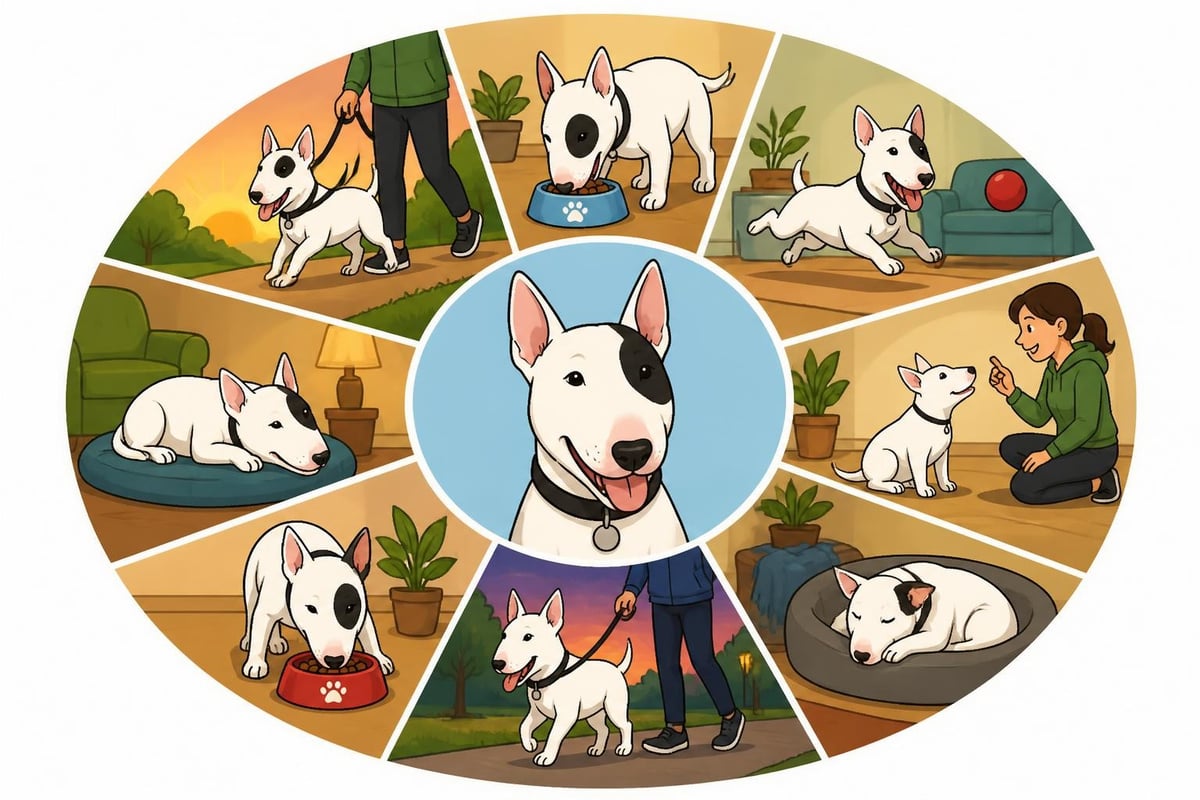
Plan your dog walks and activities in a clear schedule. By setting routines, you ensure your four-legged friend gets the attention they need, even during busy periods. Productive household organization, including care for your Bull Terrier, becomes easier with the right planning tools.
Nutrition and weight management
Bull Terriers have a hearty appetite and can gain weight quickly if their food intake isn’t well managed. Obesity stresses the joints and can worsen existing health problems.
Choose quality nutrition
A high-quality dog food tailored to age, weight, and activity level forms the base. Whether you choose dry food, wet food, or a combination, check the ingredient list. High-quality protein sources, healthy fats, and limited fillers are ideal.
Life stage
Type of food
Servings per day
Essential nutrients
Puppy (2-12 months)
Puppy food for medium breeds
3-4
Calcium, phosphorus, DHA
Adult (1-7 years)
Maintenance food
2
Balanced proteins, omega fatty acids
Senior (7+ years)
Senior food
2
Glucosamine, reduced calories
Active dogs
Performance food
2-3
Extra energy, increased protein
Treats and snacks
Training treats and snacks can add up quickly and contribute to weight gain. A rule of thumb is that treats should make up no more than 10% of daily calorie intake. Use small pieces for training and consider healthy alternatives such as carrot or cucumber pieces.
Living with a bull terrier: Practical considerations
The decision to bring a bull terrier into your home is one that deserves careful consideration. These dogs do not fit every household or lifestyle.
Is a bull terrier right for you?
A bull terrier is a good match for you if:
You have an active lifestyle and enjoy spending time outdoors
You have experience with dogs or are willing to invest intensively in training
Your household is stable and the dog will not be left alone regularly
You have a fenced garden or access to safe off-leash areas
You have patience with stubborn behavior and keep a sense of humor
Consider another breed if:
You have little time for daily training and exercise
You are looking for a calm, easily trainable breed
You live in a small space without access to outdoor areas
You are often away from home for long days
You have other smaller pets (some bull terriers have strong prey drive)
Organization is essential
Running a household with an energetic dog requires planning. From vet appointments to training classes, from feeding schedules to walking routines, organization makes the difference between chaos and harmony. A well-organized calendar helps you keep track of all aspects of your dog care.
For the coming year it makes sense to already mark important dates: annual vaccinations, heartworm prevention, flea treatment, and planned training periods. Creating an overview reduces stress and ensures nothing is overlooked.
The bull terrier community
Bull terrier owners form a close-knit community of enthusiastic fans who understand what it means to live with this unique breed. Local breed clubs organize walks, training days, and social gatherings where dogs and owners can meet.
Participating in this community not only offers socialization opportunities for your dog but also valuable knowledge exchange with experienced owners. They can advise on everything from training challenges to recommendations for veterinarians with breed-specific expertise.
Online forums and social media groups provide additional support. Sharing experiences, asking questions, and celebrating successes with like-minded bull terrier fans enriches the ownership experience.
Future outlook: Responsible breeding and breed preservation
The future of the bull terrier depends on responsible breeding practices and dedicated owners. The guidelines of the Orthopedic Foundation for Animals emphasize the importance of health testing and transparent reporting. Breeders who commit to these standards contribute to healthier future generations.
Potential owners also play a role by only buying puppies from registered, ethical breeders who invest in health testing and proper socialization. Demand for cheap puppies from unreliable sources fuels irresponsible breeding practices that harm the breed.
Education and awareness
Education about breed-specific needs and legislation around 'dangerous dogs' remains important. In some regions bull terriers are wrongly labeled as aggressive, leading to restrictive regulations. Responsible ownership and positive representation help combat these stigmas.
By properly training and socializing your bull terrier and presenting it as an ambassador of the breed, you contribute to a more positive public image. Every well-mannered bull terrier that appears friendly and controlled in public helps correct misconceptions.
Year plan for a happy bull terrier
A well-organized year makes a difference in the quality of care you can provide your bull terrier. By planning seasonal activities, medical appointments and training goals, you create structure and consistency.
Sample schedule for 2027:
January: New Year health check, reassessment of training plan
February-March: Focus on recall training for spring off-leash areas
April-May: Increased flea and tick prevention measures
June-July: Summer swimming activities and early morning walks
August: Preparation for any holidays with pet sitters
September-October: Autumn vet check, dental inspection
November-December: Indoor activities and mental stimulation during shorter days
With a practical calendar or planner you can make this planning visual and consult it daily. Tracking medical history, behavioral development and training progress becomes easier when everything is documented in one place.
Living with a bull terrier is an adventure full of loyalty, humor and unconditional love, but it also requires dedication, planning and organization. From health monitoring to training schedules, structure helps you give your four-legged friend the best care. For planning all your grooming moments, vet consultations and training activities in 2027, Kalenderwinkel.nl offers a wide range of clear calendars and planners to help you stay organized and not forget anything.