Discover how to prevent and repair tears in your planner. Practical tips for long-lasting use of calendars and planners in 2027.
Every planner or calendar user knows the feeling: you pull your trusty planner out of your bag and discover an annoying tear in the cover or between the pages. Those small tears seem harmless, but they can be the start of greater inconvenience. In 2027 we are reinvesting in our organization and planning, and nobody wants their brand-new planner to be damaged by February. This article takes you into the world of tears in planners and calendars, how to prevent them, and what you can do if they do occur.
Why tears occur in planners and calendars
The story of tears often begins at the most unexpected moments. You hurriedly stuff your planner into a full bag, open it with a quick movement during a meeting, or accidentally drop it on the floor. These daily actions seem harmless, but together they create a strain that even the best-quality materials can suffer from.
Materials and their vulnerabilities
Not every material reacts the same to daily use. Paper, the most common material in planners, has specific properties that determine how it tears:
Thin paper (80 g or less) tears faster when humid
Thicker paper (100 g or more) is more robust but can become brittle
Coated paper offers better protection against moisture
Recycled paper has shorter fibers and can be more vulnerable
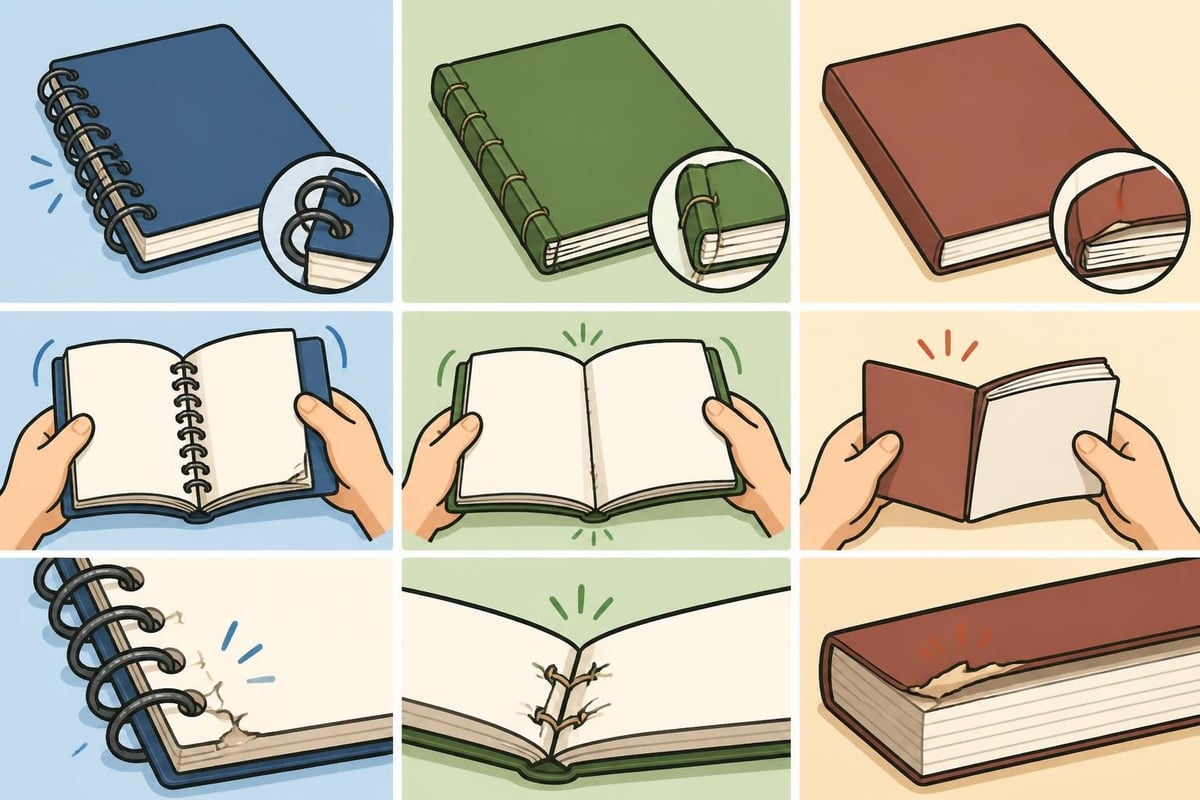
The binding plays a crucial role in how tears form. A spiral-bound planner like the A5 spiral planner 2027 romantic has different weak points than a sewn binding. With spiral bindings tears often occur around the holes, while with sewn bindings the spine is affected first.
Usage patterns that cause damage
Some habits seem harmless but cause structural damage over time. Folding pages creates break points in the paper. Each time you fully fold a page, you weaken the fibers at that spot. After dozens of times a tear almost happens by itself.
The transport of your planner deserves extra care. In an unprotected bag your planner is constantly exposed to pressure from other items. A laptop, water bottle, or umbrella can press against the corners and cause microscopic tears that slowly spread.
Habit
Risk of tears
Preventive measure
Folding pages back
High
Use a bookmark
Loose storage in bag
Average to high
Use a protective cover
Writing with heavy pressure
Average
Choose thicker paper
Use in humidity
High
Keep dry
The anatomy of a tear
When you discover a tear in your planner, it’s useful to understand how it formed. Tears often follow the weakest points in the material. For paper, those are the fibers themselves. Paper is made of cellulose fibers that lie in a certain direction, and a tear usually follows that grain.
Early warning signs
Before a full tear occurs, your planner often gives subtle signals. Recognizing these signs can help prevent more serious damage:
Slight discoloration at the page edges
Small creases that won’t flatten out
Soft spots where the paper feels thinner
Crackling noises when flipping certain pages
An A6 spiral planner has different vulnerable areas than larger formats because of its compact size. The smaller pages have less surface area to distribute forces, so tears can develop faster at the binding.
From small tear to big problem
What begins as a tear of a few millimeters can develop into a serious problem within weeks. The mechanism is simple: each time you open the planner, tensile force acts on the tear. That force causes the tear to lengthen until an entire page eventually comes loose.
The speed at which this happens depends on several factors: how often you use the planner, how careful you are with it, and whether the tear is in a high-stress spot. A tear in the spine of your planner grows much faster than one in the top corner of a page.
Prevention starts at purchase
The story of a tear-free planner starts in the store, long before you write your first appointment. When choosing a new planner for 2027, there are concrete features to look for that reduce the likelihood of tears.
Quality features to watch for
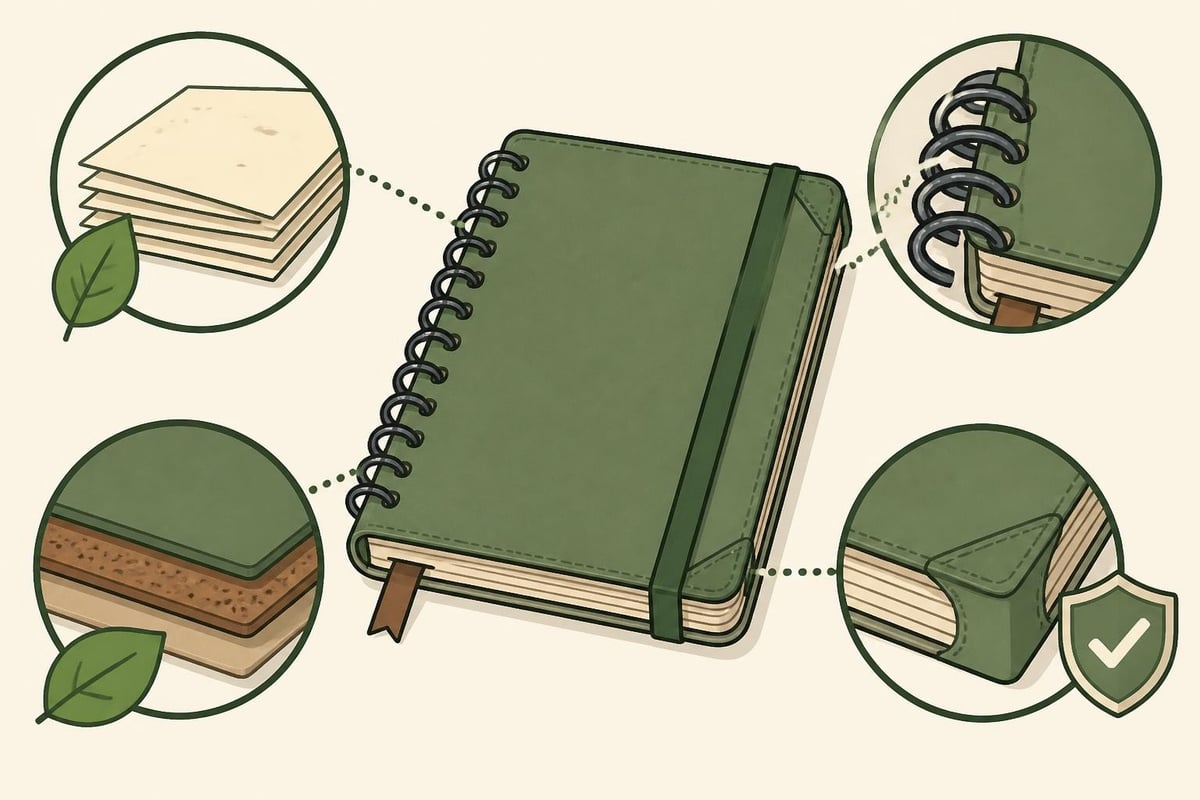
When selecting a planner, paper weight is a crucial factor. A planner with 100 gram paper or more provides significantly better resistance to tearing than budget options with 80 gram paper. That extra weight makes the paper stronger and less susceptible to moisture and mechanical stress.
The cover deserves special attention. A hard cover not only protects the contents but also prevents external pressure from being applied directly to the pages. The omslag familieplanner 2027 demonstrates how a sturdy cover can extend the life of your planner.
Check the binding by gently pulling on a page
Check the reinforcement at the perforations or spiral
Test the flexibility of the cover without forcing it
Feel the paper between your fingers for thickness
Reinforcements and protective elements
Modern planners often come with smart reinforcements that prevent tears. Reinforced corners, for example, distribute impact when dropped or bumped over a larger area. Some high-quality planners even have reinforced perforations with plastic rings that prevent pages from tearing at the holes.
An elastic band or magnetic clasp may seem like a luxury detail, but it keeps your planner closed during transport. This prevents corners from folding or pages from getting caught between other items in your bag.
Repairing existing tears
If you still encounter a tear despite all precautions, not all is lost. Depending on the severity and location of the damage, there are various repair strategies that can keep your planner usable for months or even the whole year.
Temporary solutions for acute damage
For small tears at the edge of pages, transparent tape offers a quick fix. Apply the tape to both sides of the paper for maximum strength. Note: do not use cheap adhesive tape that will yellow or peel over time. Invest in archival-quality tape designed specifically for paper.
Document repair tape is a more professional option used by libraries and archives. This tape is thinner and more flexible than regular tape, allowing pages to still be turned easily. It works particularly well for a tear in the spine of your planner.
First clean the tear of dust and dirt
Carefully align both sides of the tear
Apply the tape tight but not too tight
Carefully smooth out air bubbles
Professional repairs and when they're worthwhile
Some tears deserve professional attention, especially when it concerns an expensive or emotionally valuable planner. A bookbinder can rebind pages, replace damaged spines, or even firmly reattach loose pages. This is of course an investment, but for a planner you use all year it can be worth it.
Ask yourself whether the cost of repair is proportionate to the value of the planner. For a simple planner, replacement is often more logical, but for a beloved copy with months of notes and reminders, repair may be preferable.
Daily care for longer lifespan
The story of a tear-free planner is a story of small, daily choices. Just as a car needs regular maintenance, your planner also requires consistent attention. This care doesn't have to be time-consuming, but the impact on lifespan is significant.
Optimal storage and transport
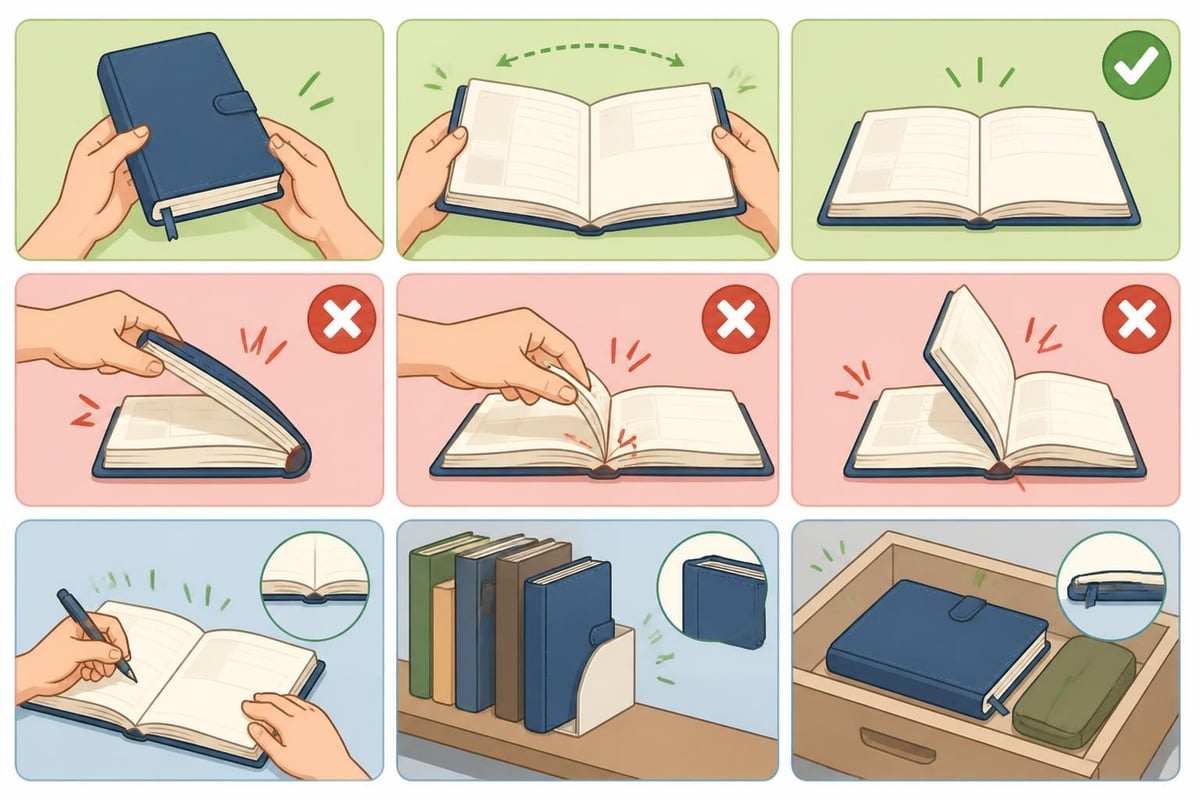
Where and how you store your planner when you're not using it largely determines how long it will last. On your desk, a horizontal position is ideal. This prevents the pages from sagging under gravity, which creates weak spots where tears can form.
For transport, a dedicated planner sleeve or a fixed compartment in your bag is essential. Choose a pocket where the planner can lie flat without being bent. Avoid compartments where other items can press against it.
Storage method
Impact on lifespan
Tear risk
Flat on desk
Excellent
Very low
Upright on a bookend
Good
Low
Loose in bag
Moderate
High
Under a stack of books
Poor
Very high
Proper opening and use
The way you open and use your planner directly affects the development of tears. Never open your planner more than 180 degrees. Spiral-bound planners can often be opened further, but glued spines will develop break lines in the binding.
When you write, don't press your hand too hard on the pages. Excessive pressure can stretch and thin the paper, making it more prone to tearing. Use a pen that doesn't require a lot of pressure, such as a rollerball or gel pen.
Seasonal influences and environmental factors
The year 2027 brings, like every year, different seasons each with their own challenges for your planner. What works in the dry winter can cause problems in the humid autumn. Understanding these seasonal influences helps you adjust your care routine.
Winter and dry air
The heating period between November and March brings extremely dry air into our homes and offices. This dryness draws moisture out of the paper, making it brittle and prone to fracture. Tears occur more easily during this period, especially at the edges of frequently used pages.
A humidity between 40 and 60 percent is ideal for paper. Consider a small humidifier near your workspace if you notice pages feeling very dry. Also watch for static electricity; this is a sign the air is too dry.
Spring and summer humidity
The warmer months bring their own challenges. High humidity can make paper swell and weaken. A planner you take to the beach or a terrace is at extra risk. Condensation from a cold drink in your bag can be enough to damage pages.
Store your planner in a closed drawer or cabinet on humid days. If your planner does get damp, let it dry open at room temperature. Never use a hairdryer or radiator, because sudden heat can cause the paper to shrink and tear.
Specific challenges per planner type
Not all planners are created equal, and each type has its own weak points where tears are most likely to occur. Recognizing these type-specific vulnerabilities helps you take targeted preventive measures.
Spiral-bound planners
Spiral-bound planners offer the advantage that they can lie completely flat, but the perforations are their Achilles' heel. The holes the coil runs through are natural weak points. With heavy use pages can tear there, especially if you often fold the planner all the way back.
Reinforce vulnerable pages preventively with reinforcement rings like the ones used for ring binders. Stick these over the existing perforations on both sides of the paper. This takes some time with a new planner, but prevents months of frustration.
Sewn and glued bindings
With glued spines the stress concentrates in the binding itself. The first and last few pages take the most strain and are the first to develop tears. Sewn bindings are more robust, but even there the thread can weaken with heavy use.
Voor dit type agenda's geldt: forceer nooit een volledig platte opening. Accepteer dat de agenda een lichte curve houdt en gebruik eventueel een presse-papier om pagina's plat te houden tijdens het schrijven.
De psychologie van zorgvuldig gebruik
Er is een interessant verschijnsel bij agendagebruikers: hoe meer je investeert in een mooie, hoogwaardige planner, hoe zorgvuldiger je ermee omgaat. Dit is niet alleen een kwestie van financiële waarde, maar ook van emotionele binding. Een agenda die je mooi vindt en waar je geld aan hebt uitgegeven, behandel je automatisch met meer respect.
Mindful gebruik als preventie
Het ontwikkelen van een bewuste relatie met je agenda helpt bij het voorkomen van scheurs. Neem de tijd wanneer je hem pakt of opent. Haast is de grootste vijand van papier. Die snelle grijpbeweging uit je tas, het geforceerd openslaan tijdens een hectische vergadering, dat zijn de momenten waarop schade ontstaat.
Maak van het openen van je agenda een klein ritueel. Leg hem eerst neer, open hem dan rustig, en ga pas schrijven als hij stabiel ligt. Deze extra seconden voorkomen niet alleen fysieke schade, maar helpen je ook om bewuster bij je planning te zijn.
Rituelen die beschermen
Veel succesvolle agendagebruikers hebben onbewust beschermende rituelen ontwikkeld. Het wekelijkse doorbladeren van de komende week, het maandelijkse doorlezen van doelen, het gebruik van een vaste plek op het bureau, al deze gewoontes zorgen voor consequente, zorgvuldige behandeling die scheurs voorkomt.
Wanneer vervangen de beste optie is
Soms is eerlijkheid het beste beleid. Een agenda met uitgebreide scheurschade, vooral rond de binding, heeft zijn beste tijd gehad. Het vasthouden aan een beschadigde planner uit sentimentaliteit of zuinigheid kan uiteindelijk meer frustratie opleveren dan het waard is.
Signalen dat vervanging nodig is
Some damage is irreparable or not worth fixing. Pages that come completely loose from the binding rarely stay reliable. A broken spine on a glued binding makes the planner impossible to use comfortably. Multiple tears per page indicate overall paper fatigue.
If you find yourself avoiding certain pages because they're too damaged, or flipping through your planner has become a frustrating experience instead of a helpful tool, it's time to replace it. Your planner should support your organization, not hinder it.
Bij Kalenderwinkel.nl vind je altijd een breed assortiment agenda's voor het nieuwe jaar. Of je nu een vervanger nodig hebt voor een beschadigde planner of proactief investeert in kwaliteit voor 2027, er is voor elk gebruik en elke voorkeur een geschikte optie beschikbaar.
De overstap naar een nieuwe agenda
Het overzetten van belangrijke informatie naar een nieuwe agenda vraagt planning. Begin ruim op tijd, bij voorkeur enkele weken voor je oude planner echt onbruikbaar wordt. Noteer eerst welke informatie permanent van waarde is en moet worden overgenomen: contactgegevens, wachtwoorden, belangrijke datums.
Voor lopende projecten en doelen kun je foto's maken van relevante pagina's voordat je de oude agenda opbergt. Digitale back-ups bieden zekerheid zonder dat je alles handmatig hoeft over te schrijven. Sommige informatie verdient misschien een betere plek dan in een agenda, zoals een apart adresboekje voor contacten.
De toekomst van scheurbestendige agenda's
De agenda-industrie ontwikkelt zich constant, en materiaalinnovaties spelen een grote rol in het verhogen van duurzaamheid. In 2027 zien we steeds meer planners met synthetische papierversterkingen, dunne lagen kunststof die tussen papierlagen worden verwerkt zonder het schrijfcomfort aan te tasten.
Innovaties in materiaal en binding
Nieuwe bindtechnieken combineren het beste van verschillende methoden. Hybride bindingen gebruiken bijvoorbeeld lijm én draad voor extra stevigheid. Sommige premium agenda's hebben nu gelaagde ruggen die flexibiliteit combineren met structurele kracht, waardoor de kans op scheurs drastisch afneemt.
Advances are also visible in paper production. Long-fiber paper types offer better tear resistance because the fibers grip each other over a larger surface. Special coatings make paper water-repellent without feeling plasticky or becoming hard to write on.
Preventing and repairing tears in your planner is about awareness, careful choices, and daily attention. By investing in quality, handling your planner correctly, and repairing small damages promptly, you can keep your organizational tool in top condition year-round. At Kalenderwinkel.nl you’ll find high-quality planners and calendars for 2027 that are built to last a full year. With convenient payment options and reliable shipping via PostNL, DHL, or UPS, you’ll quickly have a planner that supports your scheduling without worries about tears.