What kind of dog is a Havanese? Read about size, temperament, coat care, exercise and costs, with practical tips for anyone bringing one into their home.
The Havanese is a small, cheerful companion dog with a long, soft coat, a withers height of about 23 to 27 centimetres and a temperament centered on companionship. Those looking for a dog that likes to stay close to the family, is intelligent and has little hunting drive often choose this breed. In this article you can read what a Havanese looks like, what kind of character he has and how much care a coat like his requires.
What is a Havanese?
A Havanese is a small dog from the Bichon family, bred to be a loyal companion. The breed originally comes from Cuba and takes its name from Havana. The Eerste Gezelschapshonden Club Nederland describes him as a small companion dog with a characteristic build and coat, and that's exactly what he's made for: just being there.
Think of a family discussing the week's plans at the kitchen table on a Sunday morning. The Havanese is then not in his bed in the hallway, but under the chair of the person closest to the coffee. That image says more about the breed than any technical description.
How big does a Havanese get?
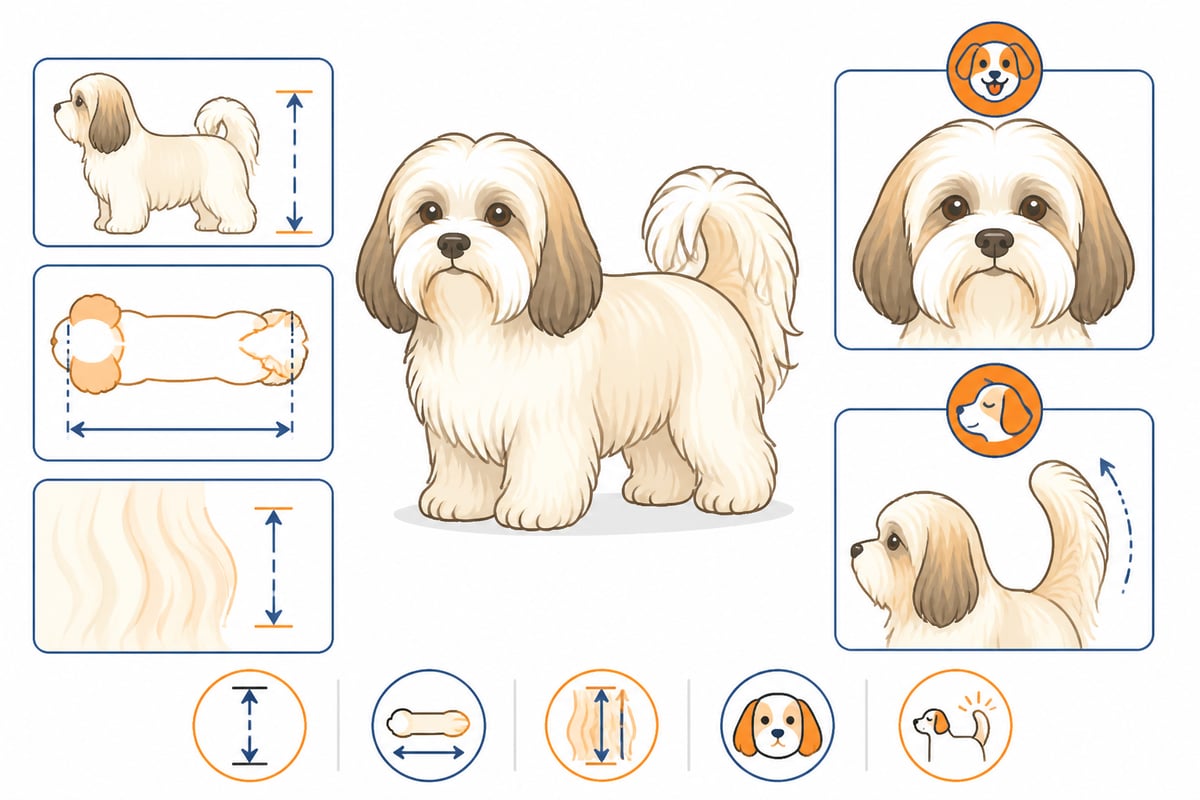
An adult Havanese is, according to the breed standard, 23 to 27 centimetres tall at the shoulder. The breed standard of the EGCN allows a tolerance of 21 to 29 centimetres, so a slightly smaller or larger dog still falls within the breed.
The build is striking. The ratio between body length and withers height is, according to the same breed standard, 4:3. A Havanese is therefore just a little longer than it is tall, which gives it that typical, effortless gait. The breed standard does not give a fixed norm for weight.
Appearance: from silky coat to colour variation
The coat is the calling card of the Havanese. The adult outer coat is, according to the breed standard, 12 to 18 centimetres long and soft, flat or wavy. Curly locks also occur. There is hardly any undercoat, which makes the coat feel light and airy.
Characteristic of the appearance are:
Drooping ears with a soft, hairy edge
Dark, expressive eyes that give him an alert, friendly look
A high-carried tail that curls over the back and is covered with long hair
Many colors: from white and cream to black, brown and spotted combinations
Every Havanese looks a little different. That’s part of the fun of having one: your dog is never completely mistaken for the neighbor’s.
Character: a shadow with a playful heart
The Havanese's character is friendly, curious and strongly focused on his owner. He is smart, learns quickly and likes variety. Anyone who shows him something new will notice that he often understands what's asked after only a few repetitions.
There is also a clown in him. Many owners tell of a dog who invents tricks to get attention, like carrying a ball around the coffee table or flopping onto his back as soon as guests arrive. That theatrical talent suits a breed that has participated in family life for centuries.
Staying home alone
This is the biggest point of attention. Because the Havanese is so people-oriented, he doesn't naturally enjoy being alone. Anyone who works away from home a lot or has a busy social life should build up alone time gradually: first a few minutes, then a little longer each time. A dog that never learns this may start whining or barking.
Watchful, but not a yappy dog
A Havanese will let you know when someone is at the door. That fits his alert nature. With consistent training it stays a short warning rather than a barking concert. For those who find that a charming detail, there is even a Havanese guard sign for the gate or front door, as a wink to that little watcher.
Suitable for seniors and families?
For many people the Havanese is a good choice, including seniors who want a small, affectionate companion. A dog that follows its owner, needs little space and doesn't demand extreme exercise fits well in an apartment or a quiet home. The condition is that the owner can continue to care for the long coat and is willing to go outside daily.
For families with children: a Havanese is friendly and playful, but small and delicate. Young children need to learn that he is not a cuddly toy to carry around. With that agreement he's a sociable family member who wants to be involved in everything.
Exercise and mental stimulation
A Havanese needs daily exercise but not peak athletic performance. The LICG recommends taking a dog outside at least four times a day, with at least two longer walks. For a small dog like the Havanese this usually means short laps plus one or two longer outings.
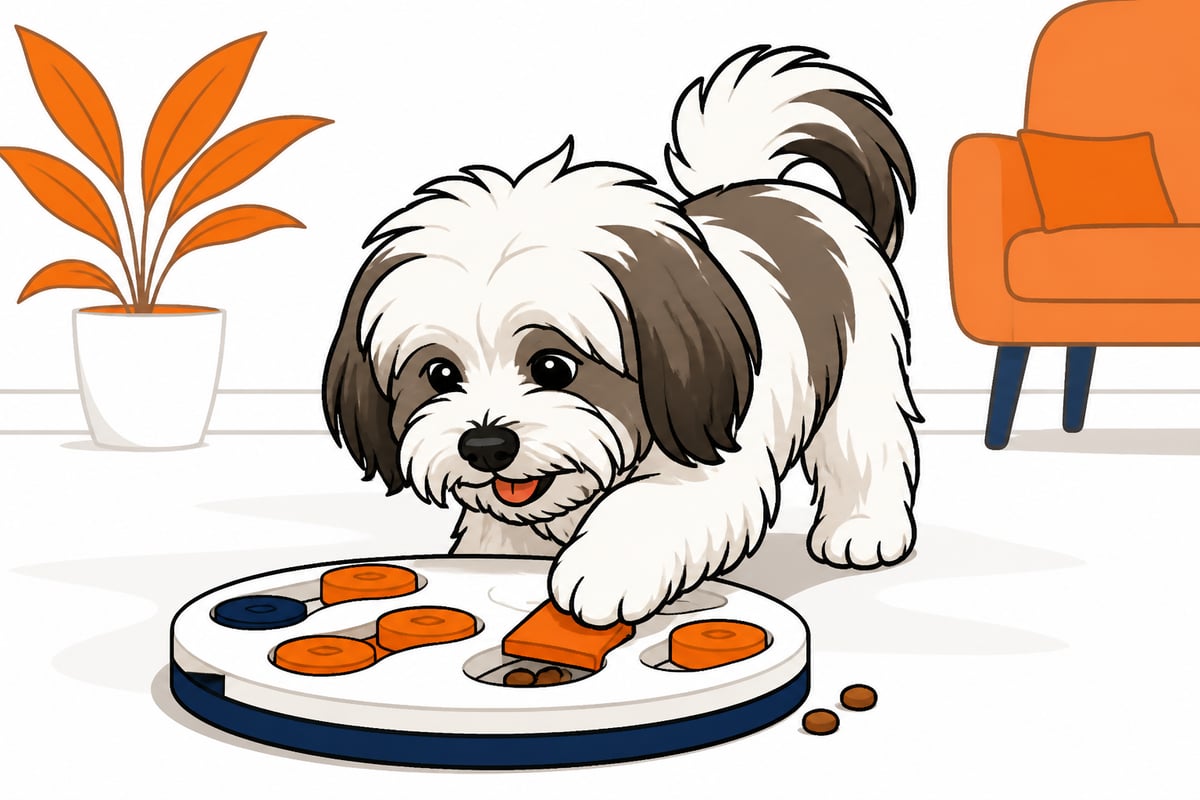
Besides exercise, his smart head needs challenge. Useful ways to keep him occupied:
Teach him simple tricks, like giving a paw or spinning in a circle
Hide small treats around the living room and let him search
Provide a snuffle mat or puzzle toys on rainy days
Vary walking routes so there are always new smells to discover
A dog that’s bored will make up its own entertainment, and that’s rarely what you’d choose.
Coat care: the daily routine
The long, silky coat of the Havanese requires regular brushing care. According to the LICG, long-haired breeds need more coat care than short-haired breeds, and the Havanese is no exception. Without brushing, mats form quickly, especially behind the ears, under the armpits and around the hind legs.
A practical routine looks like this:
Brush daily or every other day with a comb and a slicker, hair by hair and down to the skin
Check eyes and ears for dirt or irritation
Occasional bathing with a mild dog shampoo, followed by thorough drying
Regular trimming around the eyes, feet and rear when the coat gets in the way
Many owners keep the coat shorter in summer or opt for a shorter puppy trim. That saves time and prevents mats, although a visit to the groomer does cost money.
A set time each week
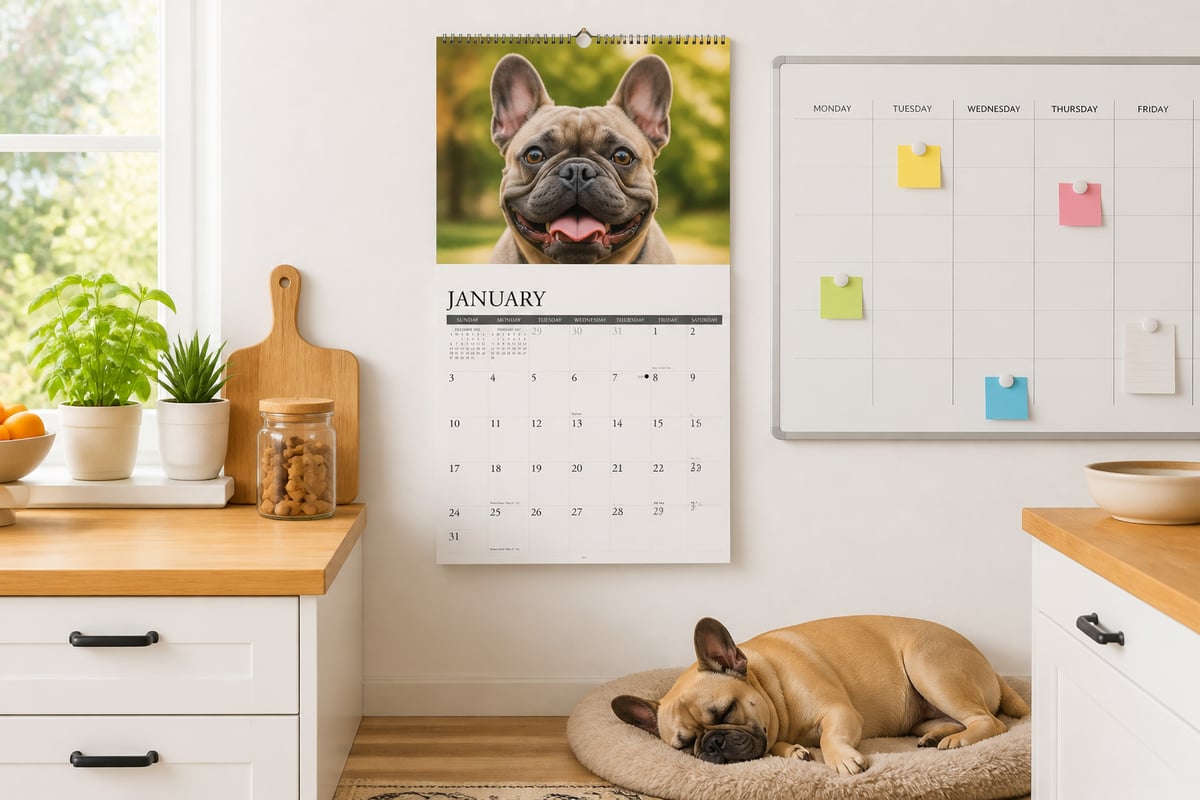
If you make grooming a habit, it becomes a calming moment instead of a chore. For example, schedule it on a fixed evening. Some people keep a calendar in the kitchen with grooming day marked among birthdays and appointments. That way you never forget.
Nutrition and health
A Havanese has a small stomach, but what he eats needs to be right. Choose a dog food that matches his age, size and activity level, and watch the portions. Small dogs gain weight faster than you think, and extra weight strains the joints.
Small breeds can have knee problems such as patellar luxation. A good breeder has parents screened and is open about health information. Brushing teeth daily or a chew stick can help limit tartar.
An annual check-up at the vet is part of life with a dog. A small dog can have a long lifespan, so you will spend a long time with them.
How much does a Havanese cost?
A Havanese is not a cheap hobby, and it’s good to take that into account beforehand. The LICG lists average one-time costs of €2,025 for a pedigree puppy and €710 in recurring costs per year for 2025. These are general dog figures, not amounts specific to the Havanese, but they give a good idea of the order of magnitude.
For a long-haired breed, grooming costs and brushing supplies are often added. So budget a little more rather than too little. Anyone seriously considering getting a puppy can find practical information about choosing, socialization and microchipping on the LICG page about looking for a dog. Only buy from a breeder who shows the parent dogs, shares health information and lets the puppies grow up in a home.
Planning a year with your Havanese
A dog brings rhythm to the household, and you can put that rhythm on paper. Many owners keep a calendar for vaccinations, grooming appointments, deworming and holidays. That way everything is in one place and you can see at a glance when the next appointment is.
For those who also want the Havanese on the wall, there is the Havanese calendar 2027. Every month a new photo of this fluffy breed, with space to write your own appointments. It’s also a nice gift for someone who has just brought a Havanese into their home.
Do you prefer other breeds? At Kalenderwinkel.nl you can also find calendars of dogs like the Miniature Schnauzer and the Basset Hound. If you’d rather have a small dog with character on the wall, you can also look at the French Bulldog.
A calendar with bulldogs brings a different atmosphere to the room than a fluffy Havanese. The French Bulldog Calendar 2027 celebrates the character, charm and bulldog attitude of this breed.
Practical tips for the first months
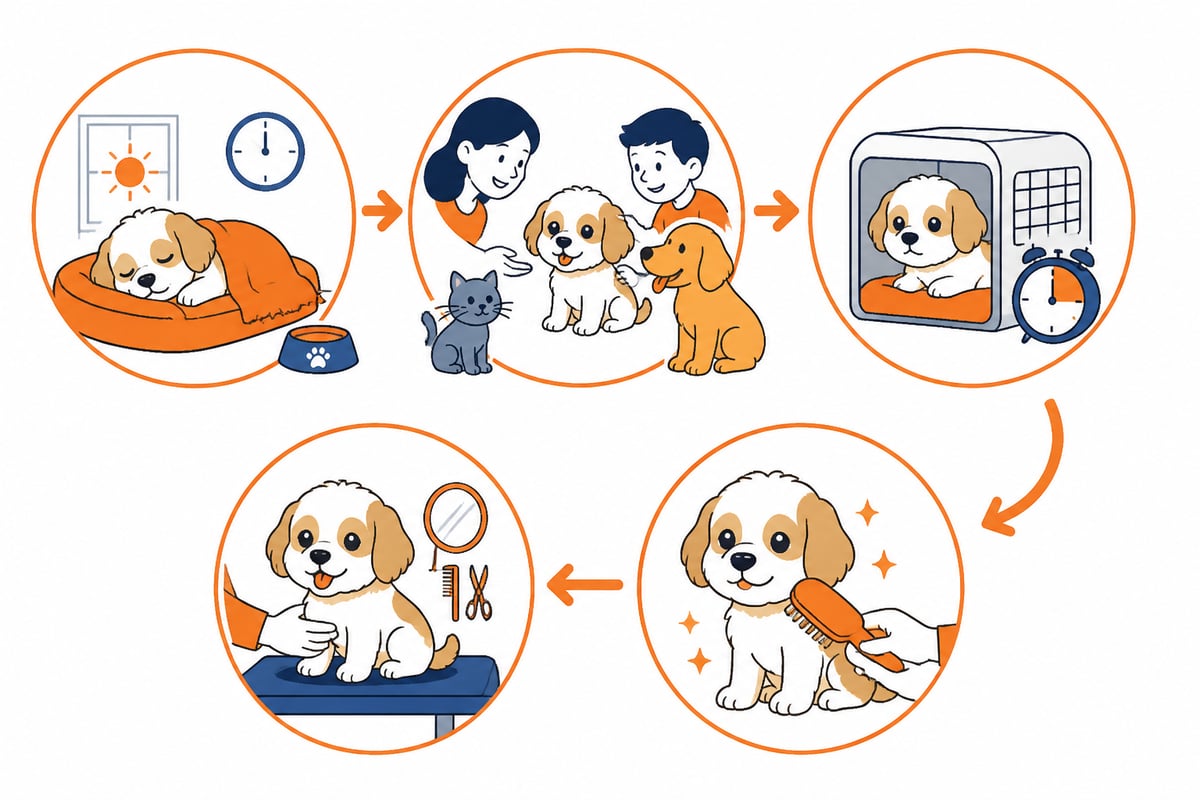
The first weeks with a Havanese puppy lay the foundation for years. Take the time for a calm start and build everything up step by step.
Give the puppy a fixed sleeping place, a set feeding time and a predictable day. Let him calmly get used to sounds, other dogs and visitors so he grows up self-confident. Start early with short brushing sessions and with touching the paws, ears and mouth. A dog accustomed to that will later object far less at the groomer or vet.
Be consistent with the rules. A Havanese is smart enough to notice what he can get with a pair of big eyes. Those who are clear from the start will later have a dog that listens kindly instead of playing the boss.
FAQ
Is a Havanese a good dog for beginners?
Yes, he is often a good choice for beginners because he is eager to learn, friendly and small in size. You do need to be willing to spend time on coat care and on building up alone time.
Does a Havanese shed a lot?
A Havanese sheds little hair in the house because he has almost no undercoat. That does not mean the coat is maintenance-free: without regular brushing mats form that can become painful.
Can a Havanese stay home alone for long?
Not without preparation. The breed forms a strong bond with its owner and finds being alone for long periods difficult. With a calm, gradual approach an adult dog will usually manage alone for a few hours, but a full workday every day is not ideal.
Put your first appointments for the coming months on paper today, from the vet to the groomer, so your Havanese lacks nothing. With a nice wall calendar you’ll keep that overview effortlessly, and with the French Bulldog Calendar 2027 or the Havanese edition you’ll also have something nice to look at. If you order on a weekday, your order will be shipped as soon as possible. Discover the calendars and planners for the new year at Kalenderwinkel.nl and view the full range.