Discover everything about the Boston Terrier: a charming, social dog with unique traits. Read about temperament, health, and care.
The Boston Terrier is known as "The American Gentleman" and for good reason. With their distinctive tuxedo-like coat and friendly character, these compact dogs have won a special place in the hearts of dog lovers worldwide. Whether you're a busy city dweller or a family with children, the Boston Terrier adapts effortlessly to different living situations. In this article I take you through the story of this remarkable dog, from their fascinating history to practical tips for their daily care.
The origin of an American icon
The story of the Boston Terrier begins in the late 19th century in Boston, Massachusetts. This dog originated from a cross between an English Bulldog and the now-extinct White English Terrier.
From fighting ring to parlor
In 1870 Robert C. Hooper purchased a dog named Judge, later known as "Hooper's Judge". This dog is considered the progenitor of all modern Boston Terriers. Judge was bred with a small white female named Burnett's Gyp, and their offspring formed the foundation for the breed as we know it today.
Important milestones in the breed's development:
1891: Founding of the Boston Terrier Club of America
1893: Official recognition by the American Kennel Club
1979: Designated the official state dog of Massachusetts
Present: One of the most popular companion dogs in America
The American Kennel Club classifies the Boston Terrier in the non-sporting group, highlighting their versatility as a companion dog.
Distinctive physical features
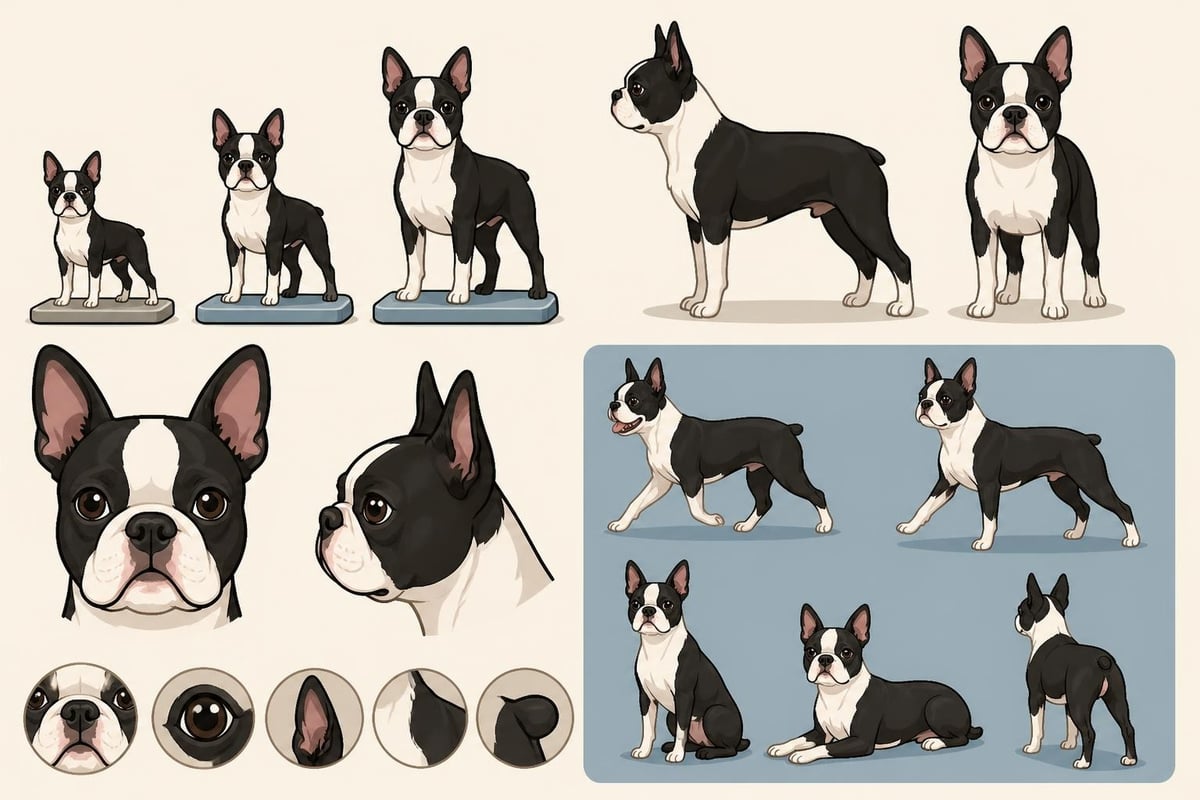
The Boston Terrier has an unmistakable appearance that immediately draws attention. Their compact, muscular build combines strength with elegance.
Their large, round eyes give the Boston Terrier an intelligent and friendly expression. The ears are erect and fairly small, contributing to their alert appearance. Most notable is their square head with a short muzzle, a characteristic of brachycephalic breeds.
Character and temperament
The Boston Terrier is known for its exceptionally friendly and social nature. This makes them excellent family dogs.
Personality traits
Positive traits:
Playful and energetic without being overly active
Intelligent and eager to learn
Good with children and other pets
Adaptability to different living environments
Minimal tendency to bark
It's fascinating to see how a Boston terrier interacts with family members. They are often sensitive to their owners' moods and adjust their behavior accordingly. After a long day at work, your Boston terrier knows exactly when you need quiet companionship or playful distraction.
Social aspects
The Boston terrier is not a dog that enjoys being alone. They form strong bonds with their family and can develop separation anxiety if left alone too long. For busy people who are frequently away from home, this requires extra attention and possibly professional care.
Health and common conditions
As with any breed, the Boston terrier has specific health issues future owners should be aware of.
Breathing problems due to brachycephaly
The short muzzle of the Boston terrier is not just a cosmetic feature. Research published in PLOS ONE shows that Boston terriers are prone to brachycephalic obstructive airway syndrome (BOAS).
Symptoms to watch for:
Loud snoring
Difficulty breathing after exertion
Decreased exercise tolerance
Excessive drooling
Vomiting or retching
VCA Animal Hospitals emphasizes the importance of caution in warm weather. Boston terriers can regulate their body temperature less efficiently than dogs with longer muzzles.
Eye problems
Due to their prominent eyes, Boston terriers are susceptible to various eye conditions:
Cataract - Cloudy vision due to lens opacity
Cherry eye - Prolapse of the tear gland
Cornea-ulcers - Scrapes on the cornea
Glaucoma - Increased eye pressure
Regular veterinary check-ups are essential. My neighbor has a Boston terrier named Max who developed cataracts at age five. Thanks to early detection, the condition could be treated effectively.
Other common conditions
Condition
Description
Prevention/Management
Patellar luxation
Kneecap dislocates
Healthy weight, avoid excessive jumping
Skin allergies
Itching, redness, infections
Good nutrition, regular grooming
Deaf
Congenital hearing loss
Genetic screening for breeders
Megaesophagus
Enlarged esophagus
Customized diet, upright feeding
PetMD provides comprehensive information about these conditions and their treatment. For hereditary conditions, it's important to work with responsible breeders who apply genetic screening.
Nutrition and weight management
A healthy weight is crucial for the Boston terrier, especially because of their breathing problems. Overweight worsens BOAS and strains the joints.
Feeding guidelines
Daily nutritional needs:
Adult dog: 1-1.5 cups of high-quality dry food
Divided into 2 meals
Adjusted to activity level and age
Watch treat calorie intake. Boston terriers are masters at begging with their big, sad eyes. Stay consistent with portions and choose healthy snacks like carrot pieces or small apple slices.
Hydration
Because of their short snout, Boston terriers sometimes have difficulty drinking efficiently. Make sure to:
Always have fresh water available
Clean water bowls
Extra water after activity
Ice cubes on hot days as refreshment
Exercise and mental stimulation
Although Boston terriers are not marathon runners, they do need daily exercise for their physical and mental well-being.
Ideal exercise schedule
Recommended activities:
Two walks of 20-30 minutes per day
Short playtime in the yard or park
Indoor games during extreme weather
Swimming (under supervision) for joint-friendly exercise
Avoid intense exertion on hot or humid days. Consistency of exercise is more important than intensity. A regular routine also helps organize your day, similar to planning with a Norway calendar for the year ahead.
Mental challenge
Boston terriers are intelligent and get bored quickly. Mental stimulation prevents destructive behavior:
Puzzle toys with treats
Hide-and-seek with toys or family
Basic obedience training and new tricks
Social interaction with other dogs
Snuffle mats for natural digging behavior
Training and upbringing
The Boston Terrier is generally easy to train thanks to their intelligence and desire to please.
Training tips for success
Effective approaches:
Positive reinforcement - Rewards work better than punishment
Short sessions - 10-15 minutes, several times a day
Consistency - All family members use the same commands
Start early - Socialization from puppyhood is crucial
Patience - Boston terriers can be stubborn
House training requires special attention. Their small bladder means frequent toilet breaks, especially for puppies. Take your pup outside every two hours and immediately after eating, drinking, playing, or sleeping.
Socialization
Early socialization is essential for a well-balanced Boston Terrier. Expose your puppy to:
One of the appealing aspects of the Boston Terrier is their relatively simple grooming needs.
Coat care
The short, smooth coat requires minimal attention:
Weekly schedule:
Brush with a soft brush or glove (2-3 times per week)
Check for skin irritations or parasites
Clean facial folds with a damp cloth
Trim nails as needed
Boston Terriers shed moderately year-round, with slight seasonal increases in spring and fall. A quick five-minute brush keeps loose hair under control.
Dental care
Dental problems are common in Boston Terriers. Prevention starts at home:
Daily tooth brushing with dog toothpaste
Dental chews and toys
Annual professional dental cleanings
Regular check for gum issues
I remember how Emma, a friend's Boston Terrier, was saved from painful tooth extractions by consistent brushing from a young age.
Bathing and grooming
Bathing is only occasionally necessary:
Every 2-3 months or when soiled
Use mild, dog-friendly shampoo
Dry thoroughly, especially between skin folds
Mind the temperature - Boston Terriers are sensitive to cold
Living environment and conditions
The Boston Terrier is a very adaptable dog that can thrive in different environments.
Urban versus rural
Benefits for city dwellers:
Compact size suitable for apartments
Moderate energy level
Minimal barking
No large yard needed
They adapt easily to city life as long as they get daily walks and attention. A Boston Terrier is just as happy in a studio as in a house with a yard, provided their social and physical needs are met.
Climate considerations
Weather conditions
Impact
Adjustments
Heat (>25°C)
High risk of overheating
Indoor stay, air conditioning, limited movement
Cold (<5°C)
Quickly becomes chilled
Dog coat, short outdoor time
Humidity
Worsens breathing problems
Extra caution, indoor activities
Normal
Optimal
Regular routine
In the Netherlands the mild summers are generally manageable, but during heatwaves your Boston Terrier will need extra care. Plan walks in the early morning or late evening.
The Boston Terrier and family life
These dogs are excellent family companions who are wonderful with children.
Interaction with children
Boston Terriers are patient and playful with children, but supervision remains important:
Teach children respectful behavior toward the dog
No rough play that could injure the dog
Respect the dog's rest time
Involve children in care and training
The bond between a Boston Terrier and a child can be heartwarming. They often become protective but never aggressive companions.
Living with other pets
With good socialization, Boston Terriers live harmoniously with:
Other dogs (small and large)
Cats (especially with early introduction)
Small pets (with caution)
Their hunting drive is limited compared with many terriers, which makes living with cats easier.
Choosing a lifelong partner
The decision to bring a Boston Terrier into your home requires careful consideration.
Checklist for prospective owners
Are you ready for a Boston Terrier?
✓ Time for daily walks and play
✓ Budget for food, grooming, and veterinary care
✓ Living situation that allows dogs
✓ Air conditioning options for warm months
✓ Willingness to commit for life (11-13 years)
✓ Understanding of breed-specific health risks
The Royal Kennel Club provides internationally recognized guidelines for responsible ownership.
Choosing a responsible breeder
Look for breeders who:
Perform genetic health testing
Raise puppies in a home environment
Keep puppies with their mother for at least 8 weeks
Be transparent about parents' health history
Provide lifelong support
Avoid puppy mills and online ads without visiting the breeder's premises. A good breeder will also ask you questions about your suitability as an owner.
Planning life with your Boston Terrier
Just as you plan the year with an agenda, a structured routine helps your Boston Terrier thrive.
Daily routine
Sample schedule:
07:00 - Morning walk and breakfast
12:00 - Short potty break and play
18:00 - Evening walk and dinner
21:00 - Last potty break before night
Consistency creates calm and prevents behavioral problems. Just as you note important dates in a birthday calendar, it can help to keep track of your dog care schedule.
Annual planning
Important appointments:
Annual health check and vaccinations
Parasite prevention (worms, fleas, ticks)
Professional dental cleanings
Trim nails as needed
Keeping medical records in an organized system prevents important treatments from being missed. A clear schedule makes the difference between reactive and proactive health management.
Costs of ownership
Honesty about the financial aspects helps prospective owners have realistic expectations.
Initial costs
Item
Estimated costs (€)
Purchasing a puppy
1.200 - 2.500
First veterinary check-up
50 - 100
Vaccinations and microchipping
100 - 150
Basic supplies
200 - 400
Training/socialization classes
100 - 300
Ongoing annual costs
Nutrition: €300 - €600
Preventive healthcare: €200 - €400
Insurance: €200 - €500
Grooming products: €100 - €200
Toys and accessories: €50 - €150
Unexpected medical costs can be significant. Pet health insurance provides financial security in emergencies.
Boston Terriers in the modern world
The Boston Terrier remains a popular choice in 2026, thanks in part to their adaptability to modern life.
Social media and community
Boston Terrier owners form a close-knit community worldwide. Online forums, Instagram accounts, and local meetups offer:
Advice from experienced owners
Emotional support during challenges
Playdates for your dog
Shared experiences and tips
These communities are invaluable, especially for new owners navigating the first months.
Future breeding practices
There is growing attention to ethical breeding practices that prioritize health over appearance. Scientific research on brachycephaly is driving changes in breed standards, focusing on:
Longer muzzles for better breathing
Wider nostrils
Genetic diversity
Temperament selection over extreme physical traits
The Boston Terrier is more than a pet; it is a loyal companion that enriches your life with joy, humor, and unconditional love. Their compact size, charming personality, and adaptability make them ideal for a variety of lifestyles. Whether you plan for the year ahead or organize your daily routine, structure and planning are important for both you and your faithful four-legged friend. At Kalenderwinkel.nl you’ll find a wide range of calendars and planners for 2027 to keep your life organized, including all those important vet appointments and special moments with your Boston Terrier. With convenient payment options and reliable shipping via PostNL, DHL, or UPS, you can plan the new year with ease.