Discover the story of purebred dogs: from centuries-old breeding programs to modern DNA tests. Learn about health, heredity, and responsible choosing.
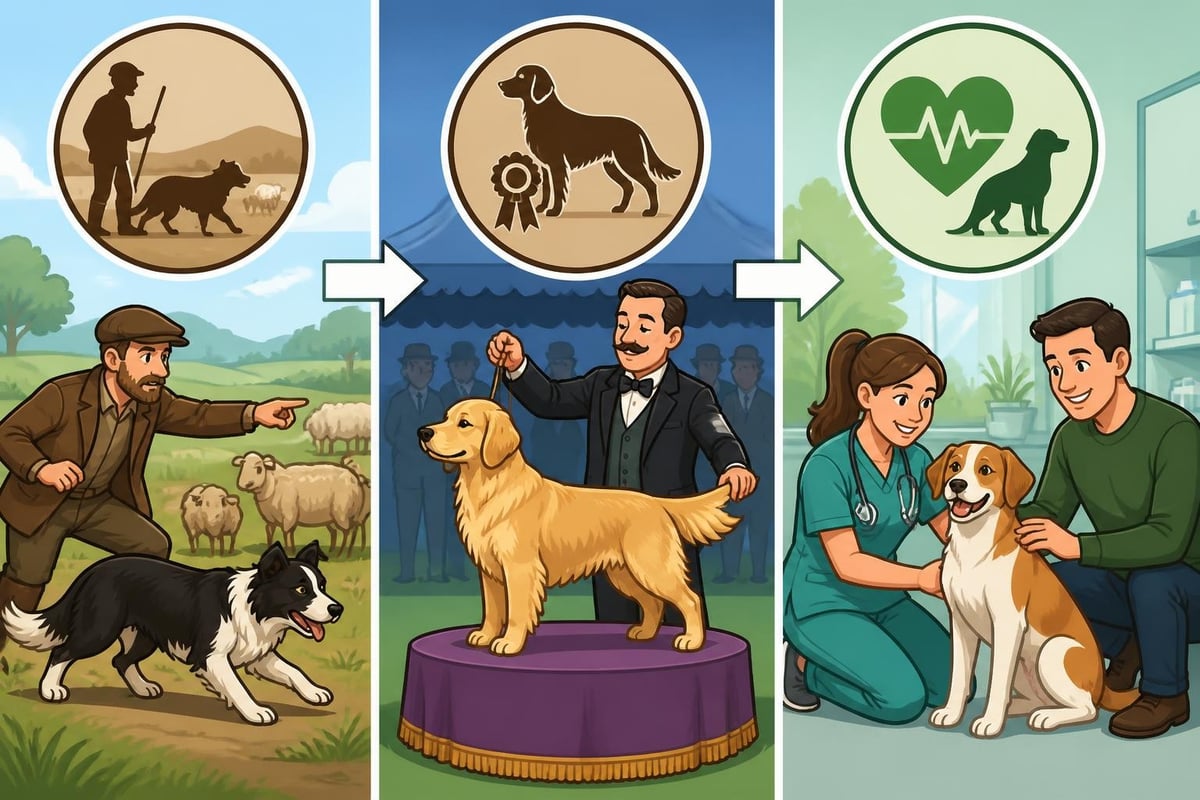
There was a time when you could tell a dog's job by looking at it. The shepherd had sharp, watchful eyes and a body built to run for miles. The hunting dog had powerful legs and a nose that picked up every scent. This is how breeds emerged: not by accident, but through centuries of purposeful selection. Today we stand at a crossroads. We value the predictability and beauty of purebreds, but we also struggle with questions about health, genetic diversity and responsibility. This is their story, and perhaps a little bit ours.
The origin of purebreds: from function to form
The history of purebreds does not begin in show rings or exhibitions, but in the fields, mountains and hunting grounds of our ancestors. Dogs were not bred to be beautiful, but to work.
Working dogs as a foundation
In the 18th and 19th centuries breeders began working more systematically. They kept records, noted pedigrees, and selected dogs with specific traits. The American Kennel Club explains how this led to the concept of the "purebred": a dog whose parents, grandparents and great-grandparents all belong to the same breed, with predictable characteristics.
Characteristics of early breeding programs:
Selection for work performance (speed, strength, scent)
Regional isolation (geographic barriers created natural populations)
Functional morphology (every physical trait had a purpose)
Limited documentation (oral traditions, later written registers)
The Border Collie was bred for its unmatched ability to herd sheep. The Newfoundland rescued fishermen from icy water. The Dachshund literally crawled into burrows to flush out badgers, something still reflected in the Dachshund calendar 2027 which nicely captures the characteristic body shape of this breed.
From working animal to status symbol
Sometime in the 19th century the focus shifted. Dogs became show animals. Purebreds received strict breed standards, sometimes so strict that health was subordinated to appearance.
Period
Primary breeding goal
Outcome
Pre-1800
Work performance
Healthy, functional dogs
1800-1950
Breed standard + work
Standardized breeds with documentation
1950-2000
Appearance + show
Increased genetic problems
2000-2026
Health + diversity
New breeding strategies and DNA testing
The genetic reality: heredity and health in purebred dogs
Here the story becomes more complex, and honestly, sometimes sad. The pedigree dogs we know today carry a genetic burden that previous generations did not foresee.
Inbreeding and genetic bottleneck
When a population becomes small, or when breeders repeatedly use the same 'champions', inbreeding occurs. Scientific research shows that pedigree dogs exhibit increased genomic damage compared with crossbreeds, a direct consequence of limited genetic diversity.
Consequences of inbreeding:
Increased risk of hereditary disorders
Reduced life expectancy in certain breeds
Weaker immune systems
Reduced fertility
The Cavalier King Charles Spaniel, for example, has a prevalence of heart disease above 50% in dogs older than five years. The German Shepherd often suffers from hip problems. These issues are not the result of one bad decision, but of decades of narrowed breeding programs.
DNA testing and modern diagnostics
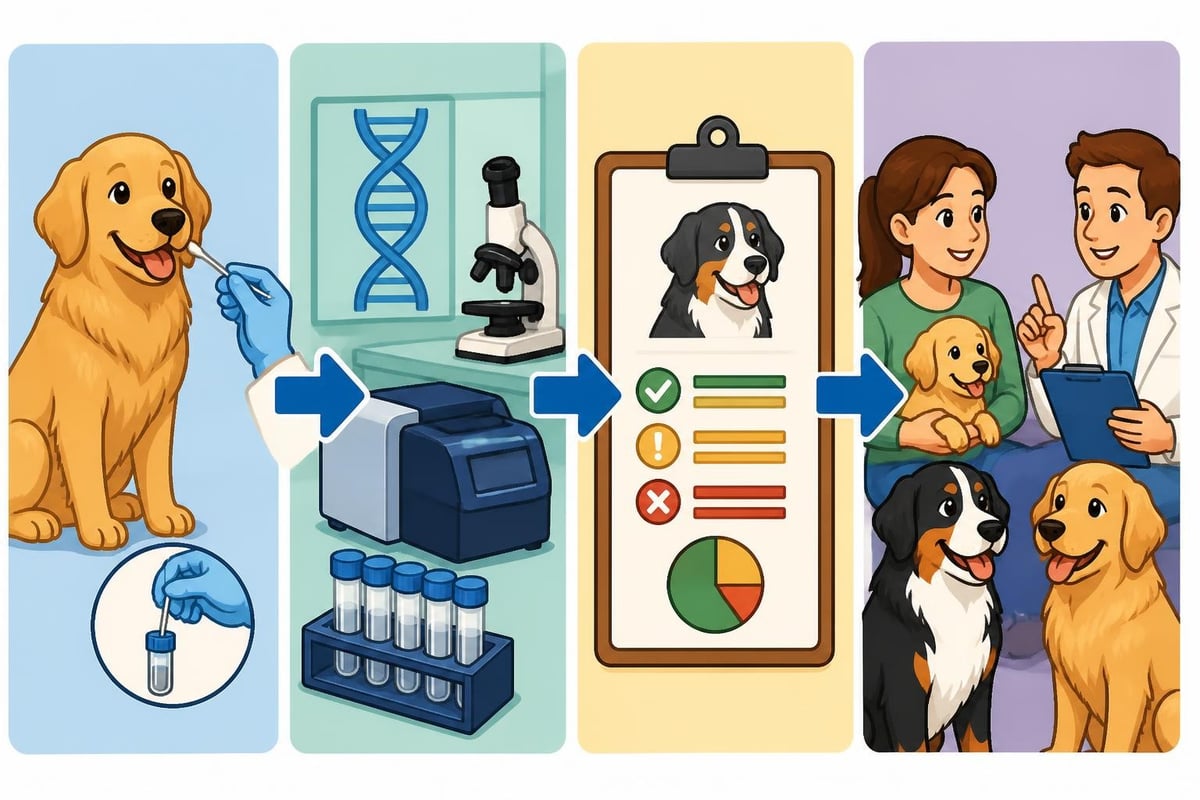
Fortunately, science is moving forward. Modern DNA tests can not only identify breed composition, but also detect carrier status for genetic disorders before breeding takes place.
In the Netherlands, for example, Utrecht University is working on Fit2Breed, a matchmaking tool that uses genetic information to create healthier pairings. This is no longer science fiction — it is happening now, in 2026.
Collecting a DNA sample (buccal swab)
Laboratory analysis of genetic markers
Report on breed composition and health risks
Breeding advice based on genetic compatibility
Monitoring of offspring
Regulation and responsibility: Europe and the Netherlands leading the way
The story of pedigree dogs is also a story of growing responsibility. Governments, kennel clubs and scientists are working together on stricter rules.
European legislation in motion
In 2023 the European Commission presented a groundbreaking legislative proposal on the welfare, traceability and breeding of dogs and cats. This proposal has far-reaching implications for everyone who breeds or sells pedigree dogs.
Key points of EU legislation:
Mandatory health screening for breeding animals
Traceability via microchips and central databases
Ban on extreme breed features that cause suffering
Stricter rules for cross-border trade
Dutch approach: Raad van Beheer
In the Netherlands the Raad van Beheer plays a crucial role. Their sustainable breeding policy sets strict requirements for pedigree dog breeders. Breeding animals must be screened for hereditary conditions, inbreeding coefficients are monitored, and violations lead to suspension.
This is more than bureaucracy. It is a collective recognition that we are responsible for the welfare of these animals, not just today but for generations ahead.
Population trends: which pedigree dogs dominate in 2026?
The popularity of pedigree dogs fluctuates. Some breeds remain favorites for decades, others fade into the background or make surprising comebacks.
European registration figures
The FCI report on 2023 provides fascinating insights into which pedigree dogs are most registered in the European Union. The top five remains relatively stable, with Labrador Retrievers, German Shepherds and French Bulldogs as ongoing favorites.
Breed
Trend 2023-2026
Notable development
Labrador Retriever
Stable
Remains popular with families
French Bulldog
Rising
The ultimate city dog
German Shepherd
Slightly declining
Health awareness increasing
Golden Retriever
Stable
Therapeutic applications
Dachshund
Rising
Compact size appealing
In the Netherlands we see a similar pattern, although smaller breeds like the Shih Tzu are also gaining popularity, especially in urban areas.
The influence of media and trends
Films, social media and celebrities have huge influence on the popularity of pedigree dogs. After every new dog movie, breeders see a spike in inquiries for that specific breed. This can be problematic when impulsive buyers do insufficient research.
Health initiatives: how the dog world heals itself
The good news? A great deal is happening in research, education, and practical tools for healthier pedigree dogs.
Scientific research with impact
The AKC Canine Health Foundation funds dozens of research projects each year. From studies into heart, eye, and joint conditions to behavioral research and nutrition studies.
Recent breakthroughs in purebred dog research:
Identification of new genetic markers for hip problems
Improved screening methods for hereditary eye diseases
Nutritional interventions that extend lifespan
Behavior therapies specific to breed-linked anxiety disorders
WSAVA provides international guidelines for genetic management and counseling, specifically aimed at breeders and veterinarians. These guidelines are not mandatory rules, but well-considered recommendations based on the best scientific evidence.
Practical tools for breeders
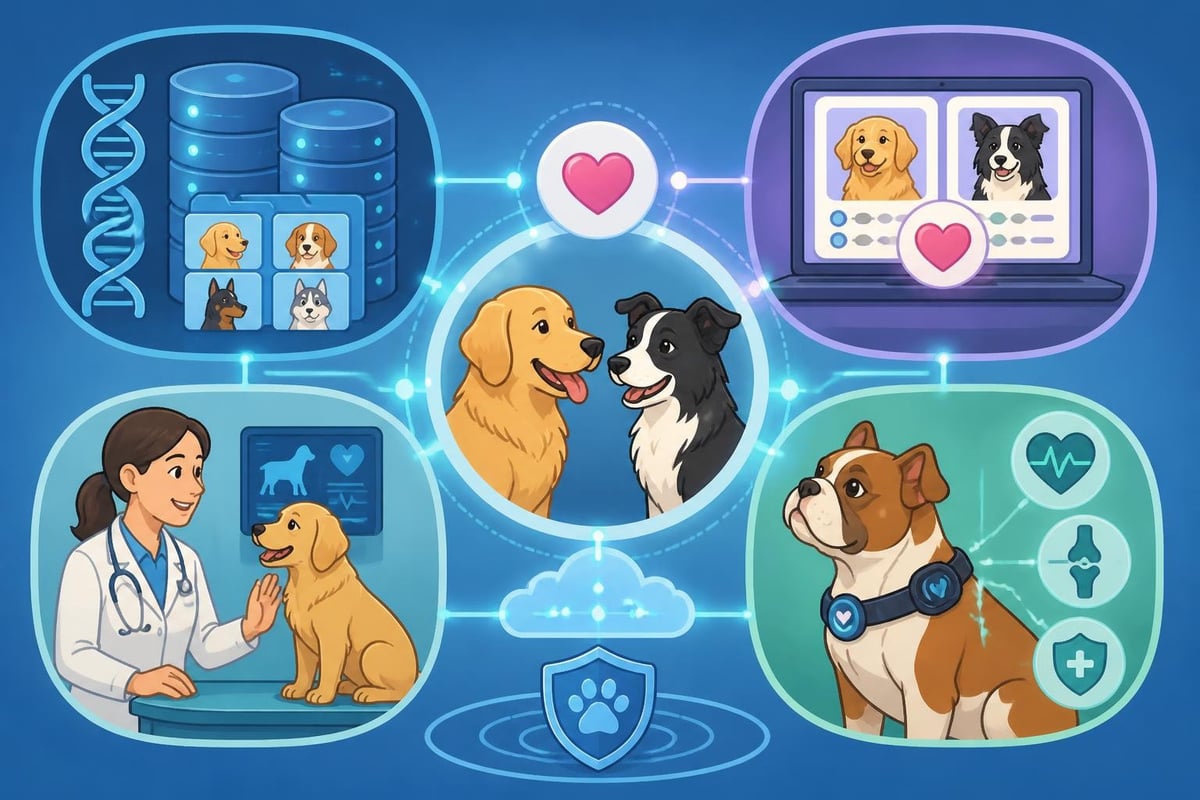
Breeders in 2026 have more tools than ever:
Genetic databases with thousands of purebred dogs and their health status
Mate-selection programs that minimize inbreeding
Health protocols per breed with mandatory tests
Online communities where breeders share knowledge
Veterinary specialists focused on breed-specific issues
A new perspective: valuing and protecting purebred dogs
Looking back at the story of purebred dogs, we see a fascinating paradox. On the one hand we have created beautiful, predictable, and specialized animals. On the other hand we have made some of them too vulnerable.
The owner's role
You, as a prospective owner of a purebred dog, play a crucial role. By asking breeders critical questions, by consciously choosing health-screened parent animals, and by avoiding "trendy" breeds when they are unsuitable for your situation, you steer the market in a healthier direction.
Questions to ask before buying a purebred dog:
Have both parents been tested for hereditary conditions?
What is the inbreeding coefficient of the planned litter?
May I view the health reports?
How old do dogs from your breeding lines live on average?
Can I contact previous buyers?
Preserving the beauty
All this does not mean purebred dogs are 'bad'. On the contrary. A Ragdoll with its soft coat and blue eyes, or an elegant German Shepherd, are beautiful animals. The dogs calendar 2027 shows how diverse and beautiful purebred dogs can be.
Het gaat erom dat we die schoonheid koppelen aan gezondheid, aan verantwoordelijkheid, aan een toekomst waarin rashonden niet lijden onder hun eigen erfgoed.
Toekomstperspectief: rashonden in 2030 en verder
Als we vooruitkijken, welk verhaal schrijven we dan voor rashonden?
Optimistische scenario's
Technologie en bewustzijn ontwikkelen zich snel. In 2030 kunnen we mogelijk:
Gentherapie gebruiken om erfelijke aandoeningen te corrigeren
Internationale databases koppelen voor maximale genetische diversiteit
AI-gedreven fokadviezen die complexe genetische interacties voorspellen
Wettelijke minimumeisen voor genetische gezondheid in heel Europa
Er zijn fokkers die nu al werken aan 'conservatieprogramma's', waarbij ze bewust zoeken naar oude, minder populaire bloedlijnen om genetische diversiteit terug te brengen.
Uitdagingen blijven bestaan
Maar er zijn ook obstakels. Commerciële druk, onwetendheid bij kopers, illegale 'puppymolens' en mode-grillen bedreigen nog steeds het welzijn van rashonden.
Persistente uitdagingen:
Vraag naar extreme raskenmerken (platte neuzen, dwerggroei)
Internationale puppy-handel met lage welzijnsnormen
Spanningsveld tussen traditionele fokkers en hervormers
Betaalbaarheid van genetische testen voor kleine, hobbymatige fokkers
De verbinding met ons dagelijks leven
Misschien vraag je je af: wat heeft dit alles met mij te maken? Ik wil gewoon een kalender kopen voor 2027.
Hier komt de cirkel rond. Rashonden zijn onderdeel van ons culturele erfgoed, van onze liefde voor dieren, van de verhalen die we vertellen en de beelden die we koesteren. Wanneer je een kalender met boerderij dieren of een kalender met grappige dieren kiest, kies je voor momenten van vreugde en verbinding.
Bewustzijn door beelden
Kalenders met rashonden doen meer dan je maand aangeven. Ze nodigen uit tot gesprek. Ze tonen diversiteit. Ze kunnen bewustzijn creëren over welke rassen gezond zijn en welke aandacht nodig hebben.
Every image of a radiant, healthy pedigree dog tells a story of responsibility. Every image of an extremely bred breed can start a conversation about what we truly value: beauty paired with welfare.
The human side: why we love pedigree dogs
Let’s be honest. We love purebreds because they are predictable. You have a good idea how big a Golden Retriever will be, how a Border Collie behaves, or whether a Beagle fits in your family.
Emotional bonds
Purebred dogs give us a sense of continuity. Grandparents had a Labrador, parents had a Labrador, and now you want a Labrador too. It’s nostalgia, tradition and comfort all in one.
But that emotional bond should not blind us to responsibility. Love for a breed also means wanting that breed to live healthy and happy lives.
Why people choose purebreds:
Predictability of temperament and size
Aesthetic preference for specific features
Family tradition or childhood memories
Suitability for specific tasks (therapy, sport, hunting)
Social connection with other owners of the same breed
There are communities, shows, forums and even therapy groups around specific breeds. This social dimension is valuable and understandable.
Scientific perspectives continue to evolve
The debate about purebreds is not static. New insights appear yearly, sometimes weekly.
Controversies and dialogue
Some scientists advocate completely doing away with purebreds in favor of “genetically healthy crosses.” Others believe that with modern techniques purebreds can become healthier than ever.
The truth likely lies somewhere in the middle. Diversity, both within and between breeds, is the key.
Vision
Arguments for
Arguments against
Traditional breed breeding
Preserves heritage, predictability
Risk of inbreeding and health
Cross-breeding programs
Increases genetic diversity
Loss of breed characteristics
Genetically optimized breeding
Combines health and breed
Expensive, technologically complex
The dialogue continues, and that’s a good thing. Standing still would mean ignoring the problems.
Purebred dogs tell a story of human ambition, beauty, but also responsibility. In 2026 we stand at a crossroads where science, regulation and consumer awareness come together to create a healthier future. Whether you choose a calendar with your favorite dog breed or are considering bringing a purebred into your home, choosing consciously makes the difference. At Kalenderwinkel.nl you’ll find a wide range of calendars for 2027, from animals to art, all with fast delivery and simple payment so you can start the new year well prepared and inspired.