How to care for a cockatiel: cage, diet, rest, free flight and cleaning. Practical tips for a healthy, happy pet bird at home.
You keep a cockatiel healthy with a roomy cage, varied diet, enough night rest, daily free flight and a regular cleaning routine. Companionship is also part of this, because this social bird feels best with a mate and plenty of variety. Below you’ll find what you need for each aspect so your cockatiel stays fit and content for years.
A cockatiel (Nymphicus hollandicus) originally comes from Australia and is loved for its crest, gentle character and whistling song. That crest is also a handy barometer: if it stands upright your bird is alert or surprised; if it lies relaxed and slightly back, everything is calm and fine.
What does a cockatiel need to stay healthy?
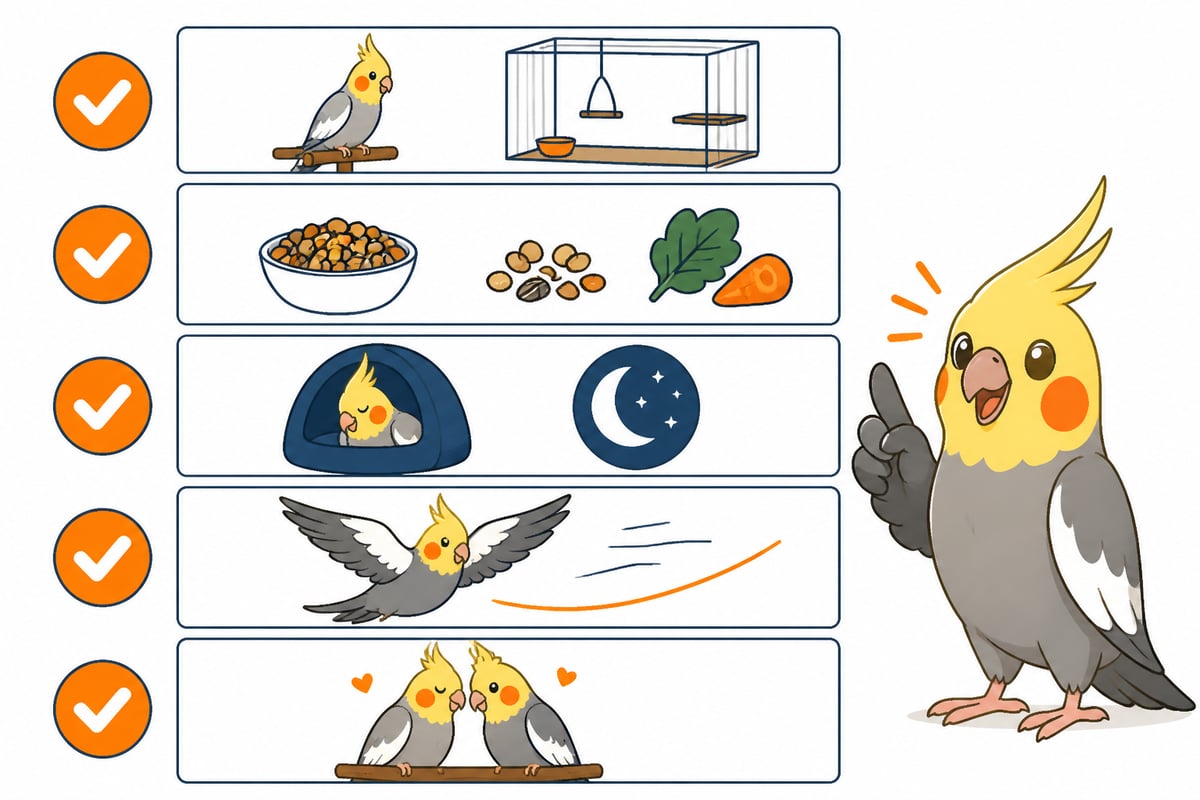
A cockatiel needs five things: enough space, good nutrition, rest, exercise and social contact. If one is missing, you often see it quickly in the behavior. A bird that normally chatters and suddenly sits quietly in a corner is telling you something.
Keep this checklist as a constant:
Space: a cage or aviary in which it can fully spread its wings
Nutrition: pellets or seed sticks as a base, supplemented with greens and fruit
Rest: a regular, dark night without TV or bright lights
Exercise: daily free flight in a safely arranged room
Companionship: a fellow bird or lots of attention from you
How you meet those five points largely determines how old your cockatiel will get. With good care a cockatiel can reach a respectable age, and sometimes they live even longer. It’s a long commitment, so it pays to start well from day one.
How big should a cage be for two cockatiels?
For a pair of cockatiels the LICG recommends an indoor cage of at least 120 × 60 × 70 cm (l × w × h), and bigger is better. Cockatiels are fairly large birds with long tails, so a small cage is not only cramped but also bad for their condition.
Pay attention to a few details when choosing the cage:
Bar spacing: maximum 1.8 cm, so the bird cannot stick its head through.
Width over height: cockatiels fly horizontally, so choose a long cage rather than a tall one.
Doors: wide enough for easy in-and-out flight without hassle.
Place in the home: bright, free from drafts and not next to the kitchen, where fumes can be harmful.
Want an outdoor aviary? For two birds the LICG recommends about 2.5 × 1 × 2 meters, with a night shelter of 1 × 1 meter that must remain warmer than 5 °C. The Flemish government also provides official pet information about parakeets covering housing and care, useful if you want to read further.
Can you keep 1 cockatiel?
You can keep a single cockatiel, but it fares best with a companion or an owner who spends a lot of time with it every day. In the wild cockatiels live in groups. A lonely bird can become anxious, pluck its feathers, or call loudly for attention.
For most households a pair is therefore the safest choice. Two males or two females can live together well. A male and a female may breed, which requires extra knowledge. For information about the species' social behavior and keeping them with conspecifics, Zooplus offers practical explanations.
If you choose to keep a single bird, plan regular times. Talk to it, let it sit on your shoulder while you read the newspaper, and place the cage in the room where the family spends most time. A cockatiel that participates in household life is a different bird than one kept in a quiet bedroom.
What does a cockatiel eat?
A cockatiel is best fed pellets or specially formulated seed sticks as a base, advises the LICG. A bowl of only loose seeds may seem appealing, but birds pick out the fatty favorites and leave the rest. Over time that leads to a one-sided diet.
A well-filled daily schedule looks roughly like this:
Base: pellets or seed sticks, fresh every day
Greens: spinach, kale, bok choy or microgreens
Vegetables and fruit: carrot, bell pepper, apple or pear, without seeds
Extra: occasionally a twig to chew on, for example from a fruit tree
Water: change daily
Introduce new food slowly. Cockatiels sometimes view new food warily before they taste it. Always place it in the same spot and eat a small piece yourself in front of your bird. It sounds odd, but birds copy a lot from each other and from their caregiver.
Avoid avocado, chocolate, salt and anything fried or heavily spiced. Those are toxic or unhealthy for birds.
How much rest and exercise does a cockatiel need?
A cockatiel needs at least 10 to 12 hours of rest each night and should be out of the cage safely for one to several hours daily, says the LICG. That may seem like a lot, but it suits a bird that is active all day in the wild.
For that night rest you can drape a cloth over the cage or place the cage in a quiet, dark room. Bear in mind that cockatiels are sensitive to sudden sounds or shadows in the dark. If your bird often wakes up at night, a soft night light can sometimes help, although complete darkness is usually better.
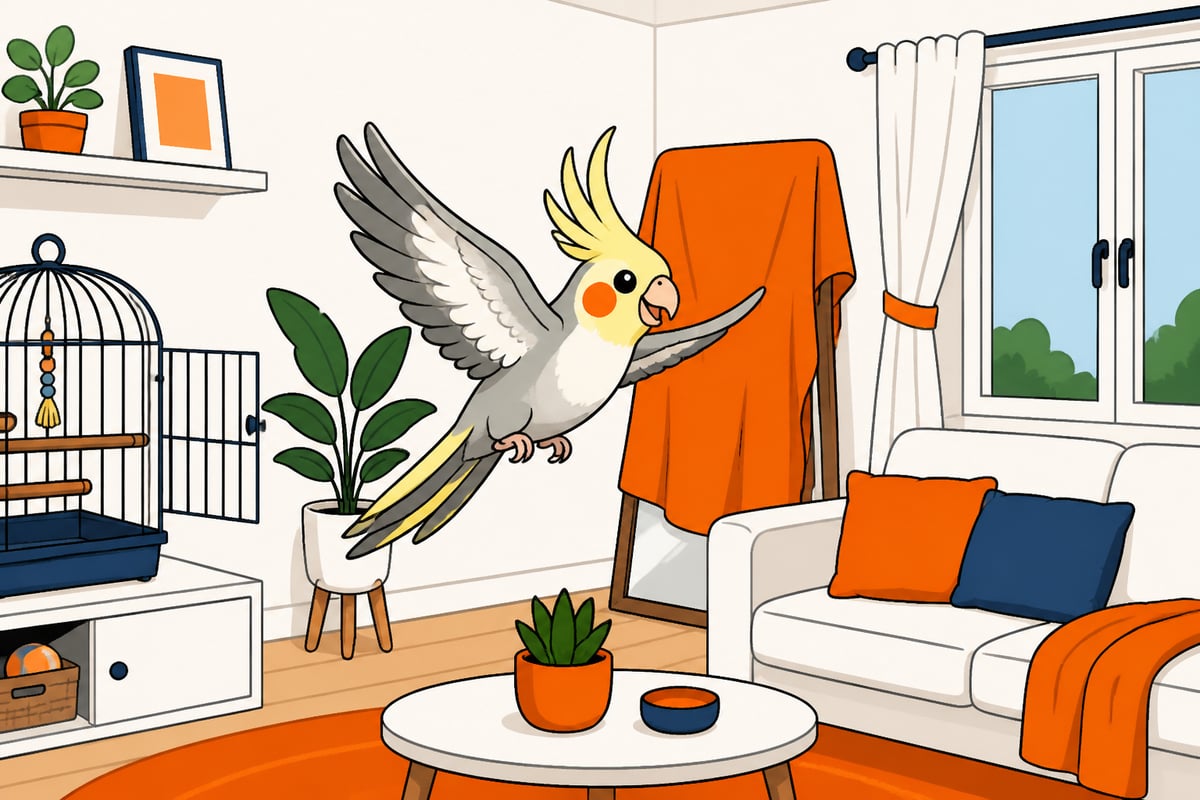
Before free flight, make the room safe first:
Close windows and doors and cover mirrors and large glass surfaces or make them visible.
Turn off the extractor hood, fan and heater and never leave open flames or boiling pans unattended.
Remove toxic houseplants and put away small objects.
Keep other pets, like cats, in another room.
Leave the cage door open and give your bird time to step out on its own. Forcing it backfires.
How do you make a cockatiel happy?
A cockatiel thrives on variety, company and opportunities to show natural behavior: climbing, chewing, singing and flying. Boredom is their biggest enemy. A cage with only two perches and a mirror is, for a clever bird, like a room without books and without a window.
How to liven things up:
Natural perches: branches of different thicknesses keep the feet fit
Chew materials: cork, unfinished wood and cardboard rolls
Toys to rotate: swap one piece each week so it stays novel
Foraging toys: hide seeds so he has to search
Music or sound: a gentle radio during the day, never all day long
Cockatiels also like to whistle and sometimes learn a few words. Males are often the best singers. If you want to tame your bird, match the bird’s pace. Start by holding your hand calmly in the cage, offer a spray of millet and only move to hand-feeding when he becomes curious himself. That takes weeks, sometimes months, and that is normal.
How to keep the cage clean and healthy
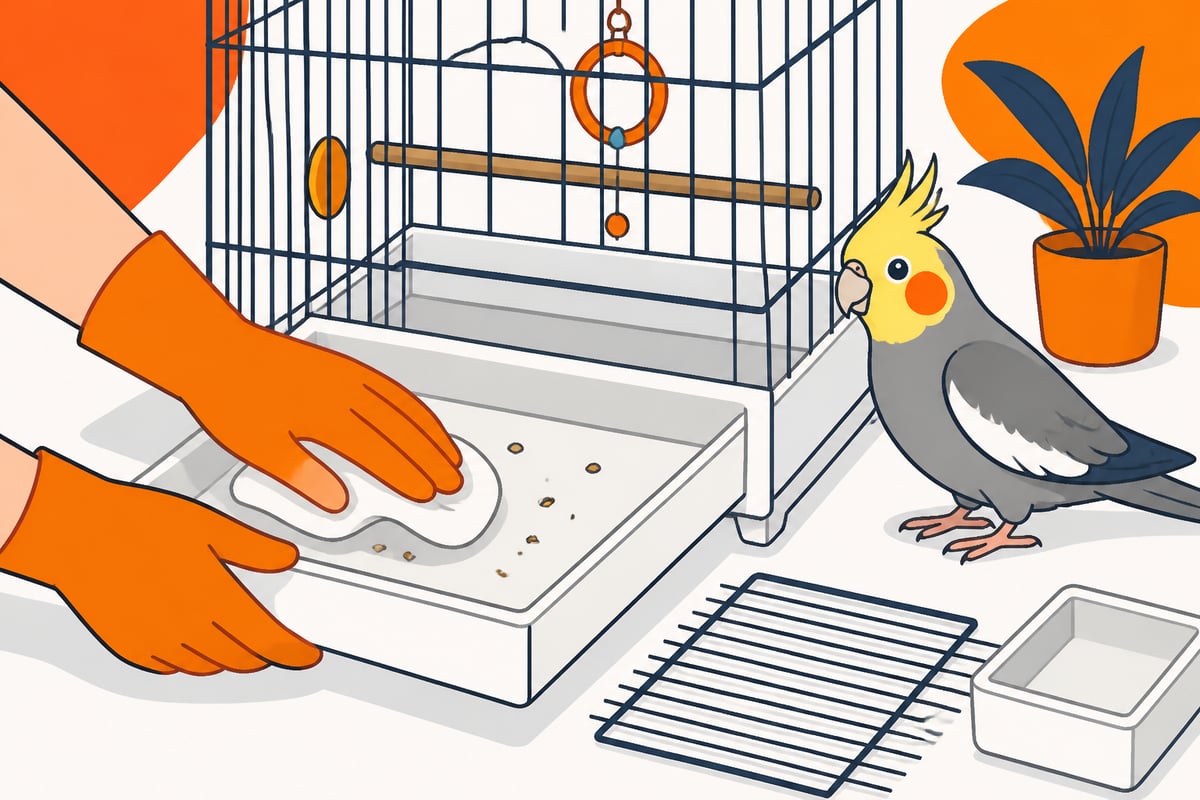
Refresh the drinking water daily, clean the bedding and the cage bottom weekly, and give the whole cage a soapy cleaning at least monthly, advises the LICG. A regular routine prevents mold and bacteria, and will save you a lot of trouble.
A useful weekly schedule looks like this:
Frequency
Task
Daily
Fresh water, empty and refill food dishes, remove heavy soiling
Weekly
Replace bedding, clean cage bottom, wipe perches
Monthly
Clean the entire cage and accessories with soapy water, rinse thoroughly and let dry
Do not use strong cleaning agents or sprays near the bird. Birds have a sensitive respiratory system, and the scents of air fresheners, oven spray, or nonstick coatings can be harmful. Ventilate the room well, but avoid drafts.
How do you notice that a cockatiel is sick?
A sick cockatiel can hide its symptoms for a long time, so watch for small changes: fluffed feathers, a lethargic posture, eating less, abnormal droppings, and watery eyes or nose.
Watch for these signs:
They sit fluffed up on the bottom or on one leg for a long time
They are eating or drinking noticeably less than normal
Their breathing sounds wheezy or their tail moves up and down with each breath
Their feathers are duller or bald spots appear
They are less active or no longer respond to you
If in doubt, quickly see a veterinarian experienced with birds. Waiting can be fatal for small birds because they weaken quickly. Keep a sick bird calm and warm in the meantime, and call ahead so the clinic knows you are coming with a bird.
A brief daily check helps a lot. Someone who knows their bird well will notice sooner if something is wrong.
A regular routine makes it easy
The best care is the kind you keep up without thinking. A regular daily rhythm gives your cockatiel calm and gives you an overview. It doesn't have to be a strict schedule; a few fixed anchor points are enough.
Many owners literally hang a calendar in front of it. On a wall calendar by the cage you cross off cleaning days, note when you changed the toys, and mark the dates of vet checkups. If you love birds, Kalenderwinkel.nl, for example, offers the cockatiel calendar 2027, with beautiful photos of the bird you can look at every month. Want a larger calendar to plan household tasks? In the family planners collection you'll find clear planners where you can also track your bird's care moments.
If you also want to show your love for the species at home, the cockatiel warning sign is a funny gift for yourself or a fellow bird lover. When planning the year it also helps to have a fixed place for everything, such as a week planner on the countertop next to the food bowl.
A pleasant side effect of a routine: your cockatiel gets used to it and becomes calmer. Animals that know when food comes and when it gets dark are less stressed.
Handy extras for a pleasant bird life
Besides the basics, there are a few small things that make a cockatiel's life noticeably nicer. Think of a bath, a bit of daylight, and a calm environment.
Bath: many cockatiels like to bathe in a shallow dish or be lightly misted with a plant spray bottle of lukewarm water
Daylight: put the cage near a window, without direct scorching sun, so it maintains a natural day-night rhythm
Quiet corner: don't place the cage right next to the TV, the stereo, or a busy door
Cage bottom: use a safe bedding, for example special bird litter or clean kitchen paper
Cockatiels can also produce a lot of dust, the so-called powder down. People with allergies sometimes notice this. Regular vacuuming and airing helps, but if you're unsure whether a bird fits a household with asthma or allergies, consult a doctor first.
If you feel like making the house cozy while the bird watches, a cup of tea and a soft scent can enhance the sense of calm. For a wide selection of loose tea and tea bags, Tealyra is an online tea shop, and for handmade candles with plant-based scents you can visit HAUS OF SMELL. Be aware that strong scents, candles, and fragrance diffusers should never be placed in your bird's room, as their lungs are fragile.
How much does a cockatiel cost?
The total cost of a cockatiel consists of the purchase price of the bird itself and a solid starter outlay for cage, furnishings and food, plus ongoing costs for food, bedding and veterinary care. The bird’s price varies by color mutation and seller, so always ask an accredited breeder or pet shop for current prices.
Factor in these items for the initial purchase:
The bird (or two, if you get a pair)
A spacious cage or aviary
Perches, toys, food and water bowls
An initial supply of pellets, seeds and bedding
A reserve fund for unexpected veterinary costs
An expensive cage isn’t necessarily the best. Focus on size and bar spacing. It’s better to buy a cheaper cage in the right dimensions than a nice-looking one that’s too small.
FAQ
How old does a cockatiel get?
With good care a cockatiel can reach a respectable age, and some birds live longer. Diet, rest, a clean living area and timely veterinary care have a big influence.
How do I recognize a male or female?
In the wild type, males usually have a bright yellow head with orange cheek patches and an even gray body, while females have a duller head. In other color mutations the distinction is harder, so ask the breeder when buying.
Can cockatiels live well with other birds?
Cockatiels can live together in a spacious aviary with other calm birds, but it doesn’t always go smoothly. When introducing birds, watch them closely and separate them if they start fighting.
Make a first appointment with yourself today: measure the spot where the cage will stand and check that it meets the recommended size of 120 × 60 × 70 cm for a pair. Then hang a calendar by the cage so the weekly and monthly cleaning days don’t get forgotten. At Kalenderwinkel.nl you’ll find a wide range of calendars, planners and stationery, and if you order before 16:00 on weekdays your package will be sent the same day, with free shipping within the Netherlands from €49.