Discover how art puzzles combine creativity, mindfulness, and relaxation. From classic art to modern designs for every puzzler.
There’s something magical about the moment you place the final piece of an art puzzle. For months that Monet painting or that abstract work by Kandinsky has lain in loose fragments on your table, but suddenly everything comes together. The experience goes beyond simple puzzling; it’s a journey through art history, an exercise in patience, and a celebration of beauty. For many, an art puzzle is not just a pastime but a meditative activity that blends creativity and relaxation in a way few other activities can match.
Why art puzzles are so beloved
The phenomenon of art puzzles has exploded in recent years. While traditional puzzles often depict generic landscapes or animals, an art puzzle brings masterpieces by world-famous artists into your own living room. These puzzles transform iconic paintings by Van Gogh, Vermeer, or Klimt into interactive experiences that force you to study every detail closely.
The psychology behind puzzling
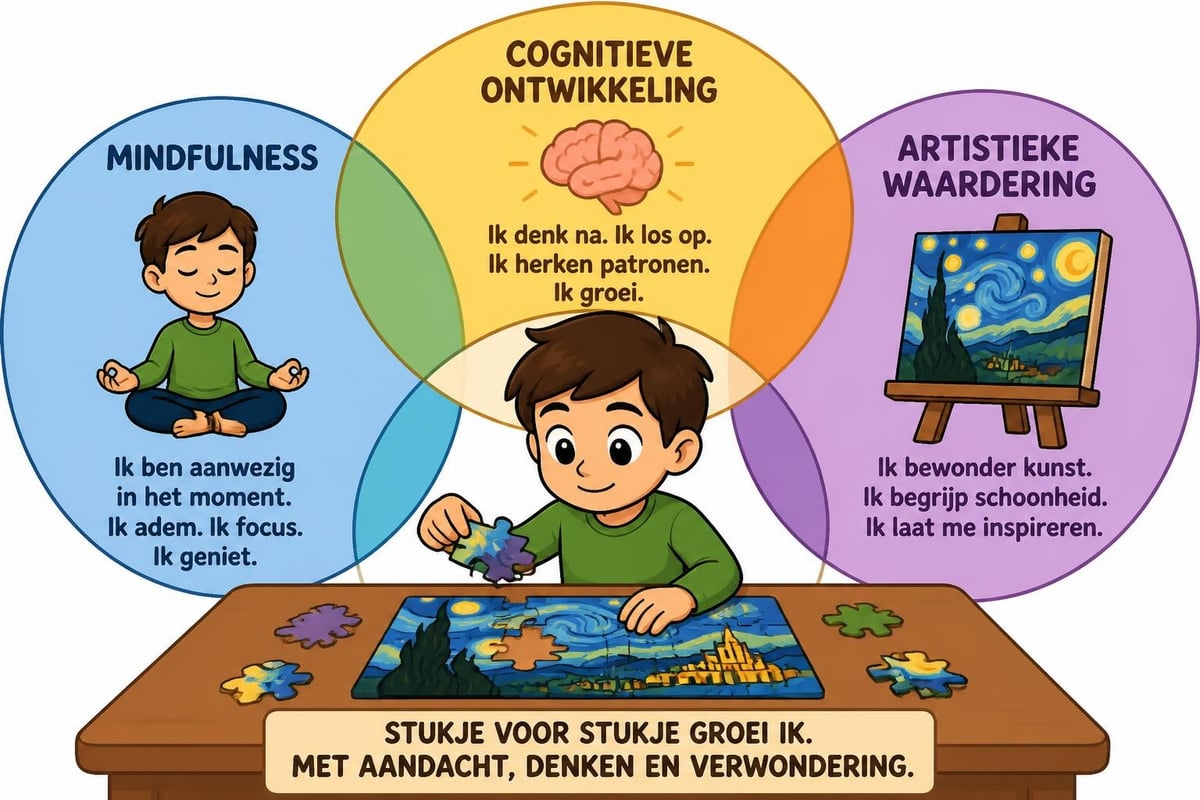
Puzzling activates different parts of your brain at once. You use logical thinking to recognize patterns, visuospatial skills to place shapes, and memory to recall which pieces belong where. With an art puzzle, there’s an extra layer: art appreciation.
Key benefits of art puzzles:
Stress reduction through meditative focus
Improvement of problem-solving ability
Development of art-historical insight
Social connection from puzzling together
Sense of accomplishment upon completion
Recent research shows that puzzle activities contribute to cognitive health. Institutions like the Smithsonian American Art Museum use puzzle-like tasks to help visitors engage more deeply with artworks, underscoring the educational value of visual puzzles.
From classical masters to modern designs
The world of art puzzles is surprisingly diverse. You’ll find not only classic reproductions of Rembrandt or Michelangelo, but also contemporary illustrations, street art, and even abstract compositions created specifically for puzzles.
Classic art puzzles
The most popular category remains reproductions of museum pieces. Think of 'The Starry Night' by Van Gogh, with its swirling skies that pose a fascinating puzzle challenge because of the repeating shapes and subtle color variations. Or 'The Kiss' by Klimt, where the golden accents and geometric patterns are both challenging and satisfying to assemble.
Artist
Popular works for puzzles
Difficulty level
Attractive elements
Van Gogh
The Starry Night
High
Swirling patterns, intense colors
Monet
Water Lilies
Medium
Soft color transitions, natural forms
Klimt
The Kiss
Very high
Gold accents, geometric details
Vermeer
Girl with a Pearl Earring
Medium
Subtle light falls, limited color palette
Modern and contemporary art puzzles
A new generation of puzzle makers creates original artworks specifically for the medium. These designs deliberately play with color, pattern and composition to optimize the puzzle experience. Some artists even experiment with unconventional shapes or double-sided puzzles that show different images.
The research on generative models shows how algorithms can now even design puzzles and evaluate difficulty, offering interesting possibilities for future art puzzle developments.
The art of choosing
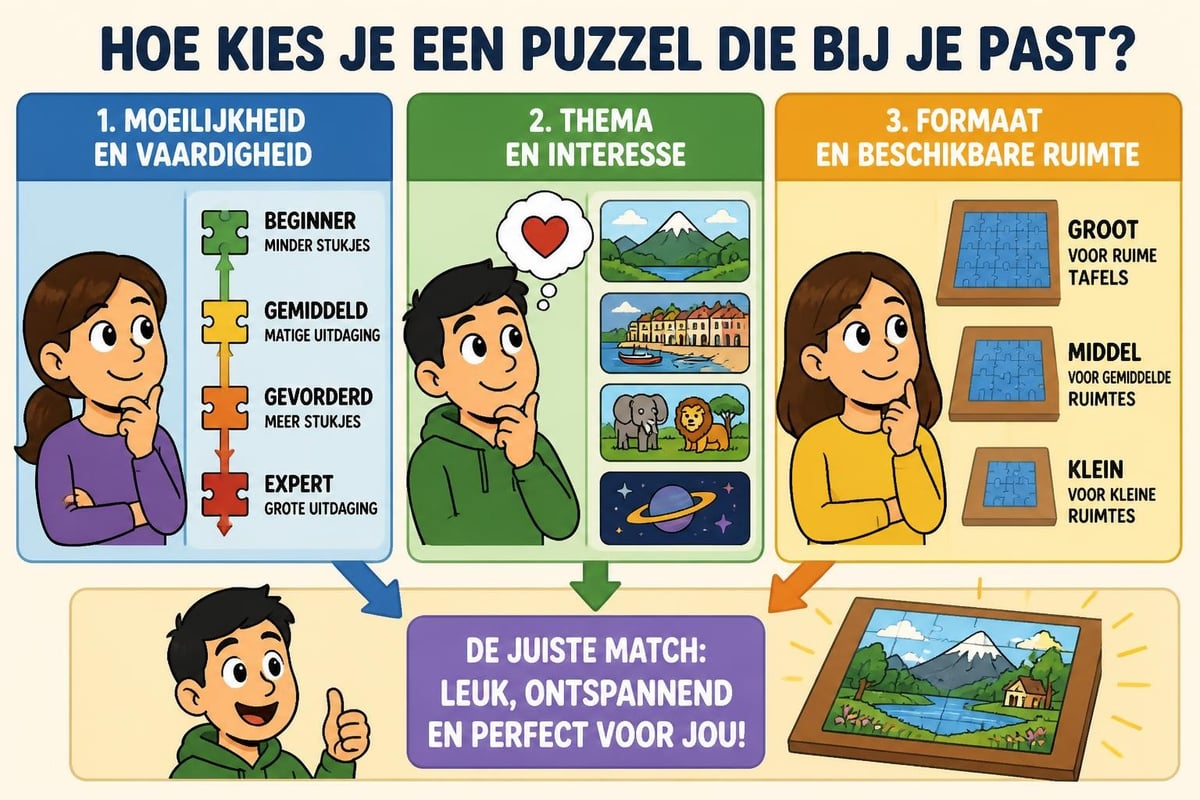
Selecting an art puzzle is a personal journey. Some puzzlers seek challenges in complex compositions with thousands of pieces, while others find calm in more manageable works of five hundred to one thousand pieces.
Determining difficulty
Factors that make an art puzzle challenging:
Color variation: Many similar shades make it difficult
Piece size: Smaller pieces require more precision
Pattern repetition: Repetitive elements demand patience
Composition: Abstract works are often more complex than figurative ones
Number of pieces: Naturally, the challenge increases with the number
A beginner-friendly art puzzle has clearly distinct color blocks, recognizable shapes and usually between 500–1000 pieces. Advanced puzzlers, on the other hand, look for art puzzles with subtle color transitions, like impressionist paintings where water, sky and reflections blend together.
Size and presentation
After completion an art puzzle transforms into wall decor. Many enthusiasts frame their finished works and hang them up, giving the puzzle a second life as an art object. This makes choosing the right size extra important.
Standard sizes range from compact (50x70 cm) to impressive (100x140 cm for 3000+ piece puzzles). Think ahead about where you might hang your finished work and whether you have enough space to assemble it.
The social dimension of puzzling
Although puzzling is often seen as a solitary activity, art puzzles are especially well suited for shared moments. Families gather around the table, friends host puzzle nights, and partners find quality time in building an artwork together.
Puzzling as a team event
The education sector has long since discovered this. Research on active learning methods shows that puzzle-based activities promote collaboration and problem-solving. Companies are increasingly using large art puzzles as a team-building activity, where employees work together toward a common goal while informally communicating.
For those looking for unique group experiences, Innobook offers various team activities that combine puzzle elements with other challenges, perfect for company outings or special occasions.
Benefits of doing art puzzles together:
A natural conversation starter without forced interaction
Discovering each other’s strengths (some see colors, others patterns)
A low-threshold activity for different ages
A tangible end result that symbolizes joint effort
Practical tips for art puzzle success
Successfully completing an art puzzle requires more than patience alone. With the right approach you not only increase your chances of success, but also your enjoyment during the process.
Organization is essential
Start by sorting your puzzle pieces. Many experienced puzzlers use multiple bowls or sorting trays to keep edge pieces, specific colors, and special patterns separate. For an art puzzle with many color nuances it can help to group pieces by tone or painting technique.
Start with the edge: This provides structure and overview
Identify distinctive elements: In artworks these are often faces, objects, or strong contrasts
Work in sections: Build separate parts of the artwork before connecting them
Use the reference image: Study the original artwork to recognize details
Take regular breaks: Fresh eyes see patterns that tired eyes miss
The right working environment
A dedicated puzzle area makes the difference. Ideally you have a flat surface with good lighting where your puzzle can remain for several days. Puzzle mats or boards are handy if you need the table for other purposes; you simply roll up your work-in-progress and store it safely.
Those who want to keep track of puzzle projects and other creative activities in 2027 can do so perfectly in a well-organized planner, such as the various options available at Kalenderwinkel.nl.
Art puzzles as an educational tool
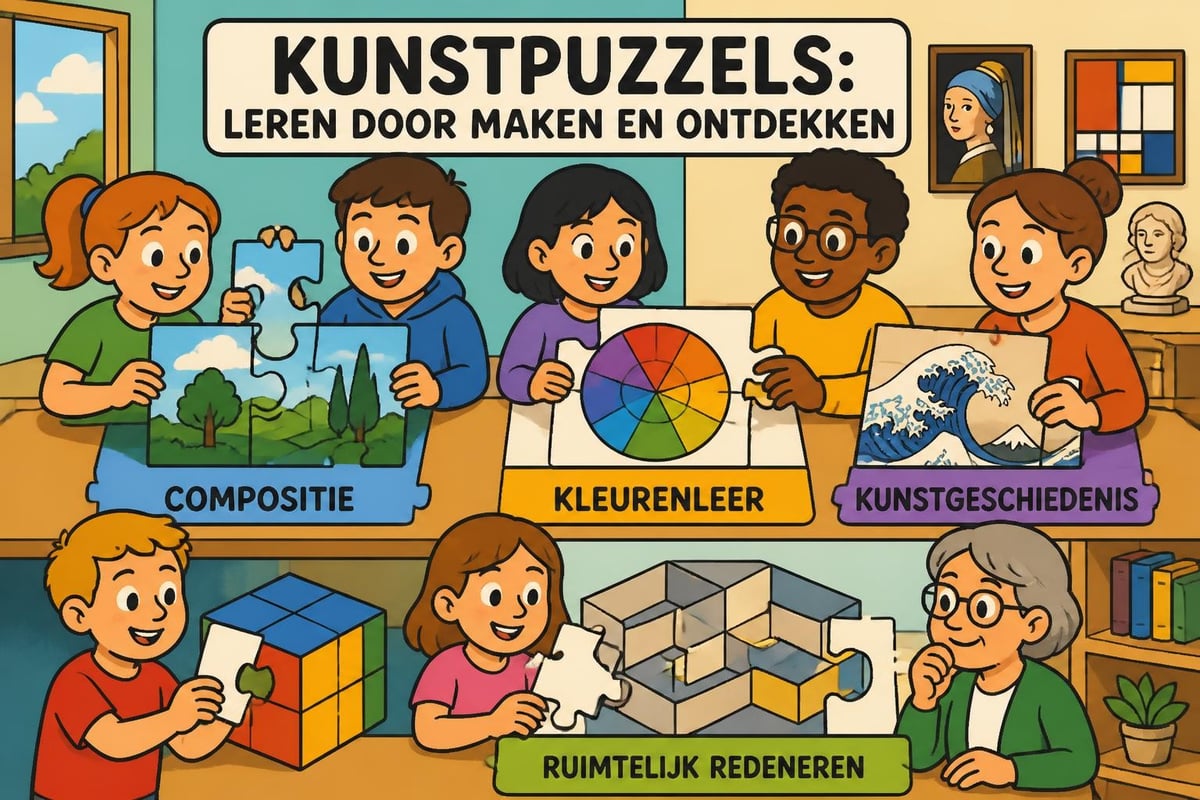
Art teachers and museum educators are increasingly discovering the value of art puzzles as a learning tool. By literally breaking a masterpiece into pieces and reassembling it, you develop an intimate understanding of composition, color use, and technique.
Art history at your fingertips
When you make an art puzzle from a Renaissance painting, you notice details you might miss on a museum visit. That subtle shading on a face, the way the artist suggests light, the symbolic objects in the background. Each puzzle piece becomes a lesson in art history.
Educational applications:
High schools use art puzzles in art history lessons
Museums sell puzzles of their collection pieces to increase engagement
Therapists use puzzling in cognitive rehabilitation
Nursing homes use familiar artworks to trigger memories
Scientific research, such as the study on Tangram puzzles, shows how visual puzzles can be approached mathematically and algorithmically, offering interesting insights into how our brain solves spatial problems.
The future of art puzzles
Technology and tradition meet in surprising developments. Augmented reality apps let you scan puzzle pieces with your camera and provide placement hints. Online communities share strategies and celebrate completed works. Some manufacturers are experimenting with puzzles that reveal hidden details under UV light.
Digital innovations
There are now apps that help with generating and solving puzzles using artificial intelligence, though the tactile experience of physical art puzzles remains irreplaceable for now. The combination of digital and physical will likely grow, with apps serving as guides without replacing the hands-on experience.
Sustainability and quality
Modern puzzle makers pay increasing attention to eco-friendly production. Cardboard from responsibly managed forests, water-based inks, and recyclable packaging are becoming standard. At the same time quality is rising: precision-cut pieces that fit perfectly, no puzzle dust, and reproductions that accurately reflect the original colors.
Collecting and preserving
For some, one art puzzle is never enough. Collectors look for limited editions, rare reproductions, or complete series by a favorite artist. A completed collection of art puzzles of all Van Gogh masterpieces or all Hokusai prints becomes a personal museum.
Storage strategies
Method
Pros
Cons
Best for
Frame and hang
Permanent artwork, decorative
Requires a lot of space
Favorite completed puzzles
Photograph and disassemble
Minimal storage, puzzle reusable
No physical object retained
Frequent puzzlers
Using puzzle glue
Keeps puzzle intact
Single use
Special or rare puzzles
Storage in boxes
Compact, organized
Not visible
Large collections
Some collectors keep a logbook of completed art puzzles, including date, hours spent and personal notes. This fits nicely in a beautiful planner where you also track other hobbies and activities throughout 2027.
Art puzzles as gifts
A carefully chosen art puzzle is a personal and thoughtful gift. You show that you know the recipient: maybe it's their favorite artist, or a painting of a city they visited. The gift not only offers hours of entertainment, but also a completion moment full of satisfaction.
Gift occasions and themes
For art lovers an art puzzle is always welcome, but certain occasions are especially suitable. Think birthdays, retirement (finally time for that 3,000-piece Vermeer), or as a distraction during recovery. Thematic sets, such as "Impressionist Masters" or "Dutch Golden Age", make the gift extra special.
Popular art puzzle themes for 2027:
Local artists and regional museums
Modern street art and graphic designs
Botanical illustrations and nature studies
Architecture and world-famous buildings
Seasonal artworks
The therapeutic value
Psychologists recognize puzzling as an effective stress reliever. With an art puzzle, the healing power of art is added. Colors, shapes and compositions affect our emotional well-being in ways we don't always consciously perceive.
Mindfulness through puzzling
Searching for that one puzzle piece requires full attention on the now. Your thoughts don't drift to deadlines or worries; your focus is entirely on shape, color and pattern. This state of flow is what mindfulness practitioners seek during meditation. An art puzzle provides a concrete, accessible way to achieve that mental calm.
Creative activities like puzzling can be easily combined with other relaxing pursuits. Schedule regular puzzle sessions into your week and note these moments of self-care in your planner for the coming year.
Whether you choose a challenging reproduction of a classic masterpiece or a modern design in vibrant colors, an art puzzle offers a unique combination of relaxation, art appreciation and cognitive stimulation. As you work on that next piece of your favorite painting, you not only experience art in a new way, but also create valuable moments of focus and calm. For those who want to bring structure to hobbies, projects and personal goals in 2027, Kalenderwinkel.nl offers a wide range of calendars and planners that perfectly fit your planning needs.