
Mopshond: all about this charming dog breed
- 12 min read

Discover everything about the pug: temperament, health, care, and what you need to know before bringing this unique dog into your home.
There are few dog breeds that elicit as much recognition and smiles as the pug. With their flat muzzle, large expressive eyes, and compact build, these small dogs have won a special place in the hearts of many dog lovers. Yet the pug is much more than just a cute appearance. These dogs have a rich history that dates back to the Chinese imperial palaces, a unique character full of personality, and specific care needs that every prospective owner should be well aware of. In this article we take you on a journey through the world of the pug, from their historical roots to modern health challenges, so you are fully prepared for life with this remarkable four-legged friend.
The history of the pug
The origin of the pug lies hidden in the mists of ancient China, where these compact dogs were bred for the Chinese nobility more than two thousand years ago. At that time they were known as "lo-sze" and lived in luxury within the imperial palaces.
Their journey to Europe began in the sixteenth century, when Dutch traders brought these distinctive dogs via their trade routes. In the Netherlands the pug even gained a heroic role when one of these vigilant dogs is said to have warned William of Orange of an approaching attack during the Eighty Years' War.
From palace dog to folk breed
The British Victorian era brought an explosion of popularity for the pug. Queen Victoria had a great fondness for the breed and significantly encouraged breeding. According to the official FCI standard, the pug is recognized under number 253 and falls into group 9 (companion and toy dogs).
Important historical milestones:
- 1500-1600: Introduction to Europe via Dutch trade routes
- 1688: Official adoption as a symbol of the House of Orange
- 1861: First formal shows in England
- 1883: Founding of the first pug club in Great Britain

Character and temperament
A pug's personality is as distinctive as its appearance. These dogs are known for their "multum in parvo" character, a Latin expression meaning "much in little." Within a compact body lives a huge personality full of charm, stubbornness, and affection.
Pugs are exceptionally social and form deep bonds with their human family members. They often follow their owners from room to room, always seeking companionship and attention. This need for closeness makes them excellent companion dogs, but it also means they are not suitable for people who are frequently and for long periods away from home.
Lively but not overactive
Unlike many other small breeds, pugs are relatively calm and balanced. They enjoy short walks and play sessions, but are just as happy to nap on the couch afterward. This balance makes them ideal for apartment dwellers or people with a less active lifestyle.
| Personality trait | Score (1-5) | Notes |
|---|---|---|
| Affectionateness | 5/5 | Extremely attached to family |
| Energy level | 2/5 | Moderately active, enjoys rest |
| Playfulness | 4/5 | Cheerful and mischievous nature |
| Watchfulness | 3/5 | Alert but not overreactive |
| Suitable for beginners | 4/5 | Relatively easygoing |
Physical characteristics and appearance
The pug is unmistakable for its compact, square build and characteristic flat face. Adult pugs typically weigh between 6.3 and 8.1 kilograms and have a shoulder height of about 25 to 30 centimeters.
Their most striking feature is, of course, the brachycephalic (short-nosed) face with deep wrinkles, large dark eyes, and small folded ears. The Dutch government provides specific guidelines for short-nosed dogs because of the health implications this morphology brings.
Coat color and grooming
The pug comes in several recognized colors:
- Fawn (beige): The most common color, ranging from silver-gray to apricot
- Black: Solid black coat with no other markings
- Silver: Lighter variant of fawn with a cool undertone
- Apricot: Warmer, orange-tinged shade
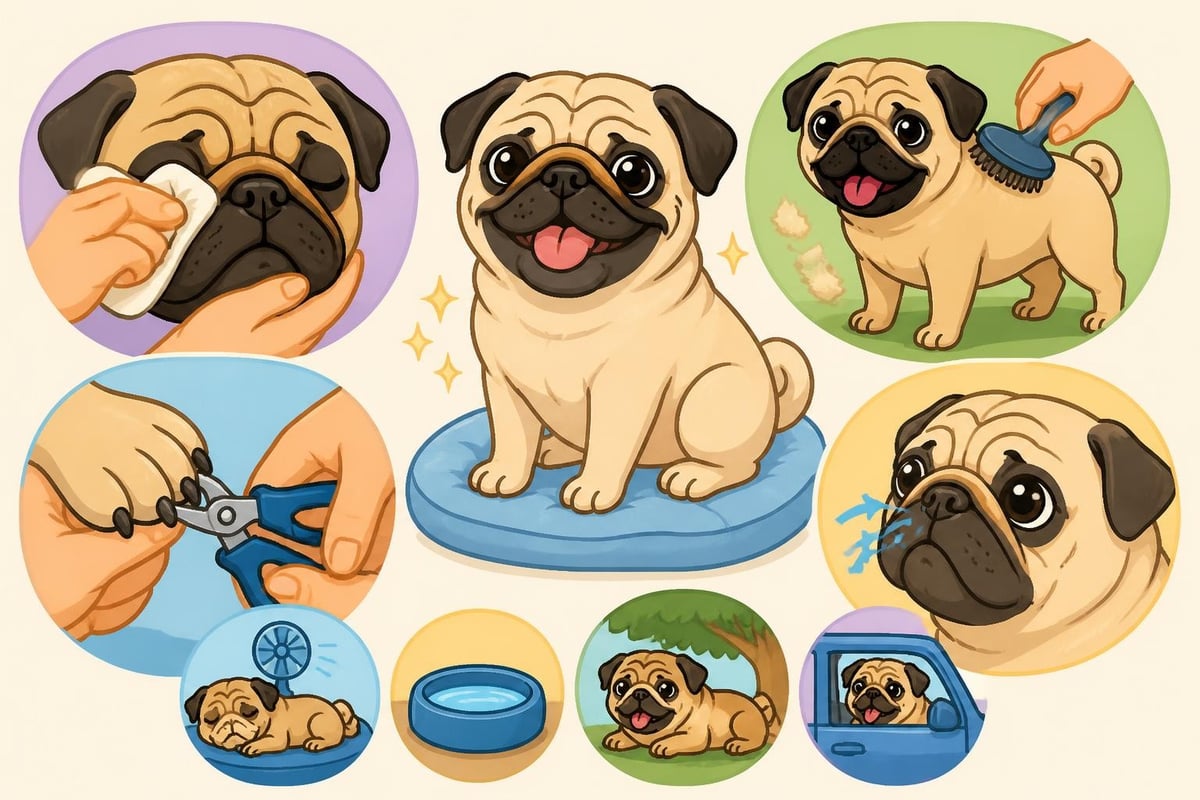
All varieties have a short, smooth coat with a soft undercoat. Despite the short hairs, pugs shed year-round, and shedding can be especially pronounced during seasonal changes.
Health and welfare care
The health of the pug has received increasing attention in recent years. Due to their extreme brachycephalic features, many pugs suffer from breathing problems, with some struggling to breathe even during normal activities. Recent research on stress in short-nosed breeds shows that these physiological limitations have a significant impact on their welfare.
Common health issues
Brachycephalic obstructive airway syndrome (BOAS):
This is by far the most common and serious health problem in the pug. Narrowed nostrils, an elongated soft palate, and a narrowed trachea make normal breathing a challenge.
Eye problems:
- Corneal ulcers from bulging eyes
- Dry eyes (keratoconjunctivitis sicca)
- Prolapsed eyeball (rare but serious)
Skin issues:
The characteristic facial wrinkles require daily cleaning to prevent skin infections. Moisture and dirt can accumulate in the folds, leading to irritation and bacterial growth.
Necrotizing meningoencephalitis (NME):
A severe, breed-specific brain inflammation that mainly affects young pugs. Scientific research has shown this has a genetic component and unfortunately is usually fatal.
| Condition | Prevalence | Prevention/Management |
|---|---|---|
| BOAS | 50-80% | Weight control, cool environment, possible surgery |
| Eye problems | 30-50% | Regular check-ups, protection from trauma |
| Skin infections | 40-60% | Daily wrinkle care, keep dry |
| NME/PDE | 1-2% | No prevention known, genetic testing of breeders |
Nutrition and weight management
Obesity is a particularly big problem in pugs. Their compact build, relatively low energy needs, and convincing begging look make it easy to overfeed them. A healthy adult pug needs only 400 to 600 calories per day, depending on activity level.
Feeding guidelines
A high-quality dog food formulated specifically for small breeds is ideal. Follow these guidelines:
- Portion control: Split the daily amount into two meals
- Limited treats: Maximum 10% of daily caloric intake
- Fresh water: Always available, especially important for brachycephalic breeds
- Feeding schedule: Consistent mealtimes help digestion
Excess weight greatly worsens breathing problems and can shorten life expectancy by years. A pug at a healthy weight should have a clearly visible waist and you should be able to feel their ribs under a thin layer of fat.
Training and socialization
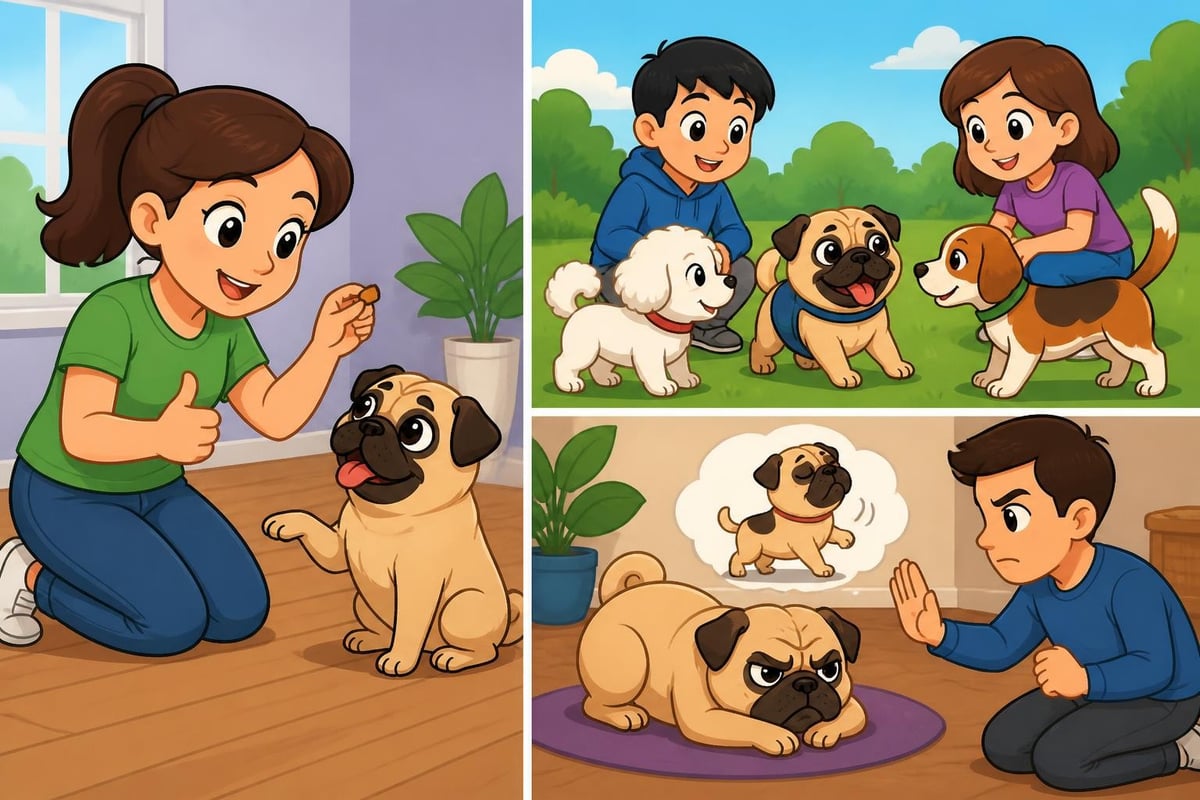
Despite their cute appearance, pugs can be surprisingly stubborn. They have an independent streak that can make training challenging at times, but with patience and positive reinforcement they respond well.
Effective training strategies
Positive reinforcement works best:
- Use small, healthy rewards
- Keep training sessions short (5-10 minutes)
- Be consistent in commands and expectations
- Make training fun and playful
Socialization from puppyhood:
Early socialization is crucial. Expose your pug puppy to different people, dogs, environments, and experiences between weeks 8 and 16. This critical window lays the foundation for a balanced, confident adult dog.
A pug's stubborn nature means consistency is important. They like to test boundaries, so stay firm in your rules without becoming harsh. Their sensitive nature responds poorly to harsh corrections.
Breeding and ethical considerations
The pug is at the center of an important debate about the ethics of dog breeding. Animal rights organizations have repeatedly pointed to the welfare problems that arise from this breed's extreme physical features.
Responsible breeding practices
Modern breeders are working to improve health by:
- Outcrossing: Crossing with healthier, less extreme types
- Health screening: Mandatory BOAS testing for breeding animals
- Genetic testing: Screen for hereditary conditions through validated testing laboratories
- Selection for functionality: Prioritize respiratory capacity over appearance
The Dutch Kennel Club has established guidelines for pug breeders, including mandatory health tests and tightened breeding regulations.
What to look for in a breeder
If you are considering getting a pug puppy, choose a breeder who:
- Has both parents tested for BOAS and other hereditary conditions
- Is transparent about health issues in the bloodline
- Raises puppies in the home with adequate socialization
- Is willing to take puppies back if problems arise
- Is a member of a recognized breeding club
Daily life with a pug
Living with a pug brings unique joys and challenges. Their presence fills a home with personality, snoring, and unconditional love.
Exercise needs
Pugs have moderate exercise needs. Two short walks of 15–20 minutes per day are usually sufficient. Avoid activity on hot days or in direct sun, as they are extremely prone to overheating.
Safe exercise guidelines:
- Walk during the cool morning or evening hours
- Always take water with you
- Watch for signs of fatigue: excessive panting, slow movements, blue tongue
- Alternate activity with rest periods
- Use a harness instead of a collar to avoid pressure on the airways
Temperature regulation
Because of their flat faces, pugs have difficulty regulating their body temperature. In summer, air conditioning is almost essential, and during heat waves you need to be extra careful.
Heat prevention tips:
- Provide cool resting spots in the house
- Use cooling mats or frozen towels
- Offer ice cubes or frozen treats
- Continuously monitor their breathing
- Know the signs of heatstroke and emergency procedures
Pugs and families
For the right family, the pug is a fantastic addition. They are excellent with children, provided both parties treat each other respectfully. Their sturdy build makes them less fragile than some other small breeds, but their protruding eyes require caution.
Compatibility with other pets
Pugs are generally friendly toward other dogs and can live well with cats, especially if they are introduced from puppyhood. Their non-aggressive nature makes conflicts rare, although their snoring and sometimes loud breathing can annoy other animals.
| Family situation | Suitability | Considerations |
|---|---|---|
| Young children | Good | Teach children to handle eyes and face gently |
| Teenagers | Excellent | Good match for less active young adults |
| Seniors | Excellent | Ideal companion dog with low exercise needs |
| Other dogs | Good to excellent | Usually social and playful |
| Cats | Good | No problem with proper introduction |
The cost of a pug
Owning a pug entails significant financial commitments, especially given their potential health issues.
Initial costs:
- Purchase price from a responsible breeder: €1,200 - €2,000
- Basic supplies: €200 - €400
- Initial veterinary checks and vaccinations: €150 - €250
Annual costs:
- Food: €300 - €500
- Routine veterinary care: €200 - €400
- Insurance: €300 - €600 (higher due to breed-specific risks)
- Grooming and maintenance: €100 - €200
Potential medical costs:
- BOAS surgery: €1,500 - €3,500
- Eye surgery: €500 - €2,000
- Skin treatments: €100 - €500 per incident
A good pet insurance plan is highly recommended, although many insurers charge higher premiums for brachycephalic breeds or exclude certain conditions.
Life expectancy and senior care
The average lifespan of a pug is between 12 and 15 years, although this can vary widely depending on their health and genetics. Dogs with severe BOAS problems often live shorter lives, while healthy individuals sometimes exceed 15 years.
Senior pugs
As pugs age, they require special care:
- More frequent veterinary check-ups (every 6 months)
- Special diet for senior dogs
- Softer bedding for joints
- More careful temperature monitoring
- Possible medication for age-related conditions
Older pugs can develop arthritis, which further reduces their already limited mobility. Pain management and weight control become even more important in the senior stage.
Alternatives and improved breeding lines
For people who are in love with the pug’s personality but have health concerns, there are alternatives:
Retro Pugs: A breeding program that crosses pugs with Jack Russell Terriers to create longer snouts and healthier airways while retaining the character.
Healthier-bred pugs: Some breeders specifically select for longer muzzles and better breathing function within bloodlines, prioritizing functionality over extreme type traits.
These initiatives show that it is possible to preserve the charm and personality of the pug while addressing welfare concerns.
The decision
Choosing a pug is a decision that deserves careful consideration. These dogs offer unparalleled companionship, humor, and affection, but also require significant commitment in terms of healthcare, finances, and time.
For the right person or family, a pug can be a source of endless joy. Their comical personality, loyalty, and loving nature create a bond many owners describe as unique among dog breeds. At the same time, responsible ownership requires recognizing and accepting their limitations and health risks.
The key is honesty about your expectations, lifestyle, and capacity to care for their special needs. A well-informed decision leads to a happy, healthy relationship that enriches both parties.
Organizing your life with a pug also requires practical tools. A dog calendar, for example, can help keep track of vet appointments, medication schedules, and important milestones in your pet’s life.
The pug remains a breed that evokes strong opinions and deep emotions from both supporters and critics. These compact dogs with big personalities deserve owners who are fully prepared for the joys and challenges they bring. Whether you are considering welcoming a pug into your life or simply want to learn more about this fascinating breed, understanding their needs is the first step toward responsible ownership. For all the practical aspects of organizing your life with a pet, Kalenderwinkel.nl offers a wide range of calendars and planners for 2027 so you can record and plan all the important moments with your faithful four‑legged friend.


Related categories

Blog posts
-

, by Kalenderwinkel.nl Mopshond: all about this charming dog breed
-

, by Kalenderwinkel.nl Parrot: colorful roommate for years of enjoyment
-

, by Kalenderwinkel.nl English Cocker Spaniel: Character, Care, and Tips
-

, by Kalenderwinkel.nl Rhodesian Ridgeback: everything about this unique dog breed


