
Owls: fascinating nocturnal birds in the Netherlands
- 13 min read

Discover everything about owls in the Netherlands: species, habitat, behavior, and how you can help these beautiful nocturnal birds. Complete guide 2026.
The world of owls has something mysterious and fascinating. These nocturnal hunters with their penetrating gaze and silent flight have fired people's imagination for centuries. Various species occur in the Netherlands, each with its own story and challenges. From the tiny little owl to the imposing Eurasian eagle-owl, these birds of prey play an important role in our ecosystem. Their presence tells us not only about the health of our nature, but also about how we can share our living environment with them.
Which owls live in the Netherlands?
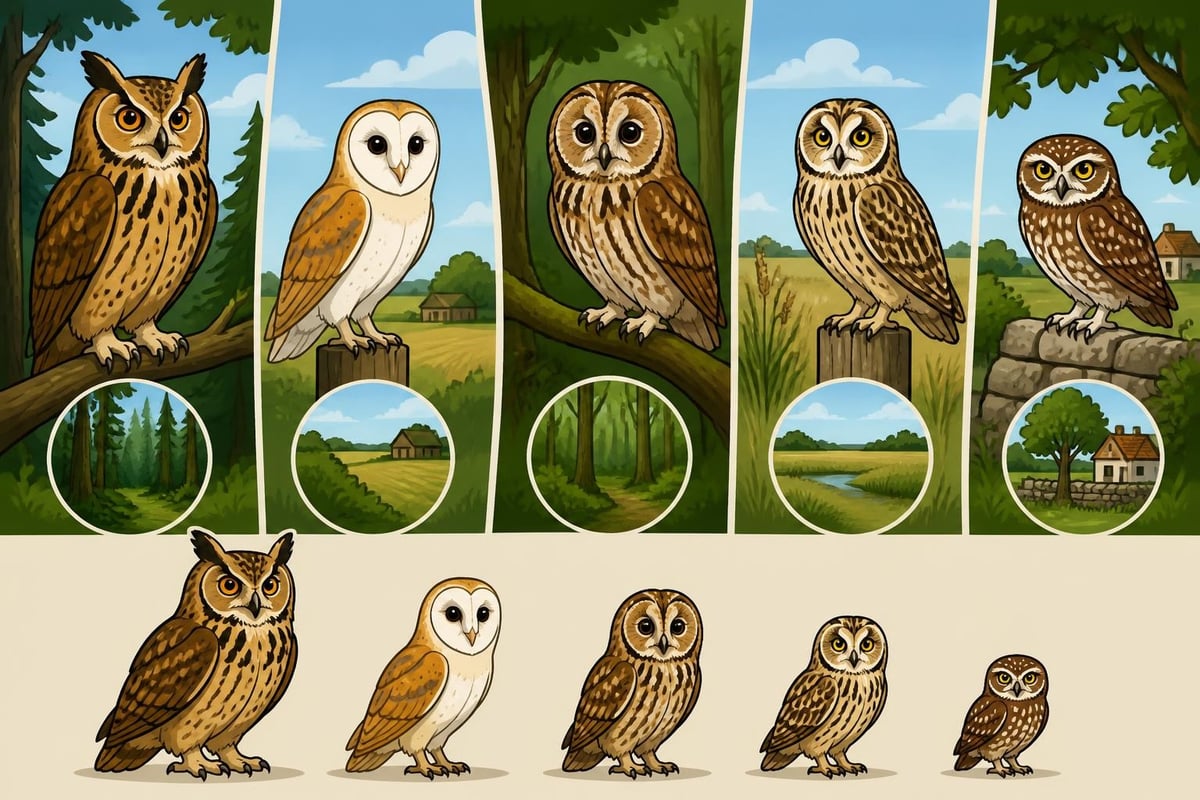
The Netherlands has a rich diversity of owl species, although many people are not aware of it. The most common species each have their own preferred habitat and behavior patterns. Their presence depends heavily on the availability of food, nesting sites and peace.
The little owl may be the most charismatic representative. This relatively small owl with its yellow eyes and characteristic eyebrows can sometimes be spotted during the day. Vogelbescherming Nederland describes how the little owl occurs in open landscapes with pollarded willows, orchards and old barns.
The barn owl is the ghostly apparition of old church towers and farmhouses. With its white, heart-shaped face and silvery-white underside, this species used to wake many a farmer with its frightening cries. Unfortunately, the barn owl has declined sharply in numbers in recent decades.
Less well-known species
In addition to these better-known species, there are also rarer owls in the Netherlands:
- Ural owl: the largest common species with its characteristic "hoo-hoo-hoo" call
- Tawny owl: an inhabitant of open landscapes and marsh areas
- Short-eared owl: a rare breeding bird of reedlands
- Great grey owl: winter visitor from the north
- Eurasian eagle-owl: the largest European owl, recently returned to the Netherlands
The fascinating life of nocturnal hunters
Owls have evolved into perfect night hunters. Their anatomy is fully adapted to a life in darkness. The large eyes can capture extremely low levels of light, but owls mainly hunt by hearing. Their asymmetrically placed ears can locate sounds in three dimensions.
The silent flight is another remarkable feature. The leading edge of their flight feathers has small serrations that break up the airflow. This allows owls to fly almost silently and completely surprise prey. A mouse only hears an owl coming when it is too late.
Hunting behavior and food
The diet of Dutch owls varies greatly by species and season. Little owls eat mainly large insects, worms and occasionally a mouse. Barn owls are specialized in small rodents. a single barn owl pair can catch thousands of mice per year.
| Owl species | Main food | Hunting ground |
|---|---|---|
| Little owl | Insects, mice, worms | Open terrain, meadows |
| Barn owl | Field mice, shrews | Agricultural areas, grasslands |
| Tawny owl | Mice, rats, young rabbits | Forests, parks, large gardens |
| Short-eared owl | Voles, small birds | Islands, reed beds |
Hunting strategy also differs. Some species sit patiently on a lookout and plunge onto their prey. Others patrol low over the land, like the short-eared owl and the marsh owl that you sometimes see hovering over fields at dusk.
Owls and their habitat
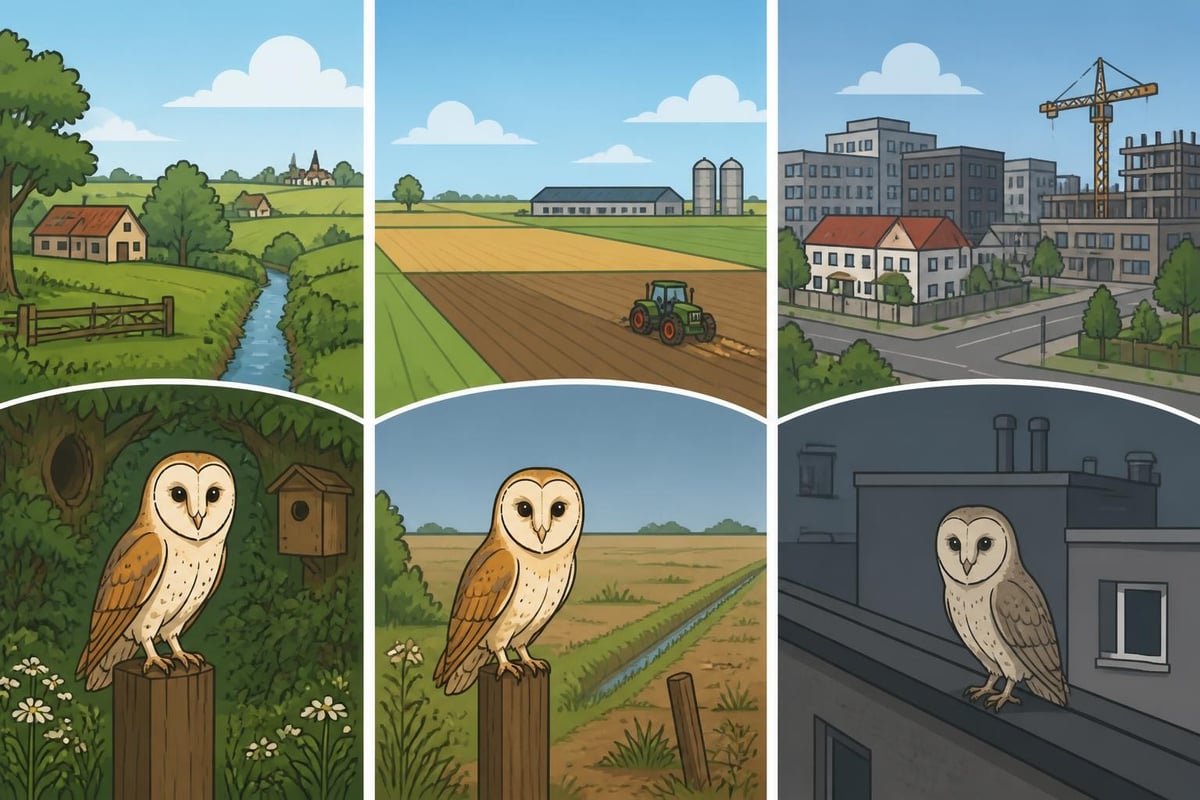
The habitat of owls in the Netherlands has undergone major changes. Where once there were vast natural landscapes, there is now intensively used cultural land. These changes have had major consequences for owl populations.
Natuurmonumenten emphasizes how important diverse landscapes are for owls. Old trees for nesting, open hunting areas and quiet during the breeding season are essential. Unfortunately, these elements are increasingly disappearing from the Dutch landscape.
The little owl has become particularly challenged. This species used to be found everywhere in the small-scale farmland landscape with hedgerows, pollarded willows and old orchards. Due to agricultural intensification, these elements have largely disappeared.
Urban owls
Some owls adapt to urban environments. Tawny owls occur in large city parks and old cemeteries. Barn owls sometimes nest in industrial buildings and large barns. These urban populations show how flexible owls can be, but they cannot fully compensate for the loss of natural habitat.
Conditions for urban owls:
- Sufficient green space for hunting grounds
- Nesting sites in old trees or buildings
- Rust tijdens de broedperiode
- Aanwezigheid van muizen en ratten
Bedreigingen en bescherming
Nederlandse uilen hebben te maken met verschillende bedreigingen. Verkeer is een grote doodsoorzaak, vooral voor kerkuilen en bosuilen die laag over wegen vliegen. Gifgebruik in de landbouw reduceert niet alleen hun voedselaanbod, maar kan ook tot vergiftiging leiden wanneer uilen prooidieren eten die gif hebben opgenomen.
Het gebrek aan nestgelegenheid is een cruciaal probleem. Oude bomen met holtes worden vaak gekapt om veiligheidsredenen. Boerderijen en kerktorens worden gerenoveerd waarbij toegangen voor uilen verdwijnen. Vogelbescherming Nederland heeft een actie opgezet om mensen te helpen de steenuil te ondersteunen door het planten van hagen en bomen.
Beschermingsmaatregelen die werken
- Nestkasten plaatsen in geschikte gebieden
- Behoud van oude bomen met natuurlijke holtes
- Extensief beheer van bermen en graslanden
- Uilenvriendelijke inrichting van boerderijen en schuren
- Muizenvriendelijke landbouw zonder gif
Verschillende organisaties werken actief aan uilenbescherming. Lokale vogelwerkgroepen plaatsen nestkasten en monitoren broedgevallen. Terreinbeheerders houden rekening met uilen bij het beheer van natuurgebieden. Deze inspanningen leveren mooie resultaten op. Waar geschikt leefgebied wordt hersteld, keren uilen vaak terug.
Uilen observeren en herkennen
Het observeren van uilen vraagt geduld en kennis van hun gedrag. De meeste soorten zijn vooral actief in de schemering en 's nachts. Vroeg in de avond, net na zonsondergang, is vaak de beste tijd om uilen te spotten.
Herkenningspunten bij verschillende soorten:
De steenuil is overdag soms zichtbaar op palen of daken. Met zijn compacte bouw, platte kop en gedrongen houding is hij niet te verwarren. Bij alarm maakt hij een kenmerkend "kiewiet" geluid.
You recognize the barn owl by its white appearance at dusk. Its flight is undulating and irregular. The call is not a 'hoo-hoo' but a prolonged, hissing scream that chills you to the bone.
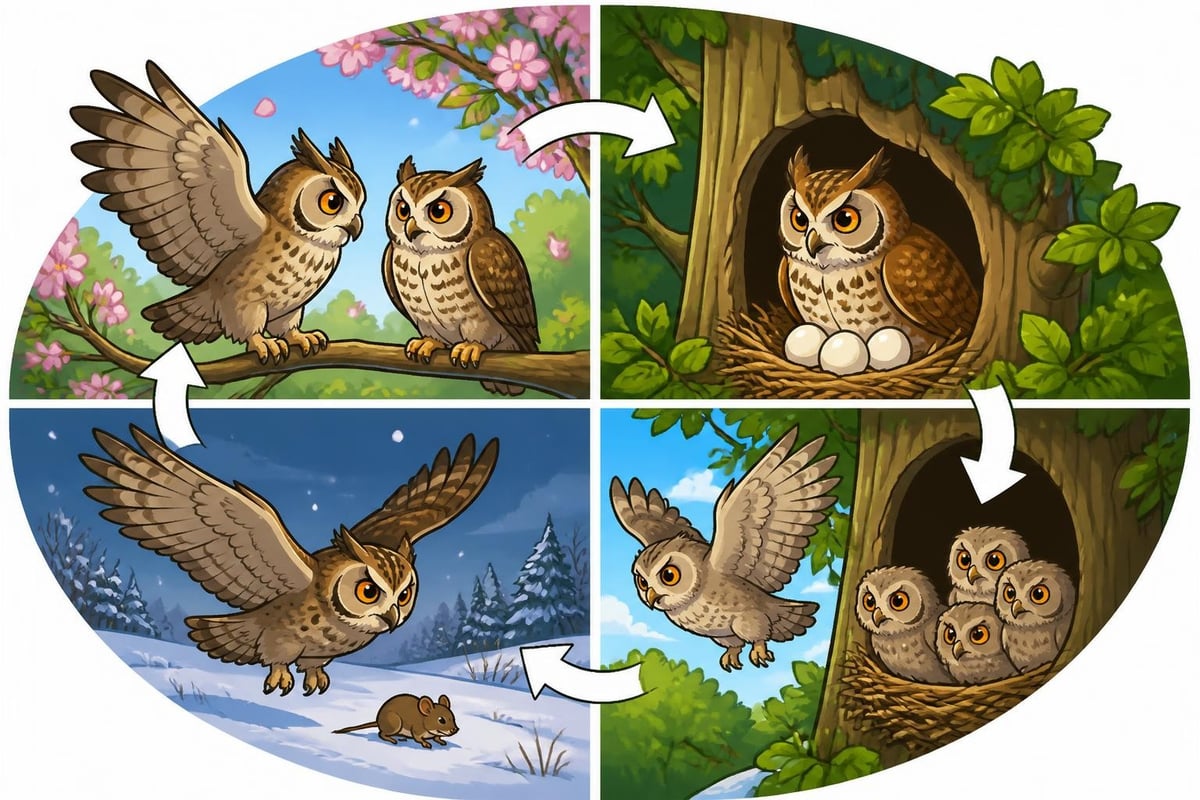
Tawny owls are mostly heard. Their territorial call in spring, a powerful "hoo-hoo-hoooo", carries far. The female answers with a higher "kiewiet".
Where can you find owls?
| Location type | Most likely species | Best time |
|---|---|---|
| Old orchards | Little owl | Daytime, early evening |
| Church towers and farms | Barn owl | Twilight |
| Old deciduous forests | Tawny owl | Early morning and evening |
| Open pastures | Long-eared owl, short-eared owl | Twilight in winter |
Owls in culture and symbolism
Owls have held a special place in human culture for centuries. In Greek mythology the owl was the symbol of wisdom, associated with the goddess Athena. This association with knowledge and intelligence still exists.
In the Netherlands, however, owls long had a less positive reputation. The calls of barn owls at night were seen as omens of death and misfortune. Farmers believed that an owl call near the house announced illness. Fortunately, this superstition has largely given way to appreciation.
Modern appreciation of owls manifests in various ways. Nature lovers collect observations for scientific research. Photographers capture the beauty of these birds. Artists use owls as inspiration, as seen in various products and images.
Scientific value
Owls are important indicators of ecosystem health. As top predators they sit at the top of the food chain. Their presence tells us there are sufficient prey animals, which in turn indicates a healthy system of plants, insects, and small mammals.
Scientific monitoring of owl populations provides valuable data. SOVON systematically collects data on breeding birds, including all owl species. This information helps develop targeted conservation measures.
Practical tips for owl-friendly gardens
Making your own garden or living area owl-friendly is easier than you think. Even small adjustments can contribute to better living conditions for these fascinating birds.
Basic elements for an owl-friendly environment:
- Let part of your garden go wild for mice and other prey species
- Plant native shrubs and trees for nesting habitat
- Avoid using poisons for pest control
- Install a nest box if suitable old trees are missing
- Ensure a variety of vegetation heights
A wild corner in your garden attracts mice, which in turn attracts owls. Old fruit trees are ideal for little owls. Do you have a barn or outbuilding? Then consider an access hole for barn owls.
Nest boxes for owls
Placing nest boxes can really make a difference. Special nest boxes have been developed for little owls that you can hang in trees or attach to old barns. Barn owl boxes are larger structures often placed in buildings.
When placing, pay attention to:
- Height: at least 3-4 meters high
- Direction: entrance opening facing east or southeast
- Location: overview of open hunting area
- Shelter: against direct wind and rain
- Maintenance: annual inspection and cleaning
The future of Dutch owls
The future of owls in the Netherlands depends on our choices. Will we preserve and restore enough habitat? Can we design our agriculture and spatial planning so there is room for these magnificent birds of prey?
There are positive developments. More and more farmers are working towards nature-inclusive agriculture. Municipalities are letting verges become flower-rich and mowing less often. Individuals are creating wildlife-friendly gardens. These small steps together can make a big difference.
Future prospects by species:
The tawny owl is doing relatively well. This adaptable species benefits from city parks and woodlands. The little owl remains vulnerable and needs targeted help. For the barn owl the future is uncertain, depending on developments in agriculture.
New threats are emerging. Climate change affects the availability of prey. Mild winters can be beneficial, but extreme weather conditions are problematic. The rollout of wind turbines and solar parks requires careful planning to spare owl habitat.
What can you do yourself?
Everyone can contribute to owl conservation:
- Report sightings via platforms such as waarneming.nl
- Support conservation organizations that work on owl protection
- Make your environment greener with native plants
- Spread knowledge about owls and their importance
- Support local initiatives for nest boxes and habitat improvement
In addition to these direct actions, it also helps to raise awareness. Share your enthusiasm for owls with others. Tell children about these special birds. Take part in owl excursions or bird counts.
Owls and the concept of conservation
Het verhaal van uilen illustreert perfect waarom natuurbehoud zo belangrijk is. Deze vogels hebben hun eigen intrinsieke waarde, maar functioneren ook als paraplusoorten. Door habitats voor uilen te beschermen, help je automatisch talloze andere planten en dieren.
Het gaat niet alleen om het redden van individuele soorten. Het gaat om het behoud van complete ecosystemen waarin alles met elkaar verbonden is. Uilen zitten aan de top van een voedselpiramide die begint bij planten, via insecten en kleine zoogdieren naar deze gevederde jagers leidt.
De bredere betekenis van uilenbescherming:
Als we voldoende muizen hebben voor uilen, betekent dat ook voldoende insecten voor die muizen, en voldoende planten voor die insecten. Het betekent gezonde bodems, schoon water en frisse lucht. Uilenbescherming is dus eigenlijk mensbescherming.
Deze holistische benadering vraagt om samenwerking tussen verschillende partijen. Boeren, natuurbeheerders, gemeenten en particulieren moeten elkaar vinden in gedeelde doelen. Gelukkig gebeurt dit steeds vaker, met mooie resultaten.
Uilen herkennen aan geluiden
Naast visuele waarnemingen zijn geluiden cruciaal bij het herkennen van uilen. Elke soort heeft zijn eigen repertoire aan roepen en geluiden. In het voorjaar, tijdens de baltsperiode, zijn uilen het meest vocaal.
De bosuil is 's avonds en 's nachts te horen met zijn karakteristieke territoriumroep. Het mannetje roept een sonoor "hoe-hoe-hoeoeoe" dat kilometers ver draagt. Het vrouwtje antwoordt met een korter, scherper "kiewiet". Deze duetten kun je van februari tot april horen.
De steenuil heeft een gevarieerd repertoire. De alarmroep is een scherp "kiewiet-kiewiet". De baltsroep van het mannetje klinkt als een zacht, hijgend "goek-goek-goek". Jonge steenuilen bedelen luidruchtig om voedsel met sissende geluiden.
Geluidsgids voor Nederlandse uilen
- Kerkuil: langgerekte, sissende schreeuw; geen typische 'hoe-hoe'
- Bosuil: diep 'hoe-hoe-hoeoeoe'; vrouwtje 'kiewiet'
- Steenuil: 'kiewiet' en 'goek-goek-goek'
- Ransuil: korte 'boe' roep; ook klapperen met vleugels
- Short-eared Owl: hoarse 'oo-oo-oo' call during courtship flights
Those who want to learn to recognize owls by sound should start by studying audio recordings. Then go to locations where the species occurs and practice listening live. Choose the best time: February to May in the late evening and early night.
De ecologische rol van uilen
Uilen vervullen een essentiële ecologische functie als toproofdier. Ze reguleren populaties van kleine zoogdieren, vooral muizen en ratten. Zonder deze natuurlijke vijanden zouden muizenpopulaties explosief kunnen groeien met alle gevolgen van dien voor landbouw en natuurlijke vegetatie.
Een kerkuilenpaar met jongen kan per seizoen meer dan duizend muizen vangen. Dit natuurlijke bestrijdingsmiddel is veel effectiever en duurzamer dan gif. Steeds meer boeren zien dit in en werken aan het behouden of aantrekken van kerkuilen door nestkasten te plaatsen en randen te extensiveren.
Ook voor het ecosysteem als geheel zijn uilen belangrijk. Hun braakballen, die ze uitwerpen na het eten, bevatten onverteerd materiaal zoals botten en vacht. Deze braakballen zijn een voedselbron voor insecten en verrijken de bodem. Wetenschappers gebruiken braakballen ook om de samenstelling van kleine zoogdierpopulaties te onderzoeken.
Ecosysteemdiensten van uilen:
- Natuurlijke plaagbestrijding in landbouwgebieden
- Populatiecontrole van knaagdieren
- Indicatorfunctie voor ecosysteemgezondheid
- Bijdrage aan nutriëntencycli via braakballen
Like many natural processes, this system works best when we do not disturb it. The use of poisons disrupts the balance because poisoned mice also poison the owls. Habitat loss prevents owls from hunting where mice are. Restoring this balance requires nature-inclusive thinking in all our activities.
Owls are more than fascinating nocturnal birds; they are important indicators of a healthy ecosystem and symbols of the natural balance we so badly need. By managing our living environment more consciously and making room for biodiversity, we can help these remarkable birds of prey. Whether you are interested in nature, photography, or simply enjoy collecting beautiful things, there are many ways to express your appreciation for the natural world. At Kalenderwinkel.nl you will find a wide range of calendars and planners for 2027 where you can record your nature observations or enjoy stunning nature photos all year long. With convenient payment options and reliable shipping via PostNL, DHL, or UPS, you can easily order your perfect calendar.


Related categories

Blog posts
-

, by Kalenderwinkel.nl Owls: fascinating nocturnal birds in the Netherlands
-

, by Kalenderwinkel.nl Tear-off calendars 2026: your daily dose of inspiration
-

, by Kalenderwinkel.nl Beagle: all about this energetic dog breed
-

, by Kalenderwinkel.nl Whale: Majestic giants of the ocean


