
Whale: Majestic giants of the ocean
- 12 min read

Discover the fascinating life of the whale. From species to behavior, these majestic giants inspire people around the world. Read more!
Throughout the centuries, the whale has held a special place in our collective imagination. These majestic mammals embody the mysteries of the ocean and show us that there is still much to discover in the waters that cover our planet. For many, the whale symbolizes strength, intelligence, and freedom. It is not surprising that these fascinating animals also find their way into art, culture, and even the way we organize and keep track of time. Just as Kalenderwinkel.nl offers a wide range of calendars for every season and preference, nature offers us a rich diversity of whale species, each with its unique characteristics and stories.
The different species of whales
When people think of whales, most imagine gigantic animals swimming through the oceans. Yet there is a surprising diversity within the whale family. Scientists divide whales into two main groups: baleen whales and toothed whales. This division is not just a technical classification but tells us a lot about how these animals live and feed.
Baleen whales
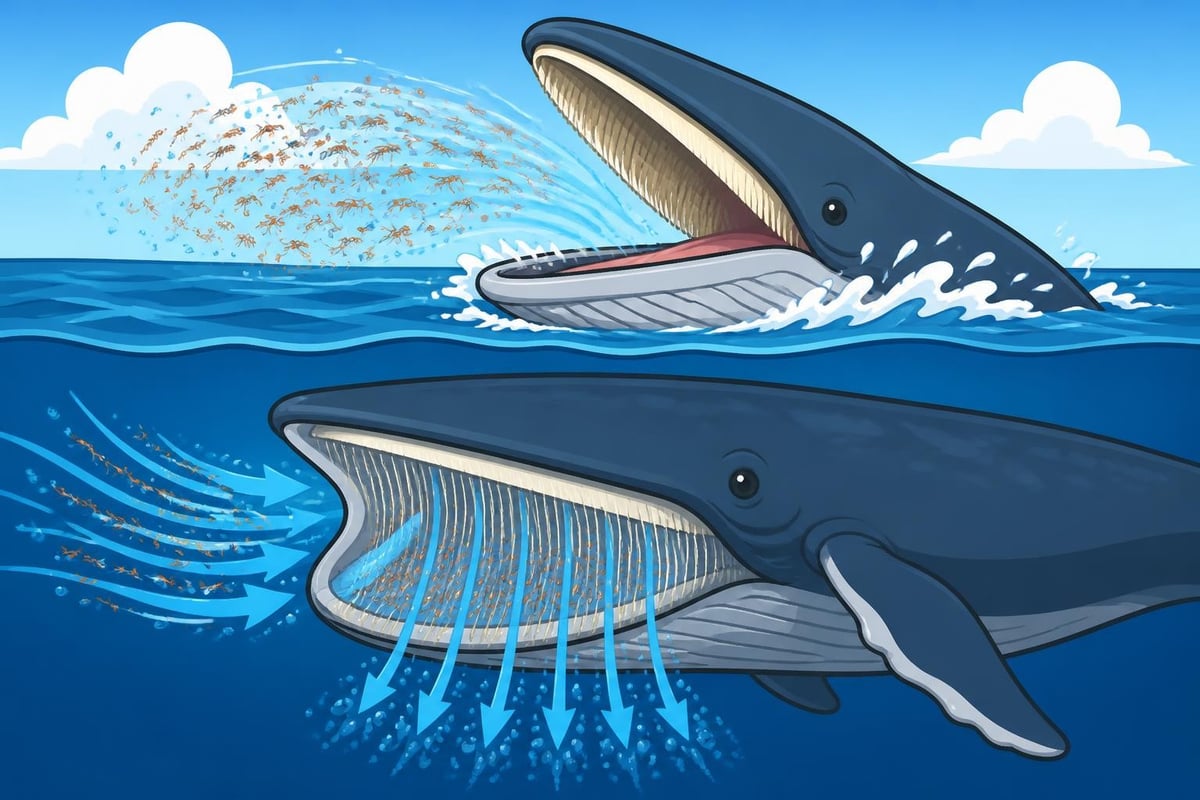
Baleen whales are among the largest animals ever to have lived on Earth. Instead of teeth, these giants have baleen—horny plates that act like a sieve. This unique system allows them to take in huge amounts of water and then filter it for krill and small fish.
The blue whale is known as the largest animal in the world and can grow to more than thirty meters long. Imagine that: longer than three trucks in a row! These giants can weigh up to 200 tons, which is equivalent to the weight of about 33 elephants. Despite their immense size, they feed mainly on small shrimp-like creatures.
Other well-known baleen whales include:
- The fin whale, the second-largest whale in the world
- The humpback whale, famous for its acrobatic breaches
- The gray whale, known for its long migrations
- The North Atlantic right whale, one of the most endangered whale species
Toothed whales
Toothed whales form a diverse group ranging from the mighty sperm whale to the playful dolphin. Yes, you read that right: dolphins are also part of the whale family! These animals have real teeth and actively hunt fish, squid, and other marine creatures.
The sperm whale is the largest toothed whale and can dive to depths of more than 2,000 meters. These impressive divers can hold their breath for over ninety minutes while hunting giant squid in the dark depths of the ocean. Their large, square head contains a mysterious substance called spermaceti, which scientists believe helps with diving and echolocation.
The social life of whales
Whales are not the solitary swimmers we might imagine. On the contrary, many species display complex social behavior comparable to other highly developed animals like elephants and primates. The way whales communicate and cooperate is a true wonder of nature.
Humpback whales are known for their intricate songs. Males produce complex melodies that can last for hours and travel hundreds of kilometers through the water. Each year populations develop new variations of their songs, indicating that whales have a form of cultural transmission.
| Whale species | Group size | Method of communication | Social behavior |
|---|---|---|---|
| Orca | 5-30 individuals | Dialects | Matriarchal groups |
| Humpback | Solitary to small groups | Songs | Seasonal cooperation |
| Sperm whale | 10-20 females with calves | Clicking sounds | Strong family bonds |
| Blue whale | Usually alone or in pairs | Low-frequency sounds | Limited social interaction |
Orcas, also called killer whales, live in tight family groups that stay together for generations. They have even developed different dialects, allowing researchers to distinguish populations based on their sounds alone. Young orcas learn hunting from older generations, with some groups developing specialized techniques unique to their community.
Migration and seasonal patterns
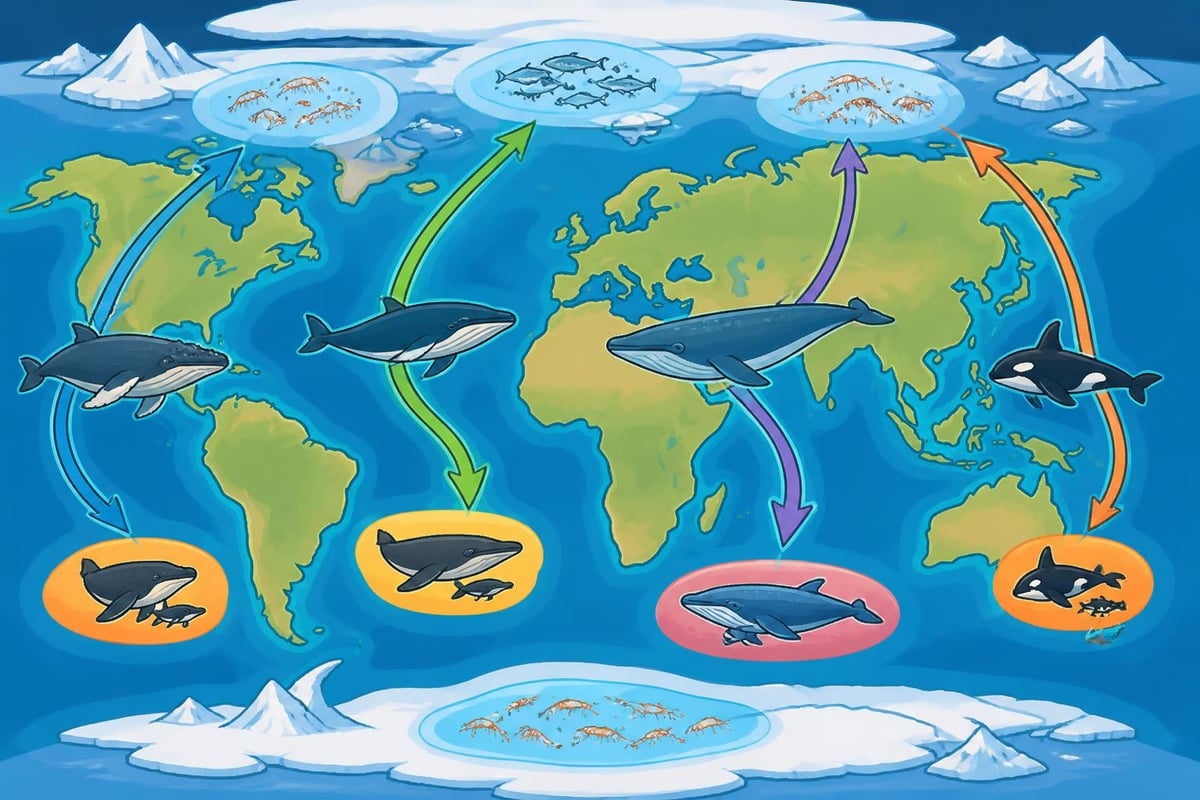
The annual migration patterns of whales are among the most impressive journeys in the animal kingdom. Some species travel more than 20,000 kilometers per year, navigating across oceans without visible landmarks. This journey is driven by two main needs: food and reproduction.
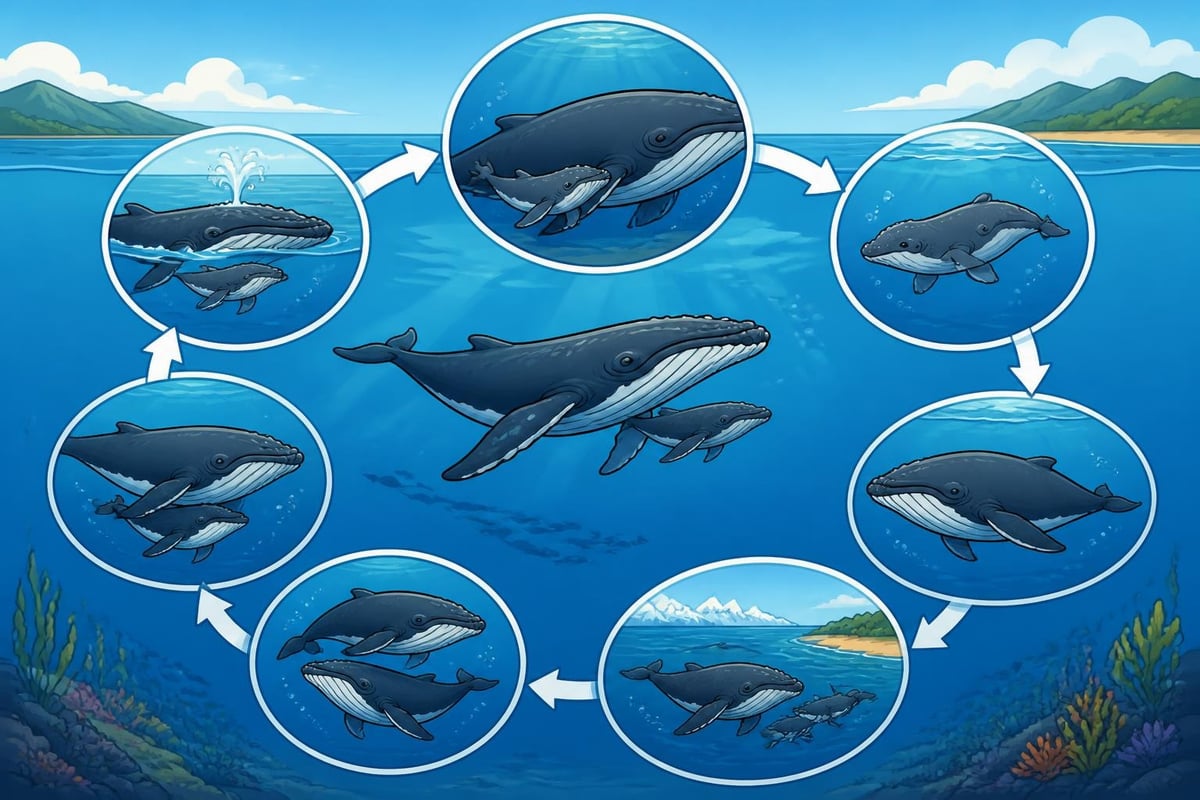
Many baleen whales spend the summer in nutrient-rich polar waters, feasting on huge amounts of krill and small fish. As winter approaches, they begin their long journey to warmer waters near the equator, where they give birth. These calves have not yet developed the thick layer of blubber needed to survive in cold water.
Navigation through the oceans
How do whales find their way across thousands of kilometers of open ocean? This question has fascinated scientists for decades. Research suggests that whales use multiple navigation methods:
Navigation techniques of whales:
- The Earth's magnetic field as a natural compass
- Underwater landscapes and seabed features
- The position of the sun and stars
- Temperature gradients in the water
- Memory of previous routes
For those interested in tracking seasonal patterns and natural cycles, the news about calendars offers interesting insights into how people have used nature over time to structure their year.
Threats and protection
The story of the whale is unfortunately also one of exploitation and recovery. For centuries whales were hunted en masse for their oil, meat, and baleen. In the twentieth century whaling reached its peak, pushing some species to the brink of extinction. The blue whale population fell to perhaps 1% of its original number.
Fortunately an international moratorium on commercial whaling was introduced in 1986. This measure has given many species a chance to recover, although some populations remain vulnerable. The North Atlantic right whale, for example, now numbers only a few hundred individuals and is under extreme pressure.
Today whales are threatened by modern challenges:
- Shipping traffic - Collisions with large ships are a major cause of death
- Noise pollution - Underwater noise from ships and sonar equipment disrupts communication
- Climate change - Changing ocean temperatures affect food chains
- Pollution - Plastics and chemicals accumulate in their bodies
- Nets and ropes - Many become entangled in fishing gear
The cultural significance of the whale
Whales have always held a special place in human cultures worldwide. For coastal communities in the far north, whales were not only a food source but also central figures in mythology and spirituality. Many indigenous peoples saw the whale as a sacred animal, a link between the world of the living and the spirits.
In Western literature the whale became immortal through Herman Melville's "Moby-Dick", the epic tale of Captain Ahab's obsessive hunt for a white sperm whale. This masterpiece from 1851 explores themes of obsession, nature versus man, and the incomprehensibility of the universe.
Even in modern times whales continue to inspire us. Documentaries like the BBC's "Blue Planet" series have introduced millions to the underwater life of these animals. Whale watching has grown into an important form of ecotourism, where people can admire these majestic creatures in their natural habitat from boats.
Whales in art and design
The whale's elegant shape and powerful presence make it a popular motif in art and design. From nursery décor to contemporary art, the whale appears everywhere. This timeless appeal comes from the combination of their immense size and simultaneously gentle, graceful movements through the water.
For those who like to capture the beauty of nature in their daily lives, nature-themed calendars offer a lovely way to enjoy that inspiration year-round. Just as a whale follows seasonal patterns, a well-chosen calendar helps us structure our time and live mindfully with the natural rhythms of the year.
Scientific breakthroughs in whale research
In recent decades scientists have made enormous progress in our understanding of whales. Modern technology such as satellite tags, underwater microphones and drones has given us unprecedented insights into the behavior of these animals.
A fascinating discovery is that whales play an important role in the ocean's carbon cycle. When a whale dies and sinks to the seafloor, it takes carbon with it that would otherwise remain in the atmosphere. This process, known as "whale fall", also creates unique ecosystems on the ocean floor that can sometimes persist for decades.
Key research areas:
- Genetic studies revealing kinship and population structure
- Acoustic research into communication patterns
- Behavioral studies using cameras attached to whales
- Hormonal analyses of skin samples
- Photo-identification tracking individual animals
Researchers have discovered that some whales live much longer than we ever thought. Greenland whales can possibly live more than 200 years, making them among the longest-lived mammals in the world. In their long lives these animals have witnessed unimaginable changes in the ocean.
The future for whales
As we look ahead to the future of whales, there is both reason for hope and concern. On one hand, many populations have recovered remarkably well from near-extinction due to whaling. The humpback, for example, which in the 1960s stood on the brink with only a few thousand individuals, now numbers in the tens of thousands again.
On the other hand, new challenges bring new threats. Ocean warming is disrupting the food chains whales rely on. Krill populations in Antarctica are declining, which has direct consequences for the baleen whales that feed there. The increase in shipping in previously pristine Arctic waters creates new risks.
| Conservation measure | Impact | Challenge |
|---|---|---|
| Speed limits for ships | Fewer collisions | Economic resistance |
| Protected areas | Safe breeding grounds | Enforcement at sea |
| Ban on whaling | Population recovery | Some countries continue to hunt |
| Research and monitoring | Better understanding | Funding needed |
International cooperation is crucial because whales know no borders. A whale spotted in Dutch waters can be swimming off the coast of Iceland months later. Protection therefore requires coordinated efforts between countries, where reliable shipping and communication are as important as in any other international project.
The symbolism of time and space
The way whales live reminds us how relative our human perception of time and space is. A whale that travels tens of thousands of kilometers in its lifetime experiences the ocean on a totally different scale than we do. Their communication travels farther than we can hear, their world is bigger than we can see.
This different experience of time invites reflection. In a world where we are constantly occupied with deadlines and appointments, we can learn something from the slower pace of nature. A whale does not rush, but follows the natural cycles of seasons and tides.
Keeping time and planning our lives with calendars is a typically human activity. Whether you choose a practical planner or a decorative wall calendar, it helps bring structure to our days. Still, it's good to pause sometimes and remember that there are beings that experience time in a completely different way.
Whales and the ecosystem
The role of whales in the marine ecosystem goes much further than most people think. These animals are what scientists call "ecosystem engineers": species that influence their environment in ways that shape living conditions for other organisms.
Whales transport nutrients vertically in the ocean. When they hunt at depth and come to the surface to breathe, they bring nutrients up in their feces. This "whale pump" enriches surface waters with iron and nitrogen, which stimulates phytoplankton growth. These microscopic plant-like organisms produce more than half of the oxygen in our atmosphere and form the base of the marine food web.
The ecological impact of whales:
- Stimulating phytoplankton growth by nutrient transport
- Carbon sequestration through their large body mass
- Creating unique "whale fall" ecosystems after death
- Influencing prey migration patterns
- Contributing to the biodiversity of oceans
The loss of whales due to hunting has likely had much greater ecological consequences than we realize. Researchers estimate that the enormous numbers of whales that once swam the oceans played a crucial role in the health of marine ecosystems worldwide.
Observing and admiring whales
For many people, seeing a whale in the wild is a transformative experience. That single glimpse of a tail fluke breaking the water's surface, or the spectacular breach of a humpback, can leave a lasting impression. Whale watching has therefore grown into a popular activity in coastal areas where these animals regularly pass by.
Responsible whale watching, however, requires respect and caution. Boats must keep enough distance so as not to disturb the animals. It is important that tourism does not come at the expense of the whales' well-being. Fortunately, more and more countries are developing guidelines for sustainable wildlife tourism.
In the Netherlands we can, with some luck, occasionally spot porpoises and sometimes larger whale species off the coast, although this is rare. For guaranteed sightings you need to go to places like Iceland, Norway, or the Azores, where whale populations are larger and the chances of sightings are higher.
Capturing these moments and memories is valuable. Just as a beautiful calendar helps remember special days, photos and journals of nature experiences can help us stay connected to the wonders of the natural world. At Kalenderwinkel.nl you can choose from a variety of themed calendars that can inspire you year-round to live mindfully with the nature around you.
The world of the whale continues to amaze us with its complexity and beauty. These majestic animals remind us that we are part of a larger whole in which every species plays a valuable role. Whether you are interested in science, nature, or simply looking for inspiration, whales have much to teach us about adaptability, social connections, and living in harmony with natural cycles. If you want to structure your year with a beautiful calendar that helps you live mindfully with the seasons, check out the extensive range at Kalenderwinkel.nl, where you can find calendars for every preference with reliable delivery to your door.
Related categories
Blog posts
-

, by Kalenderwinkel.nl Beagle: all about this energetic dog breed
-

, by Kalenderwinkel.nl Whale: Majestic giants of the ocean
-

, by Kalenderwinkel.nl Red robin: the nature calendar for bird lovers 2027
-

, by Kalenderwinkel.nl Chesapeake Bay Retriever: character, care & history


