Discover the fascinating story of the tiger: from evolution to culture. A journey through wilderness, symbolism, and modern inspiration.
The tiger. At the sound of this word an image appears in our minds: striped, powerful, majestic. This felid has become a symbol of courage, strength and untamed nature through the centuries. But the tiger is more than an icon. It is a living being with a complex story of evolution, adaptation and survival. From the frozen forests of Siberia to the dense jungles of Sumatra, the tiger has adapted to extreme conditions. In this article we take you on a journey through the world of these magnificent predators, discover their biological secrets, and understand why they still stir our imagination today.
The word tiger: origin and meaning
The Dutch word "tijger" has a rich history that goes back to Latin. The etymology of tijger reveals how this word traveled through different languages before entering our vocabulary. From the Latin tigris, which in turn was borrowed from the Ancient Greek τίγρις (tigris), the word made its way into Dutch.
The origin goes even further back. The Greek word probably came from an Iranian word meaning "arrow" or "sharp", a reference to the tiger's speed.
From language to culture
In Dutch texts the tiger has appeared for centuries. The digital library for Dutch literature shows how writers and poets through history have used the tiger as a symbol in literature and poetry. In old travel accounts the tiger was described as a dangerous beast from distant lands, while modern authors more often use it as a metaphor for inner strength.
Symbolic meanings of the tiger:
Strength and courage in Eastern cultures
Danger and wildness in Western stories
Royal dignity in heraldry
Spiritual energy in yoga and meditation
The tiger has settled into our language and culture in ways that go beyond the animal itself.
The evolution of a top predator
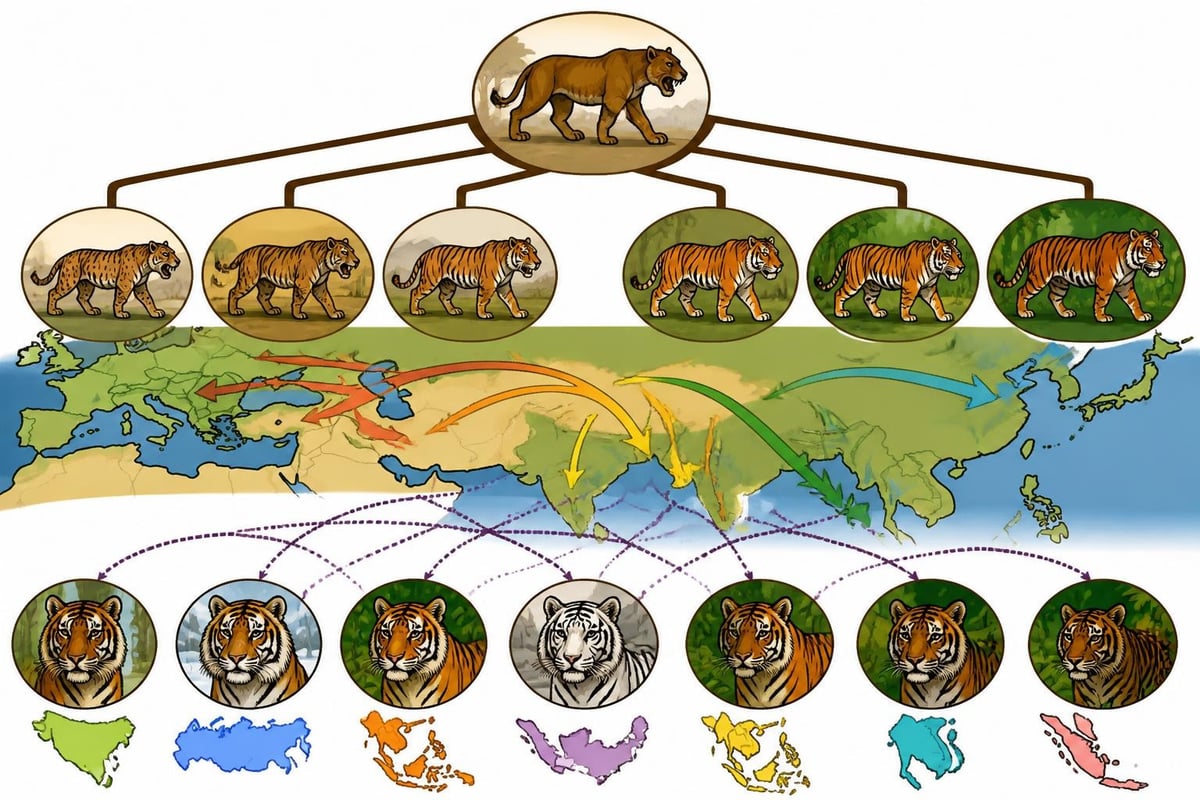
The tiger belongs to the cat family (Felidae) and is the largest living felid in the world. Their evolutionary history is a fascinating story of adaptation and diversification. Recent research using ancient DNA techniques has produced new insights into how tigers have evolved.
Adaptations to different climates - Genes involved in fat metabolism differ between Siberian and tropical tigers
Immunity and disease resistance - Specific gene variants that provide protection against parasitic infections
Sensory capabilities - Genetic basis for their exceptional night vision and hearing
Strength and speed - Muscle development and explosive power at the molecular level
These genomic insights help not only in understanding tigers but also in developing targeted conservation strategies.
Subspecies: a rich diversity
The tiger has several subspecies, each adapted to its specific habitat. Unfortunately, three subspecies have already gone extinct in the last century: the Caspian tiger, the Javan tiger, and the Bali tiger.
Subspecies
Habitat
Estimated number (2026)
Conservation status
Bengal tiger
India, Bangladesh
3.000-3.500
Endangered
Siberian tiger
Russian Far East
500-600
Endangered
Indochinese tiger
Thailand, Myanmar
350-400
Severely endangered
Malayan tiger
Malaysia
150-200
Critically endangered
Sumatran tiger
Sumatra
400-500
Critically endangered
South China tiger
China
<10 in the wild
Critically endangered
The different subspecies show striking differences. The Siberian tiger is the largest, with males reaching up to 300 kilograms. The Sumatran tiger, on the other hand, is considerably smaller, with a more compact body suited to life in dense tropical forests.
Adaptations to extreme environments
Every tiger has adapted to its specific habitat. The Siberian tiger, for example, has a thicker coat and a layer of fat to survive temperatures that can drop to -40°C. Their territory can reach up to 1,000 square kilometers because prey is scarce in these regions.
Tropische tijgers hebben daarentegen een korter, lichter vacht. Ze leven in kleinere territoria, maar moeten omgaan met andere uitdagingen zoals hogere parasietdruk en dichtere vegetatie die de jacht bemoeilijkt.
Bedreigingen en bescherming
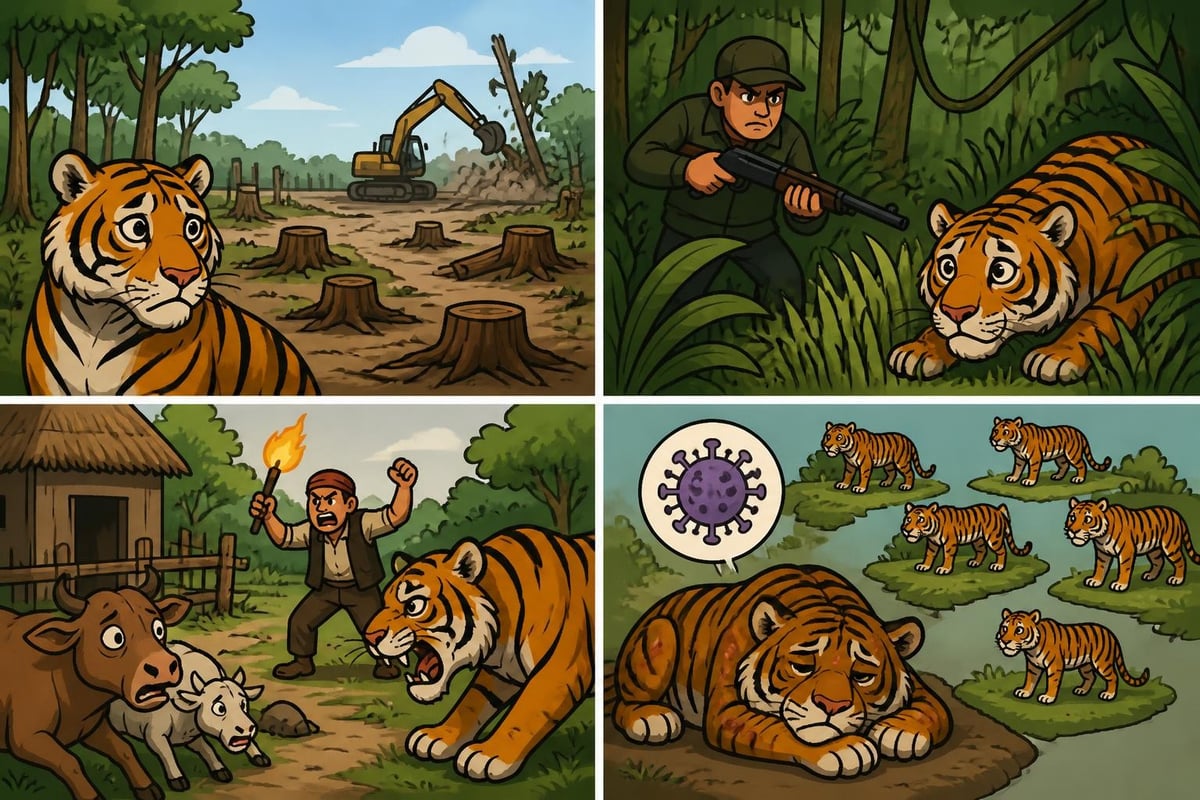
De tijger staat onder enorme druk. Habitatverlies, jacht en fragmentatie van populaties hebben geleid tot dramatische dalingen in aantallen. Begin 20e eeuw leefden er naar schatting 100.000 tijgers in het wild. Tegen 2010 was dit aantal gedaald tot ongeveer 3.200 dieren.
Een zorgwekkende factor die vaak over het hoofd wordt gezien, is ziekte. Een uitgebreide review in Frontiers in Ecology and Evolution bespreekt hoe infectieziekten een significante bedreiging vormen voor zowel tijgers als hun prooidieren. Van canine distemper virus tot tuberculose, deze ziektes kunnen kleine populaties in fragiele gebieden decimeren.
Belangrijkste bedreigingen:
Habitatverlies door ontbossing voor landbouw en infrastructuur
Stroperij voor traditionele geneeskunde en trofeeën
Prooidaling door overbejaging en habitatdegradatie
Mens-tijger conflicten bij veehouderijen nabij beschermde gebieden
Genetische verarming door kleine, geïsoleerde populaties
Klimaatverandering die habitatgeschiktheid beïnvloedt
Lichtpuntjes in het donker
Toch is er hoop. Nieuw onderzoek toont aan dat gerichte beschermingsinspanningen effect hebben. De IUCN Green Status assessment uit 2025 presenteert hoopgevende cijfers: tijgerpopulaties in India, Nepal, Bhutan en Rusland tonen tekenen van herstel. Het totale aantal wilde tijgers is gestegen naar ongeveer 4.500-5.000 dieren in 2026.
Beschermingsprojecten zoals Project Tiger in India, opgericht in 1973, hebben aangetoond dat met voldoende middelen, politieke wil en lokale betrokkenheid tijgerpopulaties kunnen herstellen. Nepal heeft zelfs zijn tijgerpopulatie verdubbeld tussen 2009 en 2022.
The tiger in culture and imagination
No other animal holds as dominant a place in human cultures as the tiger. In Asian cultures the tiger is one of the twelve animals of the Chinese zodiac, a symbol of courage and protection against evil spirits.
In Western cultures the tiger appears in children’s stories, from the cheerful Tigger in Winnie-the-Pooh to the majestic Shere Khan in The Jungle Book. These tales often form our first encounter with this impressive animal.
Tigers in modern media
The tiger remains relevant in our modern era. Documentaries by nature filmmakers like the BBC show the reality of tiger life, from affectionate maternal care to ruthless hunting. These images bring the tiger into our living rooms and create awareness of their vulnerable position.
Cultural appearances:
Chinese zodiac and astrology
National symbols (India, Bangladesh, Malaysia)
Sports teams and mascot use
Art and calligraphy through the centuries
Modern advertising for power and performance
At Kalenderwinkel.nl you can find various calendars that capture the beauty of wildlife, perfect for animal lovers who want to be inspired by nature every day.
Tiger watching and ecotourism
Tiger watching has grown into a significant industry that brings economic benefits and raises awareness. National parks in India such as Ranthambore, Bandhavgarh and Kanha offer visitors the chance to see tigers in the wild.
This form of ecotourism has a double-edged effect. On one hand it generates revenue invested in protection. On the other hand, too much human presence can cause stress to the animals.
The perfect tiger safari
A successful tiger safari requires patience, timing and a bit of luck. Your best chance of sighting is during the dry months (March–May in India), when tigers gather around water sources.
Choose the right park - Some parks have higher tiger densities
Timing is everything - Early morning and late afternoon are the most active
Multiple safaris - One safari is rarely enough
Expert guides - Local knowledge makes the difference
Patience and respect - Keep your distance and be quiet
Tigers in captivity: controversies and conservation
More tigers live in captivity worldwide than in the wild. Zoos house about 15,000–20,000 tigers, while thousands more are in private ownership, especially in the United States.
This situation raises important ethical questions. Modern, well-managed zoos play a role in education, research and breeding programs for threatened subspecies. They collaborate in international breeding programs (European Endangered Species Programme, Species Survival Plan) to preserve genetic diversity.
The dark face
Unfortunately there is also a parallel world of "tiger farms" in Asia and irresponsible private ownership elsewhere. These facilities contribute to poaching by sustaining demand for tiger products and often provide poor living conditions.
Dilemmas around captive tigers:
Educational value versus animal welfare
Genetic reservoirs versus natural populations
Cost of care versus wild protection
Tourist attraction versus ethical concerns
Responsible organizations focus on large, enriched enclosures, encourage natural behavior, and contribute to wild populations through research and fundraising.
Living like a tiger: behavior and ecology
A tiger's daily life is dominated by two things: hunting and territory defense. Tigers are solitary animals that only come together to mate. An adult tiger can eat up to 40 kilograms of meat at once, but on average succeeds in only one of every ten to twenty hunting attempts.
Their preferred prey varies by region: sambar, chital, and wild boar in India; deer and wild boar in Siberia; tapirs and wild bovids in Southeast Asia. The tiger is an opportunistic hunter that attacks everything from fish and birds to adult buffaloes of 1,000 kilograms.
Territorial behavior
Males hold territories of 60 to 100 square kilometers in dense areas, and up to 1,000 square kilometers in sparsely populated regions. They mark boundaries with urine, scratches on trees, and scent messages. Females have smaller territories that often overlap with those of a dominant male.
Tiger trait
Value
Function
Jump height
Up to 5 meters
Catching prey, obstacles
Swimming ability
Several kilometers
Movement, cooling
Bite force
1,000 psi
Fatal neck bite
Running speed
60 km/h short distance
Attack sprint
Male territory
60-1,000 km²
Food, mating
Female territory
20-100 km²
Cub care
The future of the tiger
Looking toward 2026 and beyond, the tiger's future is uncertain but not hopeless. The coming decades will be crucial. Major initiatives such as the TX2 goal (doubling tiger populations by 2022) have led to increased awareness and investment.
New technologies offer additional possibilities. Camera traps with AI recognition can track individual tigers without disturbance. DNA analysis of scat helps monitor populations. Satellite technology shows habitat changes in real time.
Future conservation strategies:
Corridors between protected areas to enable genetic exchange
Community-based conservation where local people benefit from tiger protection
Anti-poaching technology including drones and thermal cameras
Habitat restoration through reforestation and prey reintroduction
International cooperation and financing
Climate adaptation strategies
The biggest challenge remains balancing human development and wild nature. Only with broad public support and political will can we ensure that future generations know the tiger not just from pictures, but also as a living symbol of pristine wilderness.
Inspiration for every day
The tiger inspires us with its strength, beauty and resilience. This admiration translates into many forms: from art to photography, from documentaries to calendars that celebrate the majestic presence of these animals all year long.
For wildlife and nature lovers there are beautiful calendars available that showcase the beauty of animal photography. While tiger calendars are specifically rare, animal calendars in general provide a daily dose of nature inspiration. At Kalenderwinkel.nl you can find various animal calendars such as the Bernese Mountain Dog puppies calendar, which show how animals can inspire and bring joy to us every day.
Popular tiger themes in products:
Wildlife photography calendars featuring big cats
Nature and wilderness wall calendars
Educational calendars with conservation messages
Art calendars with Eastern tiger iconography
Family planner with nature themes
These products serve a dual purpose: they decorate our spaces and remind us of the wonders of the natural world that we must cherish and protect.
The tiger continues to fascinate us with its power, beauty and story of survival against the odds. From evolutionary adaptations to cultural symbolism, this majestic animal moves us on many levels. If you’re looking for inspiration for 2027 and want to enjoy the beauty of nature all year round, discover the wide range of calendars at Kalenderwinkel.nl. With convenient payment options and reliable shipping via PostNL, DHL or UPS, you’re sure to find the perfect calendar that honors your love of wildlife and nature.